If you import pill boxes into the United States, the pill box import duty you pay in 2026 is not a single rate. It is four layers stacked on each other, and the layer that hurts most — a 25 percent Section 301 charge — depends on which ten-digit code your customs broker picks.
That is the part most buyers miss. They ask the factory for an FOB price, add freight, and treat the pill box import duty as a rounding error. Then the broker files the shipment as a household article instead of a container, and a quarter of the value lands on top of everything else.
This guide is for importers, brand owners and sourcing managers bringing pill boxes in from China. It is not legal advice. It is the classification and landed-cost model we work through with our own customers before they place a purchase order, in the order their customs brokers ask for it.
Why 2026 Rewrote the Duty Math
For years, the pill box import duty came down to one number: the Section 301 list rate. That changed in February 2026. On 20 February, the Supreme Court ruled 6-3 that IEEPA does not authorise the president to impose tariffs at all. Every IEEPA “reciprocal” tariff, and the fentanyl-linked tariffs on China, Mexico and Canada, were void from the start.
Nothing stayed empty for long. Within four days the administration moved to Section 122 of the Trade Act of 1974 — a temporary surcharge capped at 15 percent and 150 days. That clock ran out on 24 July 2026, and a new Section 301 forced-labor tariff took its place the same day.
The Four Layers of a Pill Box Import Duty
Layer 1 — The MFN Base Rate
This is the ordinary rate in Column 1 of the HTSUS. A plastic box usually sits between 0 and 3.4 percent. A metal one is 7.8 percent, and that figure has held steady for years — it is the one number you can plan around.
Buyers sometimes ask why the base rate matters when 25 percent sits on top. Because the base rate is a fingerprint of the classification you actually hold. Get it wrong and you are arguing about a quarter of the invoice.
Layer 2 — Section 301 List Tariffs
These are the original China tariffs, in force since 2018 and never repealed. Depending on the HTS line, they run from 7.5 to 25 percent. Two headings that look nearly identical can sit on opposite sides of a list — which is why a metal pill box and a plastic household article can reach very different totals.
Layer 3 — The Section 301 Forced-Labor Tariff
Since 24 July 2026, roughly sixty economies face a new two-tier charge: 10 percent for one group, 12.5 percent for another. China sits in the 12.5 percent tier, filed under HTS 9903.05.31. The pill box import duty grows here rather than resetting — it stacks on top of Layer 2.
Treat it as a live line, not a settled one. The Court of International Trade heard the challenge on 30 September 2026, did not rule, and issued no injunction. The duty is still being collected. Note in your file that the line cannot be removed until a final ruling is published.
Layer 4 — Section 232, Metal Programs Only
If your box is steel or aluminium, one more layer may apply. Section 232 duties are 50 percent, and since 6 April 2026 they are assessed on the full declared value rather than the metal content alone. Forced-labor tariffs are not charged on Section 232 goods, to avoid double counting — but 50 percent is the bigger number anyway.
The Fees Nobody Puts in the Quote
Two statutory fees sit outside the tariff layers. The Merchandise Processing Fee runs at 0.3464 percent of value, with a floor and a ceiling. From 1 October 2026 the floor is $34.58 and the ceiling is $670.86.
The break-even is about $9,983 of declared value. Below that, you pay $34.58 no matter how small the shipment. That floor is where small importers get caught: ship six times a year and you pay it six times, whether the box is worth $4,000 or $9,000. Consolidating orders is a real cost lever, not just a freight preference. The Harbor Maintenance Fee, at 0.125 percent, applies to ocean freight.
Where a Pill Box Actually Lands in the HTS
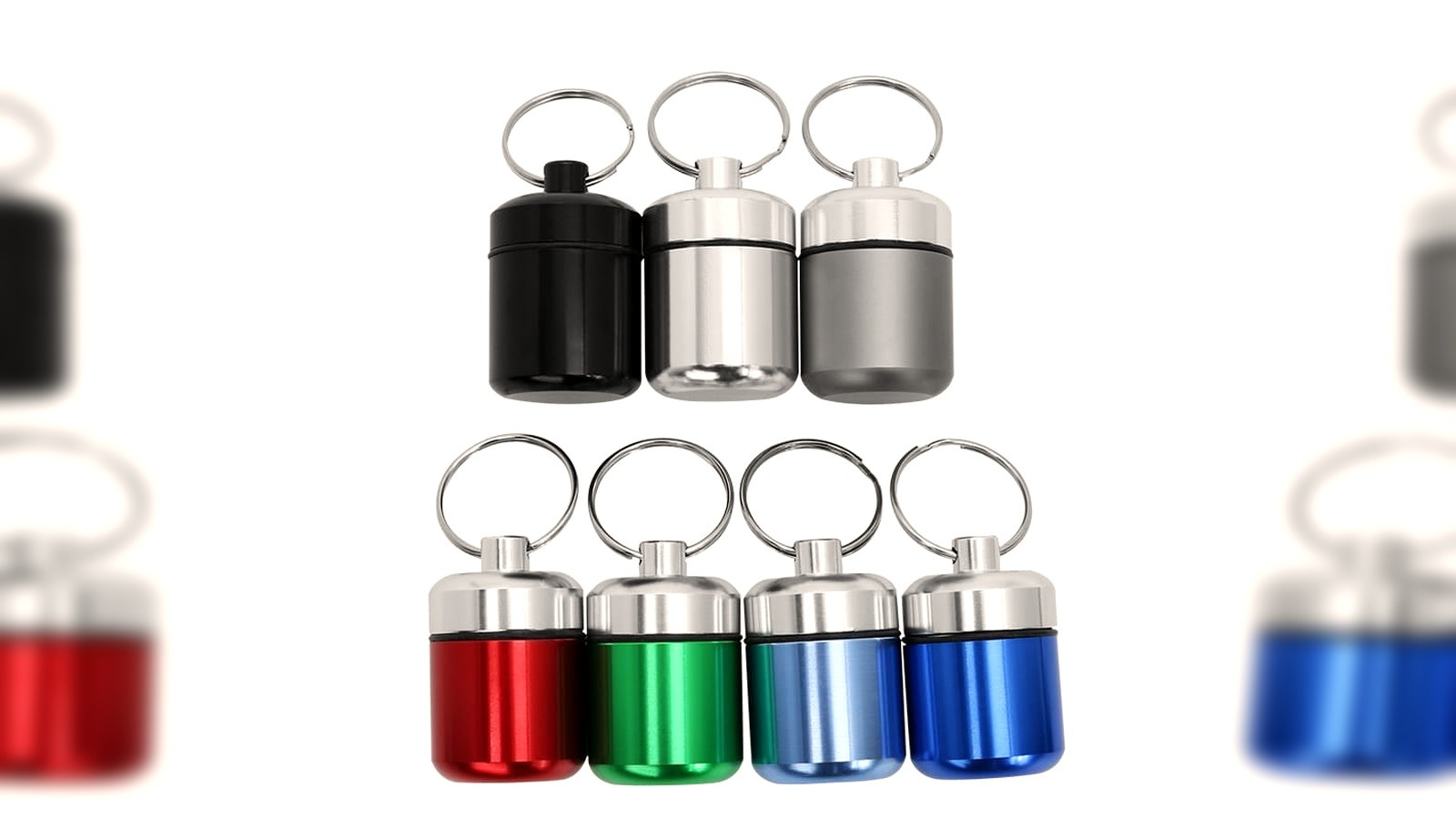
Metal — 7326.90.3500 at 7.8 Percent
Metal is the one case with published CBP rulings to point at. Three decisions — G87873, K84936 and L88938 — cover a brass-plated stainless steel hinged box, a steel box with a mirror, and a steel box in a leather case. All three were classified under 7326.90.3500 at 7.8 percent ad valorem.
The defining language is the part worth quoting to your broker: “other articles of iron or steel — containers of a kind normally carried in the pocket or in the handbag.” Cite the ruling numbers and the argument usually ends there.
Plastic — Three Headings Sit in Play
Plastic is messier. The same box can be filed under 3923.30 (containers for conveyance or packing), 3924.10 (household articles) or 3926.90 (other articles of plastics). The MFN rates are close — around 3 percent each — so the base duty barely moves.
What moves is Layer 2. The Section 301 lists are built on specific headings, and the container-versus-household-article line is exactly the kind of boundary that decides whether a 25 percent charge applies. Lock the ten-digit code with a broker before tooling, not after the first container clears.
Aluminium, Wood, Brass
Aluminium boxes generally land in 7616.99, wooden ones in 4421.90.90, brass and copper in 7419.99.30. For mixed-material builds — an aluminium shell with a plastic tray — expect the broker to classify by the component that gives the article its essential character, and be ready to document which one that is.
What to Ask the Factory Before You Order
Most of the data that decides your pill box import duty sits with the molder, not with you. Ask for six things in writing before you sign:
- Material composition by component: resin grade, colourant, coating, label adhesive, closure material.
- The metal-to-plastic ratio, if the build is mixed.
- Net weight per piece and carton packing specifications.
- A country-of-origin declaration for each material.
- Supply-chain documentation for forced-labor review, including mill and factory declarations.
- A written commitment to notify you before any material substitution.
The last one is the one buyers forget. A silent resin change can move the article across a tariff line or invalidate the classification your broker filed. If you are vetting a new supplier, our pill box manufacturer guide covers how to confirm they can produce this data per SKU.
Reading a Landed-Cost Quote Properly
Compare quotes on the same Incoterm and the same port of discharge, or you are comparing nothing. FOB prices from Chinese factories typically hold for 7 to 15 days; after that, a resin or metal-price move triggers a re-quote. Ask what triggers a re-quote, not just how long the price lasts.
A pill box import duty figure that hides the HTS code is not a quote, it is a guess. If a supplier offers DDP, “duty included” is not a full answer. Ask which code they are declaring, and ask where the refund goes if the duty is later ruled invalid.
That second question matters more than it looks. Refunds are not automatic — importers must file, and eligibility is narrow. If your supplier is the importer of record on a DDP deal, the money lands with them, not you. So put a duty-refund clause in the contract. Most templates say “new tariffs are the buyer’s responsibility.” Almost none say who keeps the money if a tariff is struck down.
Three Things Buyers Are Getting Wrong Right Now
“Tariffs are about to be cancelled.” No. The CIT heard the forced-labor case on 30 September 2026 and did not rule, and no injunction was issued. Duties are collected today. Model it as live.
“The MPF rate went up.” It did not. The ad valorem rate is still 0.3464 percent. What changed on 1 October 2026 is the floor and the ceiling — $34.58 and $670.86. Write “the per-entry cost floor rose,” not “the rate rose.”
“The 30-for-30 deal will cut my duty.” Not for pill boxes. In late September 2026 the two sides each listed about $30 billion of goods; the US list covers 77 tariff lines, mostly toys, child car seats, Christmas decorations, microwave ovens, towels and bedding. Pill boxes are not on it. Do not promise your customer a 2027 price cut.
Four Mistakes I See in Quoting Meetings
Treating duty as one number. Ask your broker for a line-by-line breakdown — MFN, Section 301 list, forced-labor tier and fees on separate rows. They have different legal bases and different expiry conditions. Merged into one row, you cannot react when policy moves.
Settling the code after tooling. Classification belongs before the mold is cut. A design change that moves you from a container heading to a household-article heading is 25 percent of the invoice, and it is very hard to unwind.
Ignoring the MPF floor. Small, frequent shipments pay the floor every time. Model the annual total, not the per-shipment cost.
Skipping origin documentation. CBP’s anti-circumvention reviews ask for the full bill of materials, mill and factory declarations, and forced-labor supply-chain evidence. If you cannot produce them, the goods sit. To be blunt: transshipment and origin misdeclaration are not cost strategies, they are seizure risks. Classify honestly and document properly — that is the only saving that survives an audit.
The pill box import duty is a design input now, not an afterthought. Settle the ten-digit code with your broker, ask the factory for the material and weight data that supports it, and put a refund clause in the contract. Do those three things before you order and the rest is arithmetic.
Everything above reflects the position in October 2026. Rates and rulings in this area are moving, so confirm current figures against the USITC HTS and with a licensed customs broker before you file. For the factory side of the same process, see how we run a pill box manufacturing audit.