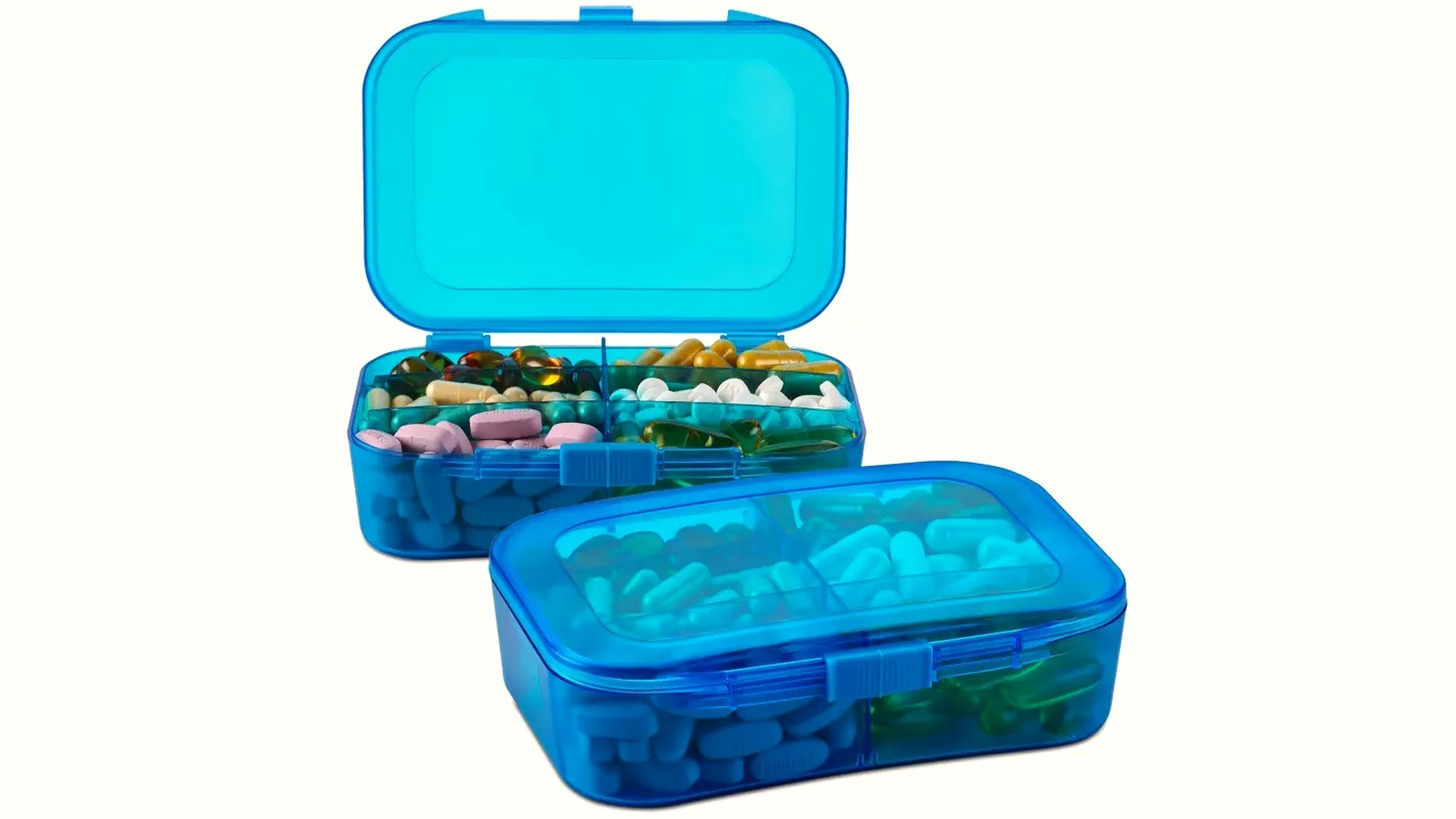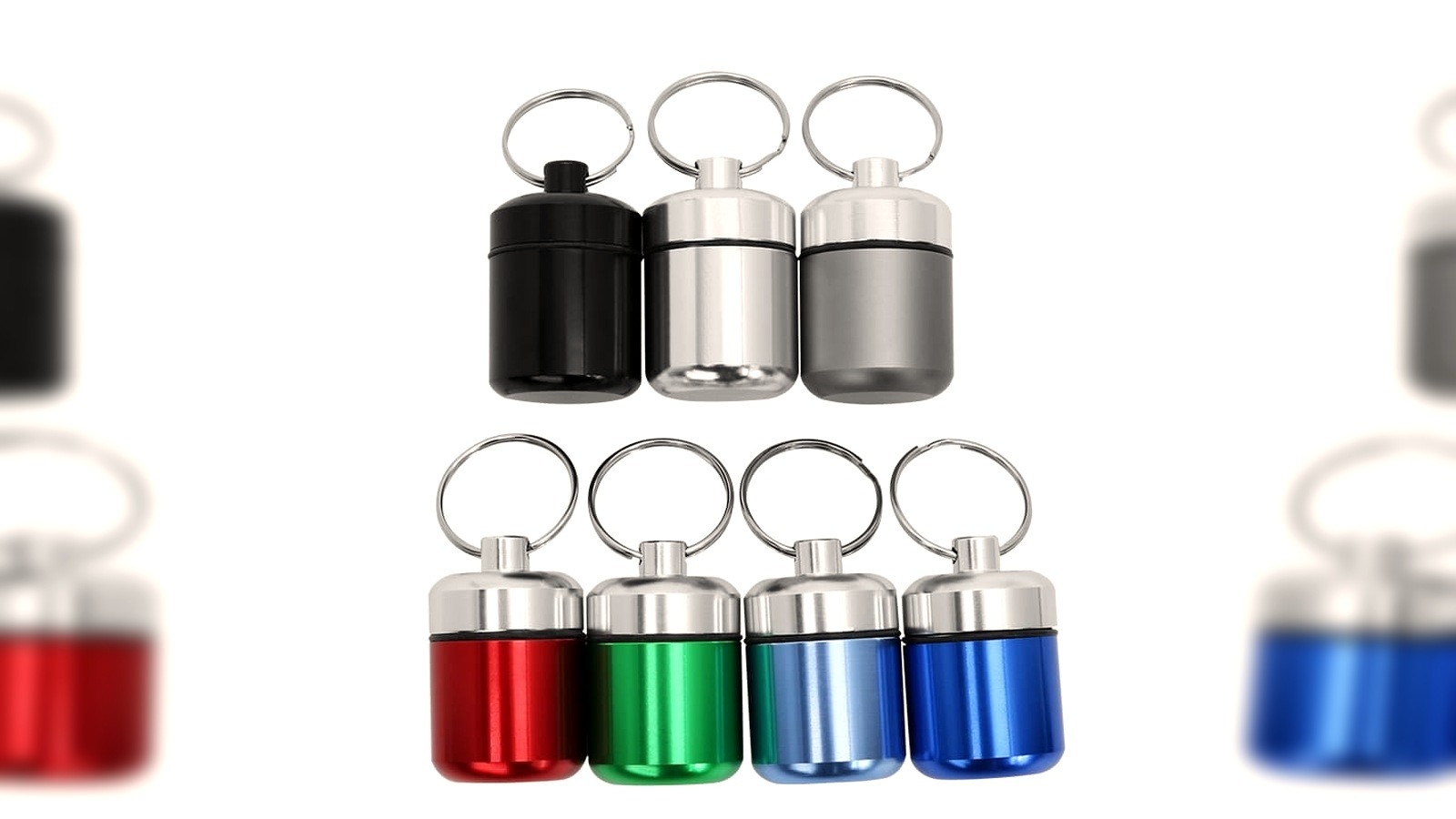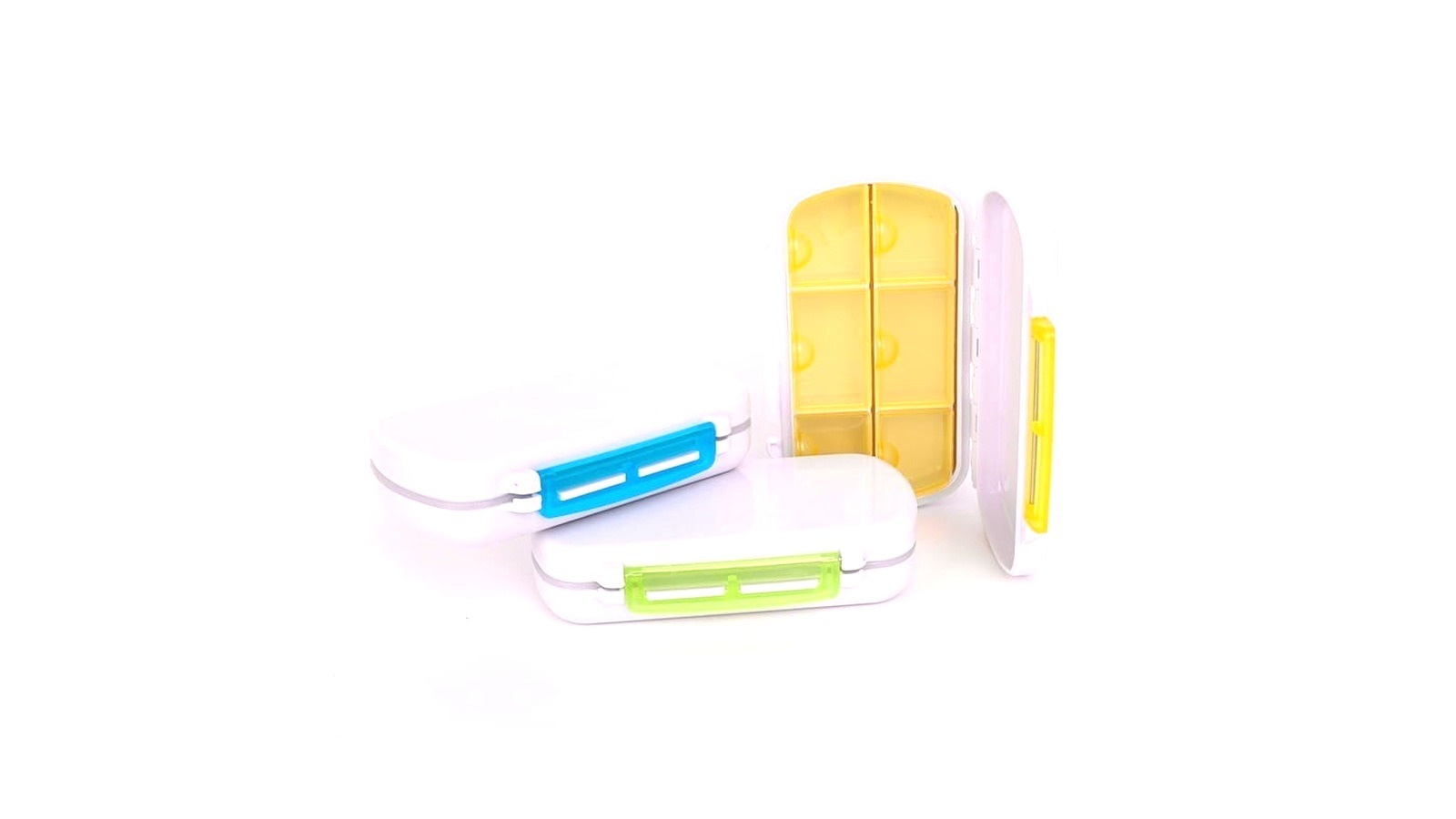
If the box has no continuous gasket, a desiccant pill box is mostly decoration. Moisture control is two different jobs: blocking humid air with a seal, or absorbing vapor that already got in with a drying agent. They stack, but neither replaces the other — and most weekly organizers can only do the first one well.
Two Different Jobs: Blocking and Absorbing
A gasket blocks. It keeps humid room air out, so the air inside stays whatever it was when you closed the lid. A desiccant absorbs. It pulls water vapor out of the air that is already inside and keeps pulling as long as it has capacity left.
The two routes can be combined, and on humid markets they should be. But a perfect seal with no desiccant still traps whatever humidity was inside when you filled it, and a sachet in a leaky box fights the whole room, refilled every time a lid opens.
That second picture is the heart of this article. Pharmacy packaging puts desiccants inside sealed bottles with a fixed pocket of air. A divided weekly organizer is a different machine, and the difference decides whether the desiccant does anything at all.
Why a Sachet Dropped into a Weekly Organizer Rarely Pays Off
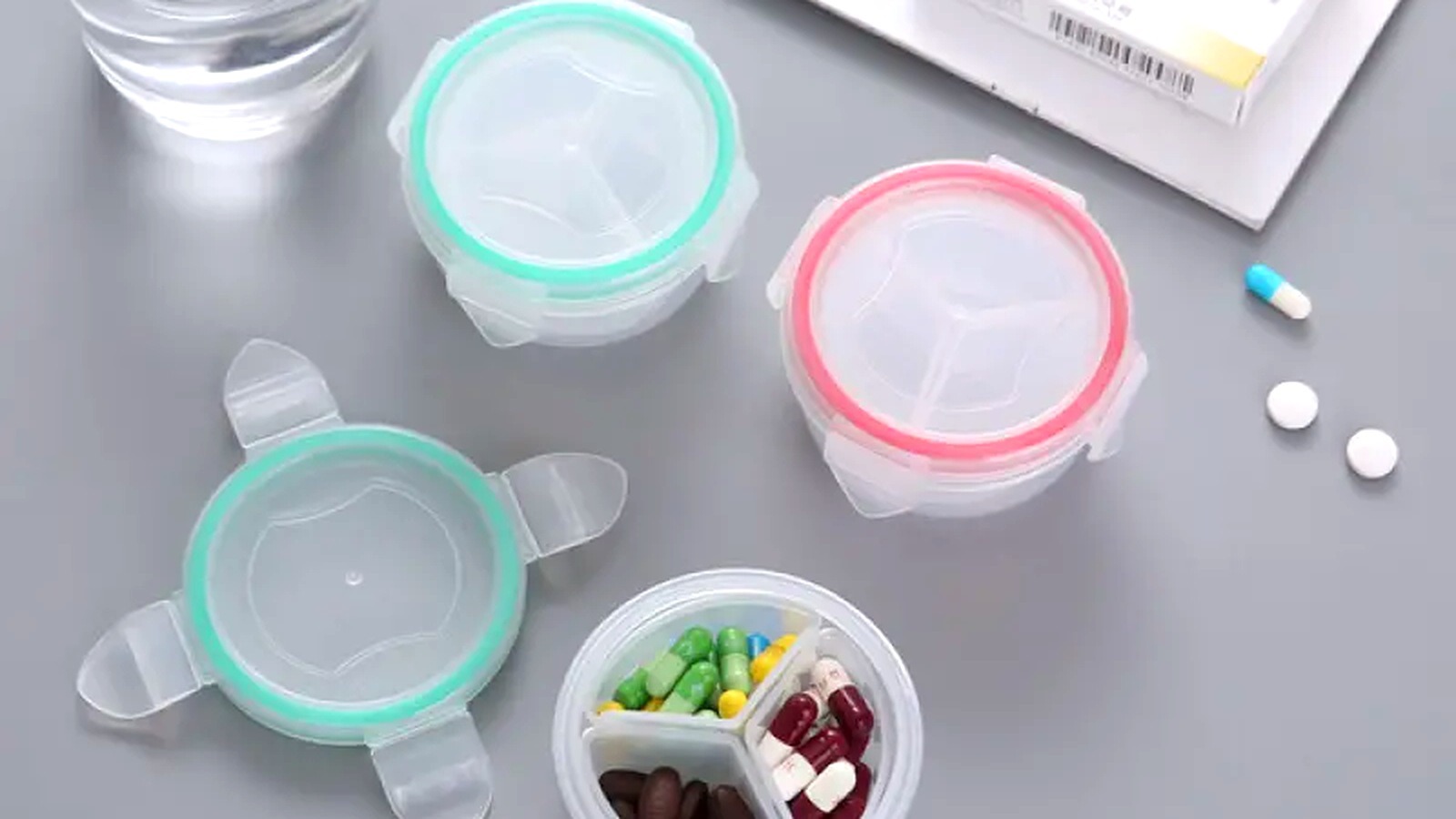
One hour of open air costs a desiccant about ten percent
Drying agents start working the moment they meet air. Packaging research on solid oral dosage forms reports that activated clay, silica gel and molecular sieves all pick up roughly 10% of their own weight in water after one hour at 25 °C and 75% RH.
If the target is holding a container below 20% RH, that single hour of exposure can erase the protection entirely. This is why pharmaceutical filling lines control room humidity and the clock between unwrapping a desiccant and sealing the bottle.
A Sunday-night refill on a bathroom counter has no such controls. By the time the sachet is inside the case, it has already spent a chunk of its capacity on your kitchen air.
A divided tray has no headspace worth protecting
A pill bottle is a closed system with a fixed volume of air. You fill it once, close it, and the desiccant manages that one trapped pocket for months. A weekly organizer opens one or more compartments every day, plus the outer lid at every refill.
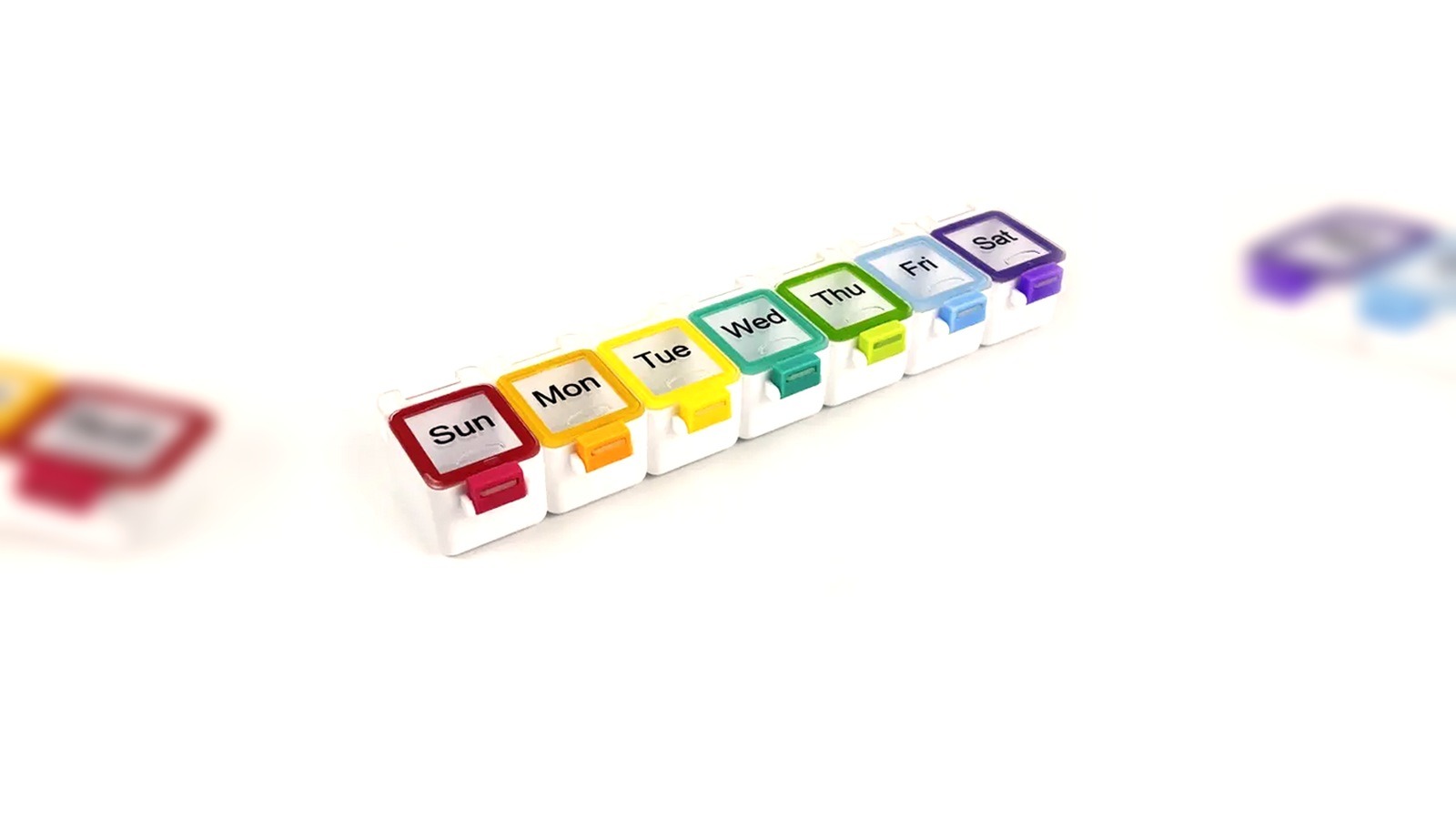
Most compartments also connect to each other through hinge lines and tray walls, so there is no sealed cell for a sachet to dry. Whatever it pulls out of Monday’s compartment gets replaced on Tuesday by the humidity of the room.
And where do organizers actually live? Bathrooms and kitchens — the two most humid rooms in a house. In that environment a loose sachet is closer to a placebo than to protection.
The Four Drying Agents Buyers Get Quoted
Suppliers quote four materials, and they behave differently enough that ordering “a desiccant” means nothing. Industry supplier reference values, which you should verify per grade:
- Silica gel — the default. Around 30–35% adsorption by weight, effective across the 30–90% RH range packaging actually sees, equilibrates near 30% RH.
- Molecular sieve — the deep dryer. Holds about 14% of its weight even at 10% RH and can pull a headspace below 1% RH. Costs 2–4× silica gel. Read the next section before specifying it.
- Clay (montmorillonite) — the cost tier. Up to roughly 25% capacity, but its working ceiling sits around 50 °C and it is effectively single-use.
- Calcium chloride — the wet-climate absorber. Takes up several times its weight, but turns to liquid brine when saturated, so it must never sit loose near pills.
Grades of the same material differ a lot. Ask the supplier for the moisture sorption isotherm of the exact grade at the temperatures your market sees — that document separates a spec from a slogan.
Over-Drying Is a Failure Mode Too
Here is the part almost nobody quotes: too much drying agent can damage the product. Gelatin capsule shells need to hold roughly 12–16% water to keep their strength, which corresponds to about 40–65% RH at 25 °C. Below 30% RH they tend to turn brittle.
A generously sized molecular sieve inside a small sealed case can push the local humidity far below that line. Softgels and gelatin capsules can crack, and a cracked shell exposes the fill to air — the exact failure the sachet was bought to prevent.
Packaging literature warns about the same effect in drug hydrates: aggressive drying can push certain forms into unstable amorphous states. Softgels in the mix? Pair this with which formats should never share a compartment.
The buyer’s conclusion is not “avoid desiccants”. It is: size them to the dosage form, and write that matching down.
When a Built-In Chamber Genuinely Pays Off
A desiccant pill box earns its cost only when three conditions hold at once. First, the case has a continuous seal — one gasket line closing the whole load path, not fourteen independent snap lids. Without that, absorb nothing, fix the seal first.
Second, the chamber is physically separated from the doses, with its own opening, so fresh or spent desiccant never touches a pill. Third, somebody defined what “saturated” means and what the user should do when it happens.
At least one metal weekly case on Amazon now ships that full stack: aluminum shell, PP inner tray, a drying agent chamber, individual compartment lids and an airtight seal, listed around $18–20 with a 4.4-star average over roughly 1,400 ratings. The structure is right.
What the listing never says is whether the drying agent inside can be swapped once it saturates. Hold that thought — it is the whole next section.
Fixed or Replaceable? The Question No Listing Answers
A saturated desiccant is not neutral. It is a warm, damp brick inside a case the owner believes is being protected. Depending on the material and conditions, some of that moisture can even migrate back out when the surrounding air is drier than the granules — standard sorption behavior, not a defect.
Replacement turns the chamber from a one-season feature into a maintenance item, and that changes the product design: a snap or threaded chamber cap, a refill format users can actually buy, and a closure force spec so the cap still seals after years of opens.
If the chamber is glued shut, the honest deliverable is a service-life statement: how many months the charge protects at what humidity, and what to do at end of life. Anything vaguer leaves your customers to discover the wet-brick problem on their own.
Safety Rules That Belong in the Spec Sheet
Indicating silica gel — the type that switches color — gets its color from cobalt chloride or similar dyes. Indicating grades are flagged as unsuitable for protecting food and drugs. If you want a visual indicator, it belongs inside the isolated chamber or nowhere.
Loose desiccant must never share a compartment with pills. The ingestion risks are choking and, for some materials, intestinal blockage. Children and cognitively impaired users are exactly the groups organizers serve, so a chamber closure should not be finger-openable by a toddler.
Never write “FDA approved desiccant” into a listing or a spec. Food-contact status for these materials is its own regulatory topic and varies by market. What a buyer can demand is paperwork: a compliance declaration for the sachet material plus third-party test reports on the finished assembly.
“Silica gel is non-toxic” is shorthand, not a license. Non-toxic and safe to eat are different sentences, and your listing copy should keep them that way.
How to Write It into a Purchase Order
- Seal first, absorb second. Specify the gasket material, compression set and gap before discussing drying agents. If the seal fails, nothing downstream matters — see our earlier guide to moisture-proof versus waterproof pill boxes.
- Demand the isotherm, not the adjective. The moisture sorption isotherm of the exact grade, at your market’s temperatures, belongs in the buying file.
- Size by calculation. Quantity should follow from headspace volume, target RH and expected leakage — not from “one sachet fits the mold”. Over-drying is a documented failure mode for gelatin products.
- Isolate and service. Chamber physically separated from doses; replaceable charge, or a written service life with an end-of-life instruction.
- Verify on the finished assembly. Load real pills, add a humidity indicator card, cycle your worst-case open/close pattern, and read it at day 7, 14 and 30.
Run this list against any supplier quote that says “moisture-proof, with desiccant”. In a truly sealed case, a replaceable, isolated chamber turns an ordinary organizer into a genuine desiccant pill box for humid climates.
In a snap-lid weekly tray, the same sachet is close to a placebo — and material choice matters as much as the seal, which is why we keep plastic selection and drug compatibility next to this topic.