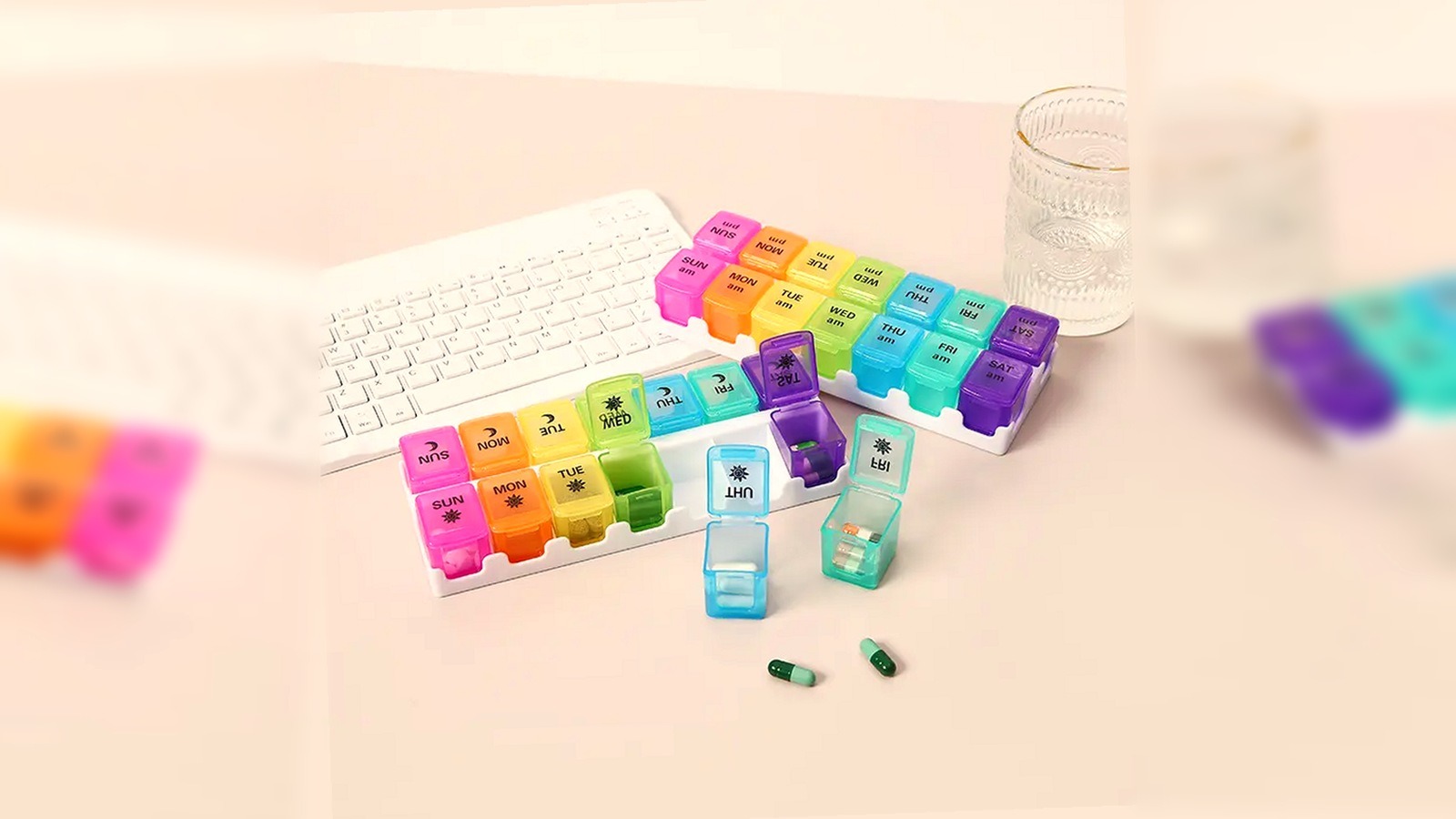
A gummy, an oil-based softgel and a coated tablet are three different packaging problems sharing one plastic box. Gummies breathe out moisture and drink in flavour. Softgels can weep oil. Tablets stain. Most brands find out from the first wave of reviews, which mention clumping, smell and colour transfer.
If you are specifying a private-label pill organizer for gummies and softgels, the fix is not a bigger box. It is deciding, before the mould is cut, which formats are allowed to share a compartment and which ones must be separated by design.
This guide walks through what actually happens between dosage forms, which combinations to keep apart, and the geometry, material and lid decisions that decide whether a mixed-format organizer earns repeat orders or returns.
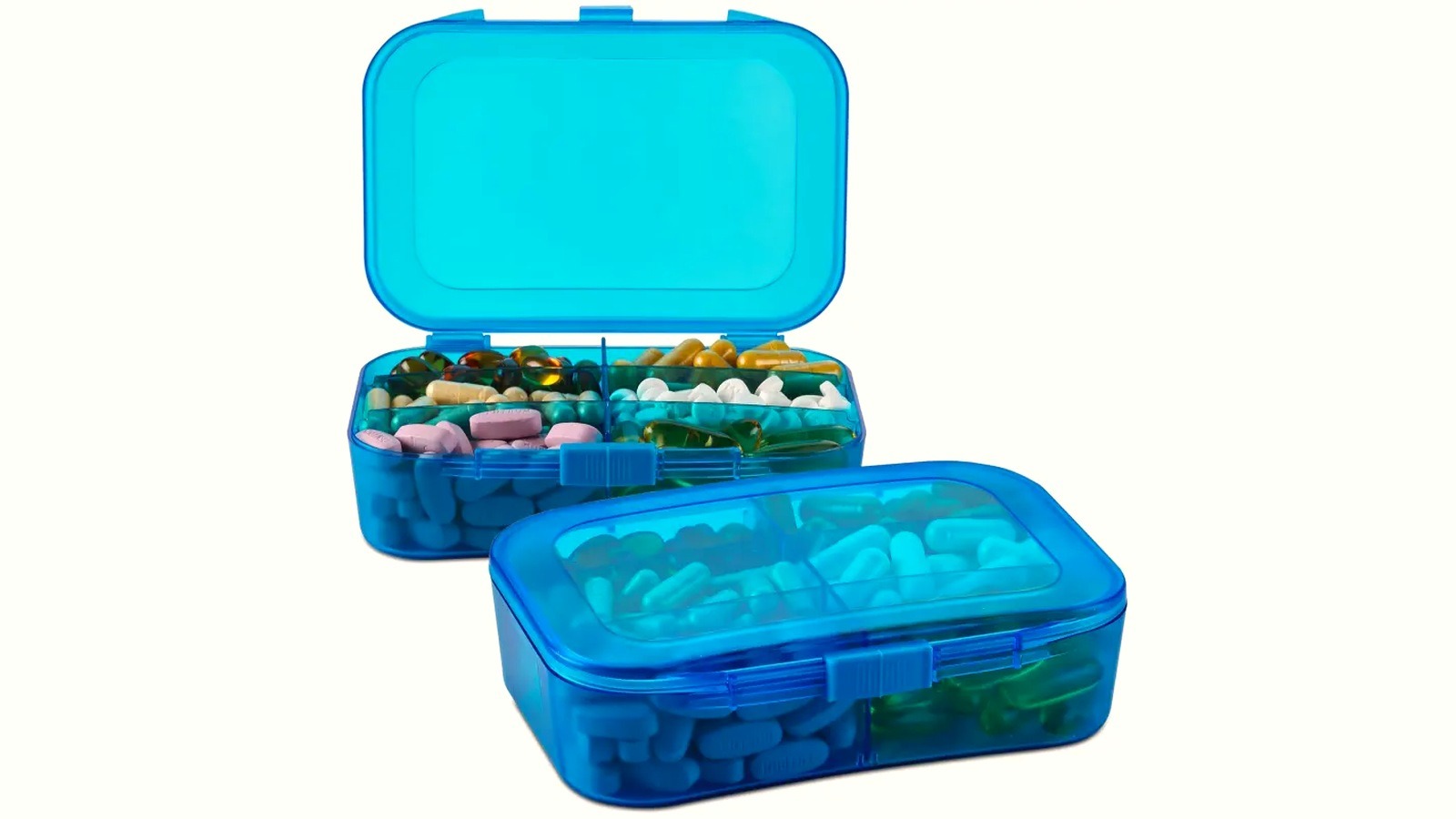
What Actually Goes Wrong Between Formats
Gummies Move Moisture in Both Directions
Gelatin and pectin gummies are hygroscopic. Supplement makers describe their stability in terms of water activity — the water that can move — rather than the total water in the product. In a closed compartment, that movable water drifts toward whatever is driest, which is often the coated tablet in the next cell.
Heat and humidity speed all of this up. Warm storage softens gummies until they slump, stick together and merge into a single block; sugar and acid coatings dissolve or turn blotchy. Third-party supplement guidance is blunt about the cross-effect too: gummies can pass moisture, flavour and oil to neighbouring capsules, and can stick to them.
Softgels Weep, Stain and Go Rancid
Fish oil, omega-3 and vitamin E softgels hold oil inside a gelatin shell. The shell is slightly permeable, so over weeks oil migrates to the surface. In a shared compartment that surface oil transfers to tablets, softens their coatings and leaves greasy marks on the plastic around them.
Oxidation is the second failure. Oil-based softgels past their prime develop a fishy or rancid smell, and odour moves through an open tray faster than anything else. Storage directions on the label govern this — the organizer cannot rescue an expired softgel.
Tablets Take as Well as Give
Coated tablets pick up colour and flavour from gummies. Half tablets are worse than whole ones: the cut face is bare and sheds dust, and the sharp edge scuffs neighbouring coatings. That dust and those fragments settle in the gummy cell, where they hold moisture and start the sticking all over again.
Which Combinations to Separate
| Combination | Main risk | Verdict |
|—|—|—|
| Gummy + gummy | Clumping in warm weather | Acceptable in a deep cell; fill one week at a time |
| Gummy + coated tablet | Moisture and colour transfer | Separate |
| Softgel + tablet | Oil staining and taint | Separate |
| Softgel + softgel | Shells sticking together | Acceptable; keep away from heat |
| Half tablets + anything | Dust, sharp edges, moisture | Own cell or own container |
These verdicts are packing guidance, not chemistry claims. They come from supplement-industry storage guidance and from what shows up in returns. Where actual medicine is concerned, the product label and the patient’s pharmacist decide — an organizer maker should never be the one giving storage advice.
Why a Pill Organizer for Gummies Needs Different Cells
Most compartment cells on the market are sized around standard tablets, with roughly 20×20×15 mm of clear space. That cell cannot take two adult gummies lying flat. It is also the most common reason a supplement organizer comes back: “too small” appears in about 11.5% of negative reviews, with undersized compartments at 6.9%.
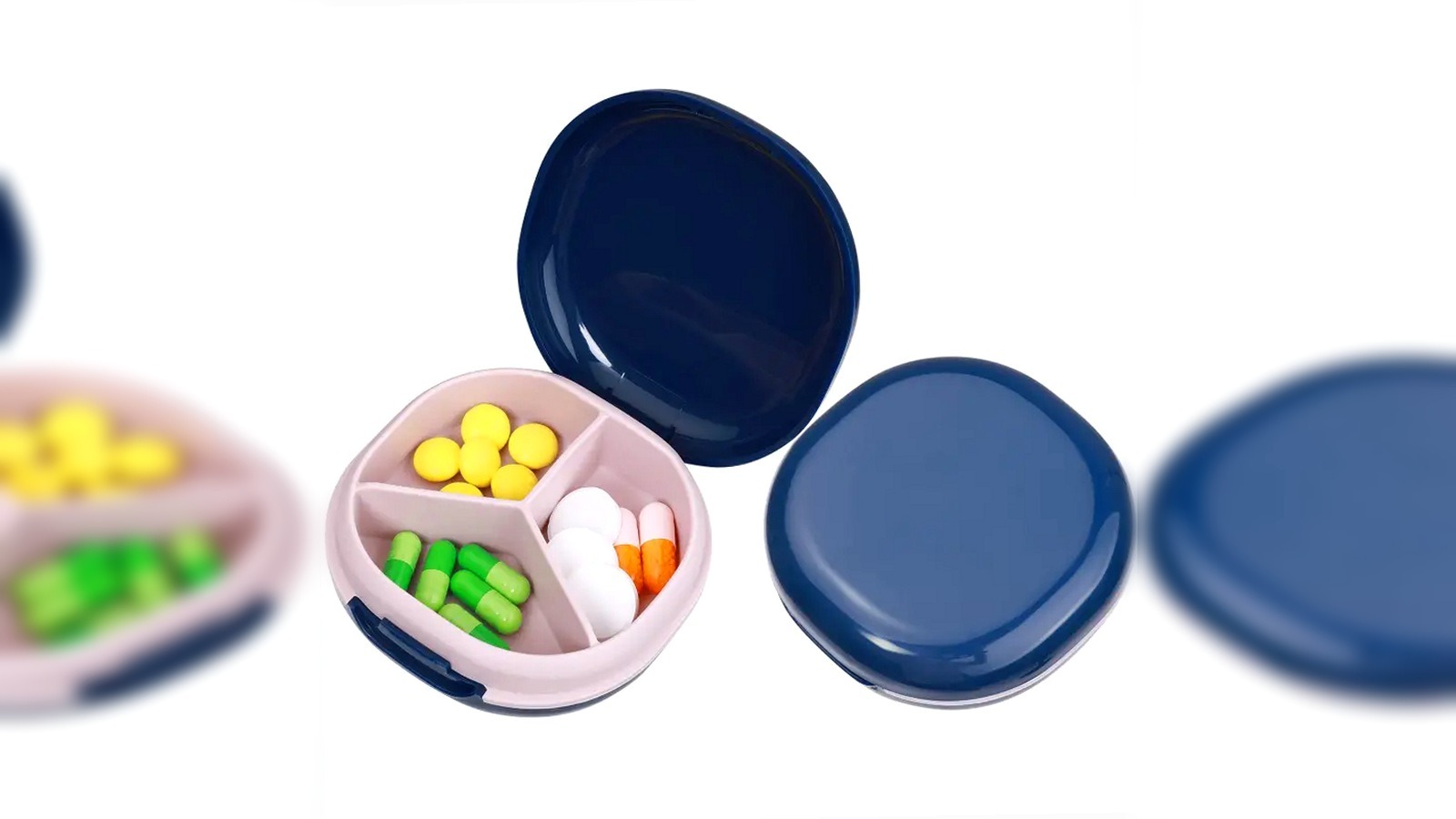
Shape matters as much as size. Softgels roll. A shallow cell with a wide lid gap lets them migrate between compartments whenever the box tilts in a drawer or a delivery van. Deep cells with rounded inside corners hold irregular shapes in place and release cleanly when the user taps the pod out.
Gummies also swell and shrink with the season. A cell that fits them in February can be a fight in July, which is why the clearance conversation belongs in the drawing review, not in the returns analysis.
Four Design Features That Earn Their Cost
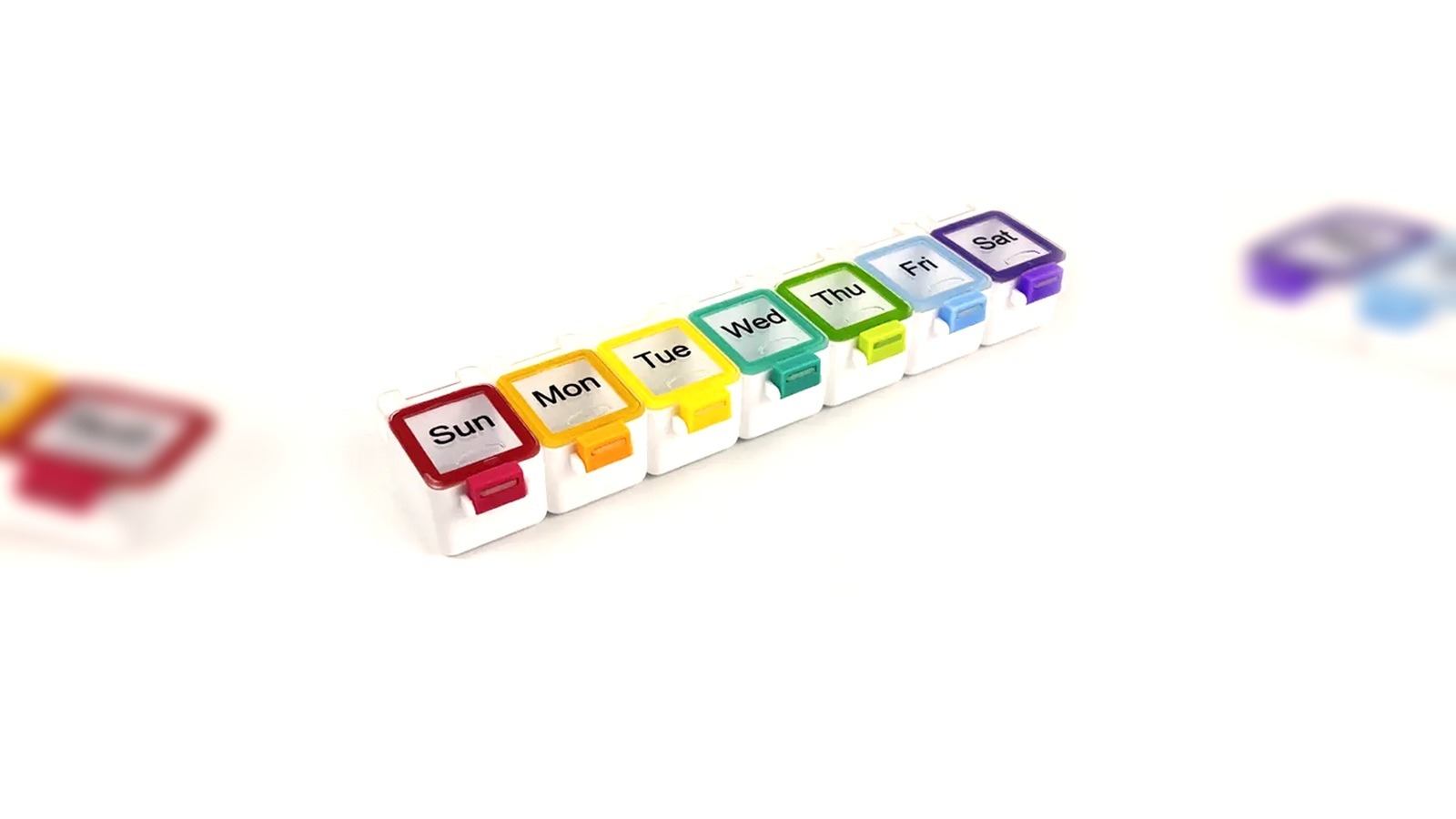
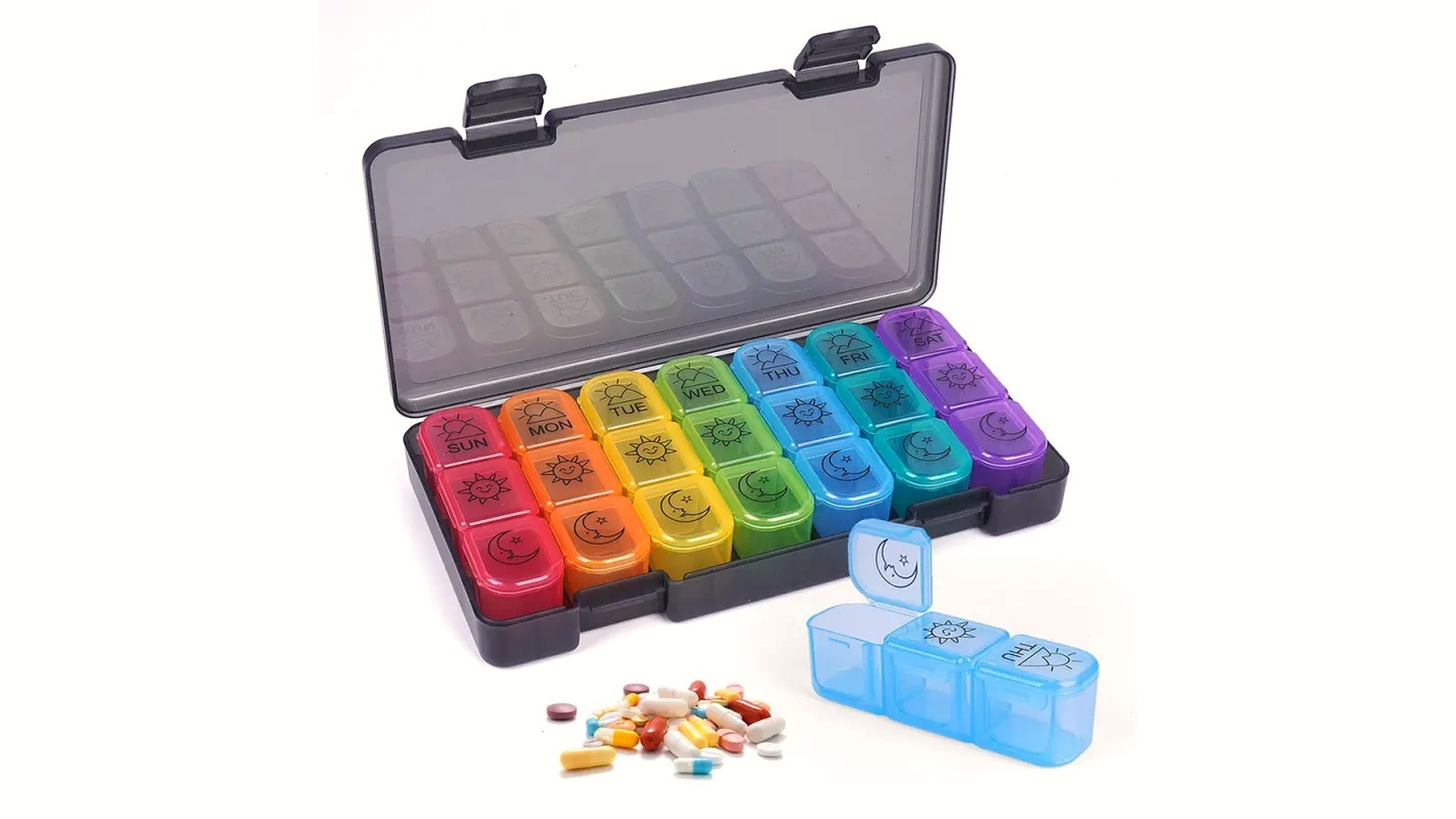
- Removable day pods. The sticky Tuesday pod comes out and goes under the tap without the user washing the whole tray. This is the feature gummy users mention most in positive reviews.
- A real seal. A gasketed or double-seal lid slows moisture exchange between a bathroom shelf and the gummies inside. We compare the gasket options in our moisture-proof vs waterproof pill box guide.
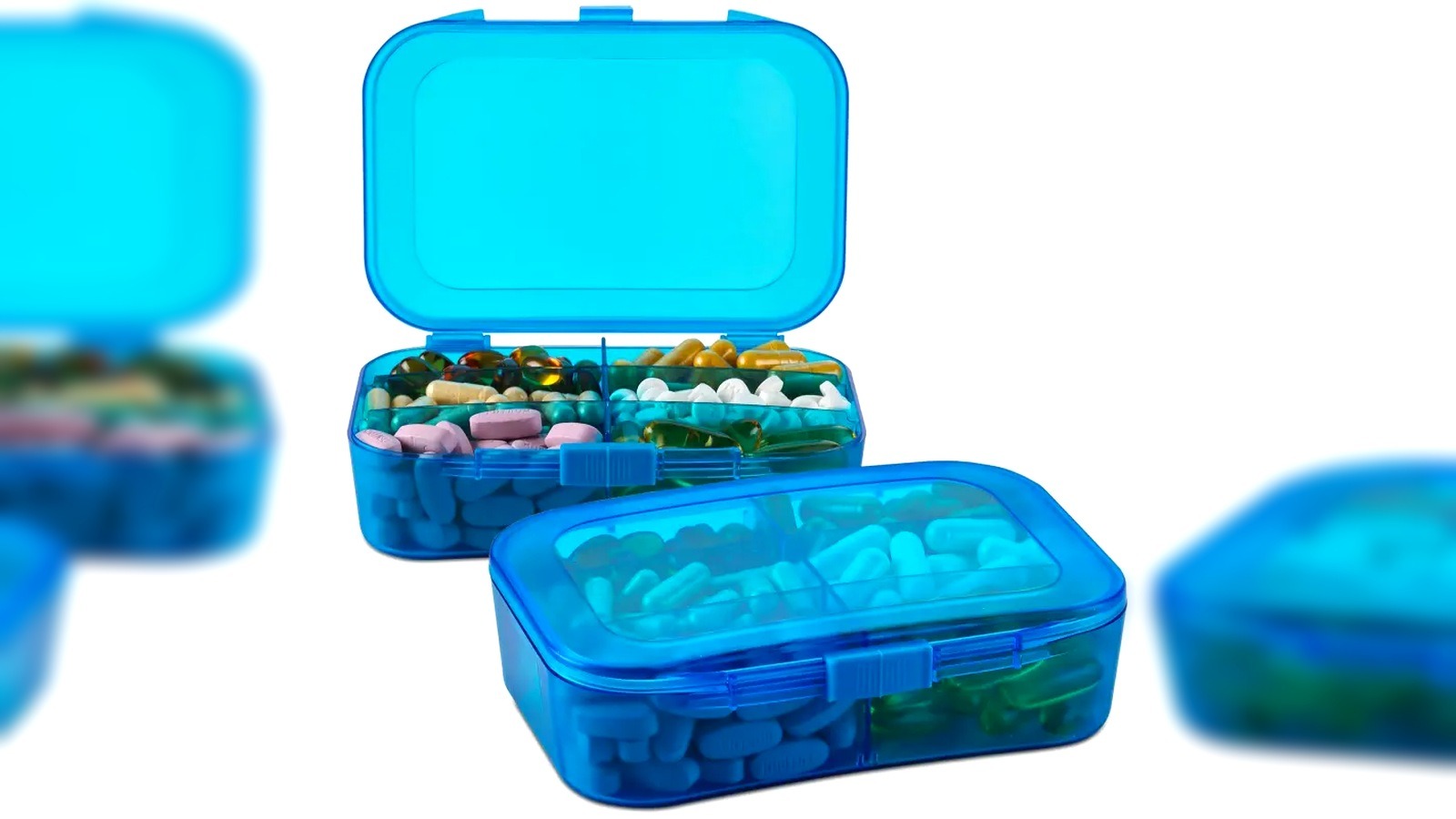
- A lid you can see through. Clumping, staining and oil weep are visible failures. A clear window turns them into a warranty photo instead of a silent complaint; we covered the trade-offs in our clear vs amber vs opaque shell guide.
- Deep, rounded compartments. Bulky formats need height, and rounded inside corners stop fragments and sugar dust from packing into the corners where mould gets a start.
Material and Compliance Notes Buyers Miss
For anything that touches supplements, ask for a food-contact compliance statement on the finished article, not a resin datasheet. Olefin parts fall under 21 CFR 177.1520 in the US; silicone and rubber gaskets fall under 177.2600.
In the EU, the baseline is (EC) 1935/2004 with the EU 10/2011 plastics limits. German LFGB adds a sensory test — odour and taste — on the finished part, and that is where most claims fail.
Never let a listing say the box is “FDA approved”. FDA does not certify individual products. The defensible sentence is: moulded in a food-contact grade, with third-party migration testing on finished units, and the report available to your retail customers.
Material choice also decides staining. Our pill box plastic selection and compatibility guide covers sorption and migration at the material level.
For a gummy SKU, add a practical acceptance test on top: soak a finished compartment with the customer’s actual product for two weeks, then grade the stain against a reference chip.
Fill One Week at a Time — and Print It on the Pack
The working convention across supplement brands is simple: fill the organizer one week at a time, not one month. A week of gummies in a closed cell is a packing choice. A month of them is a stability experiment nobody signed up for.
Print the instruction. One line on the back card — fill one week at a time, keep the rest in the original bottle — costs almost nothing and removes the most common misuse of a pill organizer for gummies before it happens.
The format itself has evidence behind it. A 2015 systematic review of 52 studies found pill boxes and blister packs were associated with better medication adherence than no intervention, with 71% of doses taken versus 63%. The organizer works. The job of the spec is to keep its contents in saleable condition until the last dose.
The Child-Access Question You Cannot Skip
Gummies look like sweets, and the surveillance numbers show what follows. CDC recorded an estimated 10,930 emergency-department visits for unsupervised melatonin ingestion by children aged five and under between 2019 and 2022 — 7.1% of all unsupervised medication exposure visits in that age group.
Gummies were the most commonly documented solid dosage form in those visits at 47.3%, and in 35.8% of solid-form cases the child reached ten units or more.
Most weekly organizers are not child-resistant, and melatonin products are not required to be. CDC’s published advice is to store supplements up and away, out of sight, and to prefer child-resistant packaging in homes with young children.
If your SKU targets households with children, decide early: a lockable lid, a child-resistant closure, or explicit warnings on the retail pack. Any of the three is a decision to make before tooling, not after a first incident.
What Goes Into the Spec Sheet
- Target dosage forms per compartment, with the largest single unit dimension stated in millimetres
- Compartment clear size and depth, measured on the drawing, not on the render
- Removable pods — yes or no, and a washing tolerance if you claim one
- Seal type, and the moisture claim it actually supports
- Food-contact statement per finished part, with the third-party report
- Stain acceptance: two-week soak in the customer’s product, graded against a reference
- Fill-level instruction printed on the retail pack
- Child-access decision: open, lockable, or child-resistant
Most mixed-format organizers fail in a boring place: two products that were never meant to touch, touching for three weeks in a warm drawer. Specifying which formats share a cell — and designing the compartments, the seal and the label around that answer — is cheap engineering compared with a relaunch.
Send us the dosage forms your customers actually take, the retail price band and the markets you sell into. We will recommend the compartment geometry, the material grade and the seal type to write into the purchase order — and we will flag the combinations that tend to come back as returns.