Ask a factory for a “premium” pill organizer and you will get seven different quotes, because “expensive-looking” is not one feature. It is the combined effect of material, surface treatment, and packaging — and each lever has its own cost, its own failure mode, and its own line item in a purchase specification.
This guide breaks down the pill box styles that photograph and shelve like a higher-priced product, using current production examples. Each look is translated into the specification language a buyer actually needs.
The short version: anodized aluminum delivers the strongest perceived-value jump for the money, a transparent shell over a colored tray is the cheapest way to add visual depth, novelty silhouettes win gift channels but eat capacity, and a window color box can lift or sink the whole effect depending on how it ships.
What “Looks Expensive” Means in This Category
Shoppers cannot weigh a pill organizer in a listing photo. They judge three things: what the surface appears to be made of, whether the color looks intentional or leftover, and how the product is presented in the box.
Aggregated complaint statistics for the category show why this matters commercially. Size mismatch and closing problems dominate returns, but faded labels and worn surfaces form a distinct complaint group. A product that looks tired after a month undoes every dollar spent on the initial design.
There is also a price-band argument. Mainstream plastic weekly organizers cluster in the roughly $18–24 listing band, while metal styles have been observed listing around $27–31 — a blue-ocean pocket in an otherwise crowded category. The styles below are the ones that earn that band.
Anodized Aluminum: The Fastest Route to Perceived Value
Nothing changes the shelf impression of a small metal container faster than swapping painted plastic for anodized aluminum. Anodizing is not paint: the part goes into an electrolytic bath, an oxide layer is grown into the surface, and dye is absorbed into that layer before sealing.
The color sits inside the metal, so it does not chip the way a sprayed coat does. Brushed or sandblasted pre-finishes give the surface a fine, even grain that photographs as quality.
Current production examples show the range this style family covers:
- Flat-head aluminum alloy metal pill box — a squared slab format with a machined look.
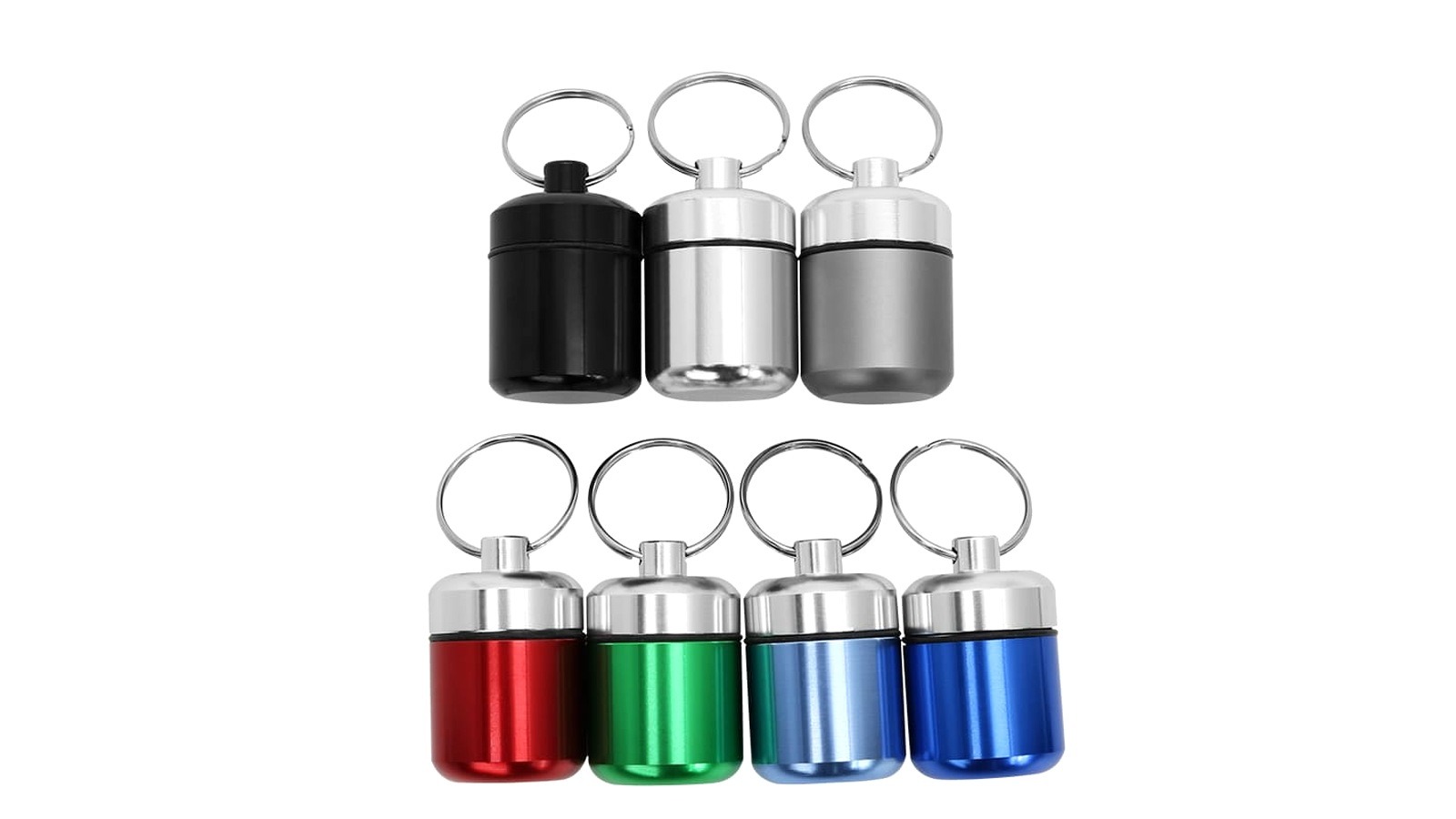
- Keychain aluminum alloy metal pill box — the capsule-with-ring format, offered in a full anodized colorway set from black and silver through red, green, and blue.
- Waterproof aluminum alloy metal pill box — the same visual language with a sealing gasket story attached.
- 3-compartment aluminum alloy pill organizer — anodized color on a divided interior.
The specification work sits in three places. First, name the alloy grade and whether the body is extruded or stamped, because surface quality after anodizing follows the base metal. Second, define the pre-finish — brushed, sandblasted, or polished — since the same dye over different textures reads as different products.
Third, control color across batches. Anodized reds and blues drift between dye lots, and two shades of “the same” blue in one carton is the fastest way to look cheap. The workable clause is simple: retain an approved color master sample, and require every production batch to be checked against it under the same light source.
Transparent Shell Over a Colored Tray: Depth on a Plastic Budget
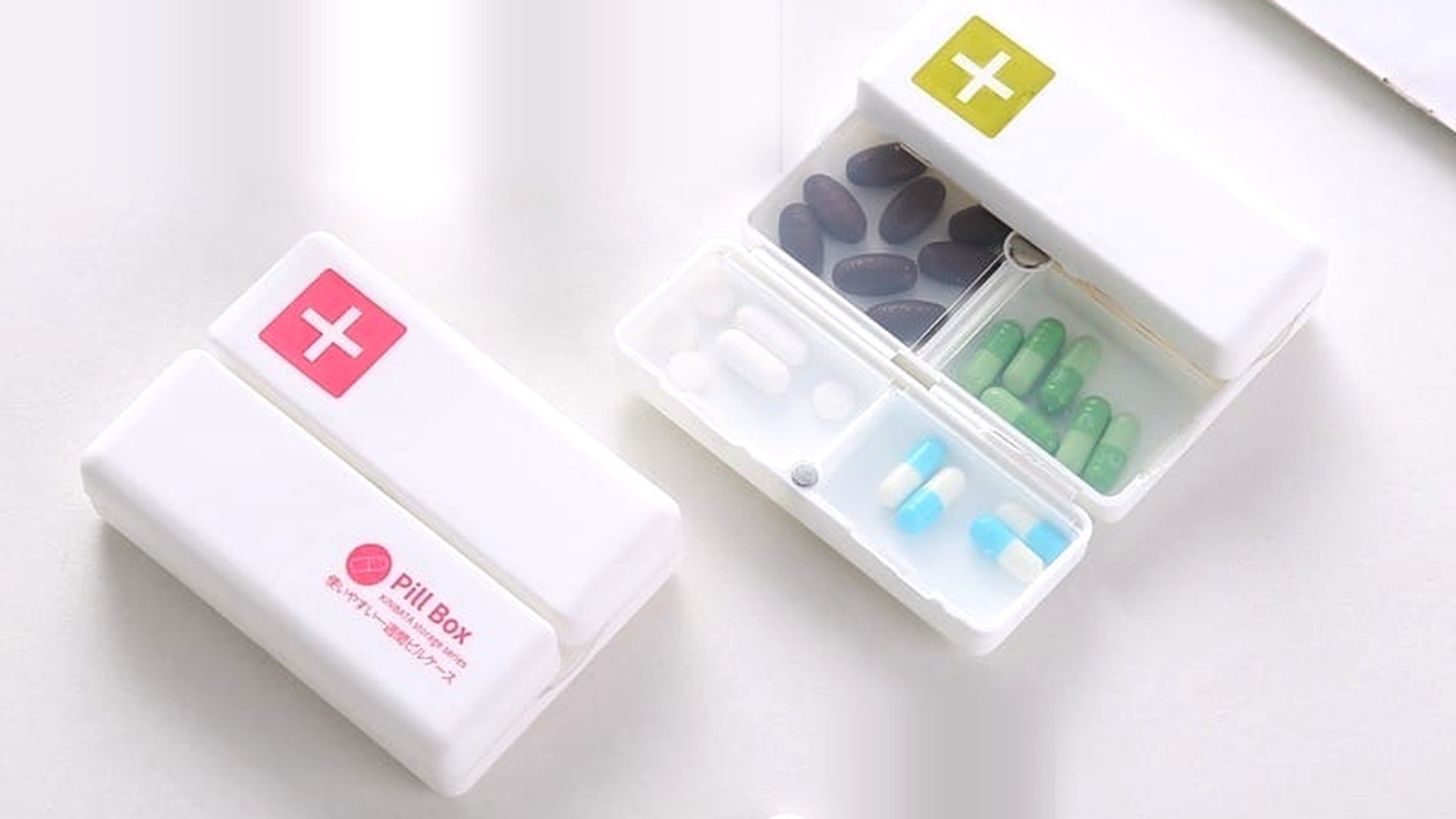
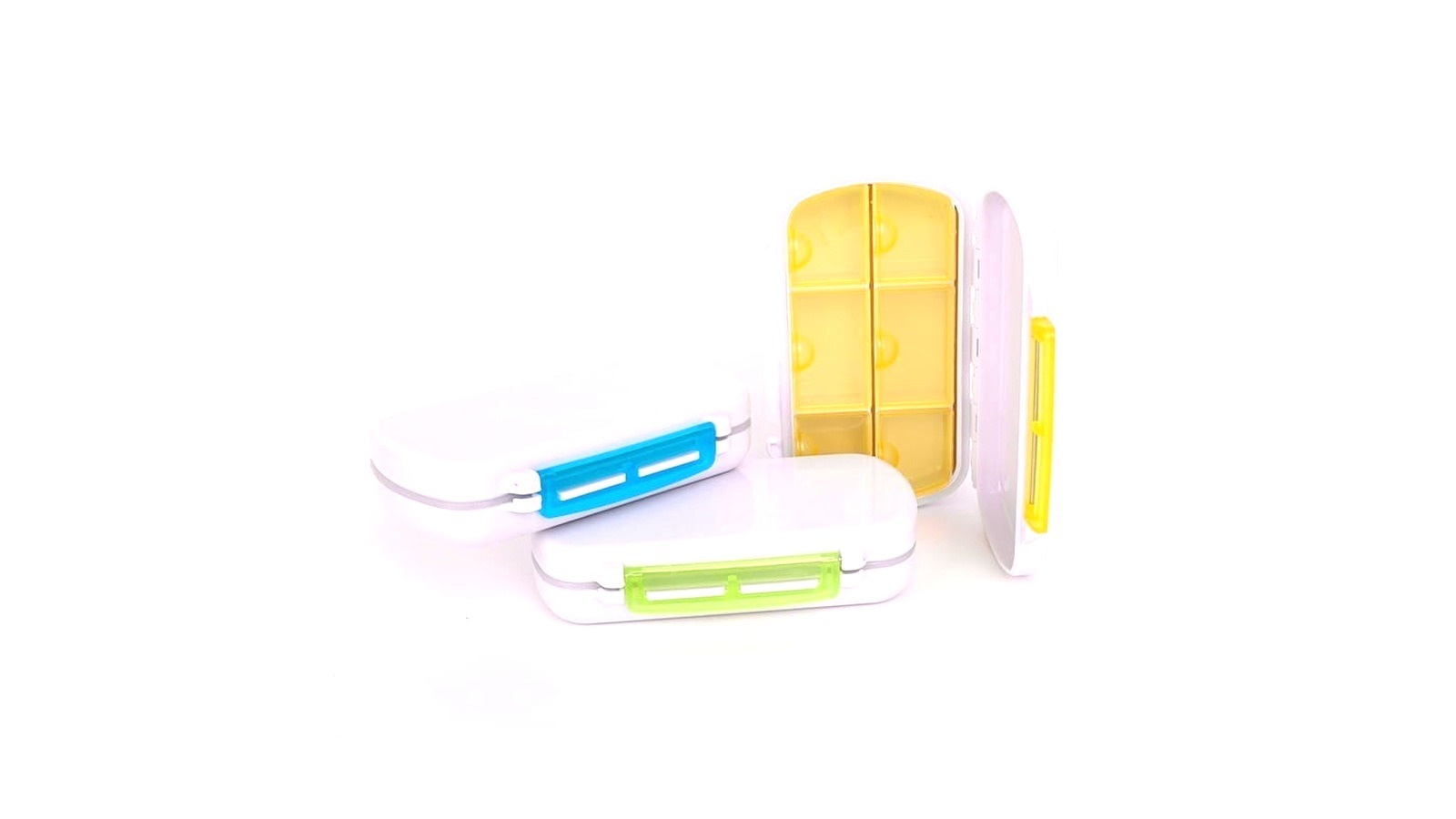
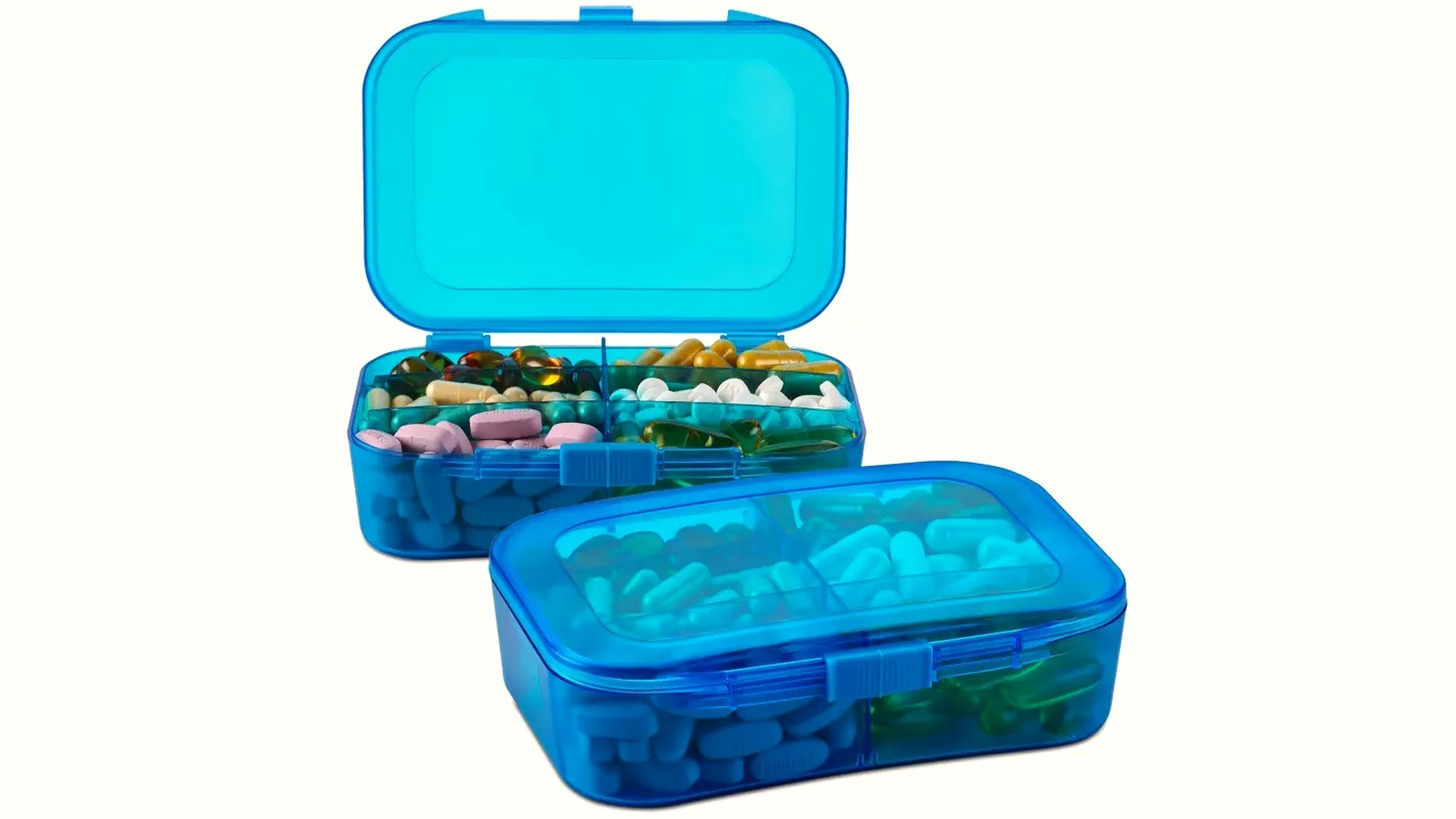
The cheapest perceived-value upgrade in plastic is not a better plastic — it is two plastics. A clear outer shell with a colored tray visible inside creates depth that single-shot colored plastic cannot match. The eye reads the gap between layers as construction rather than molding.
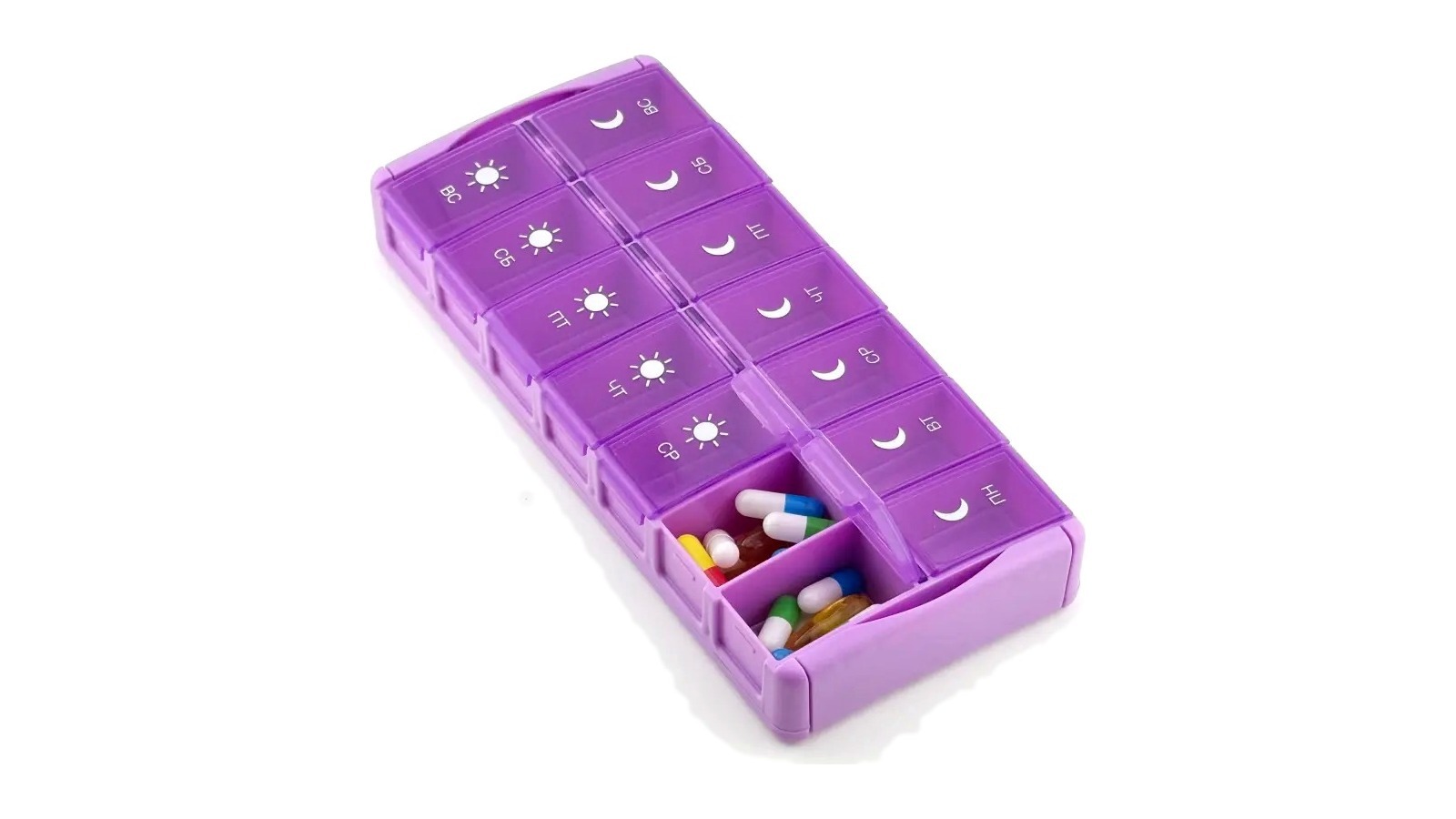
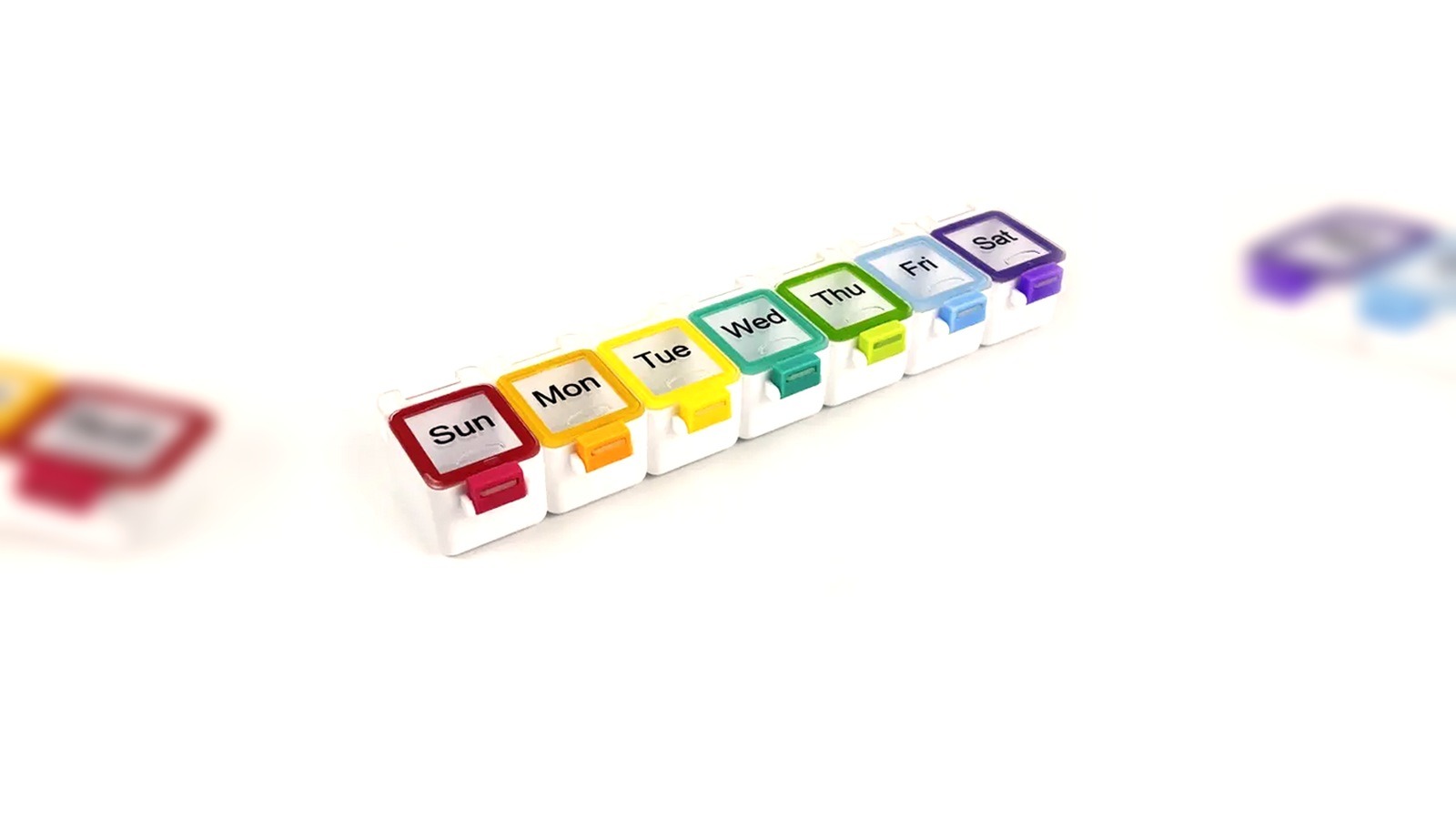
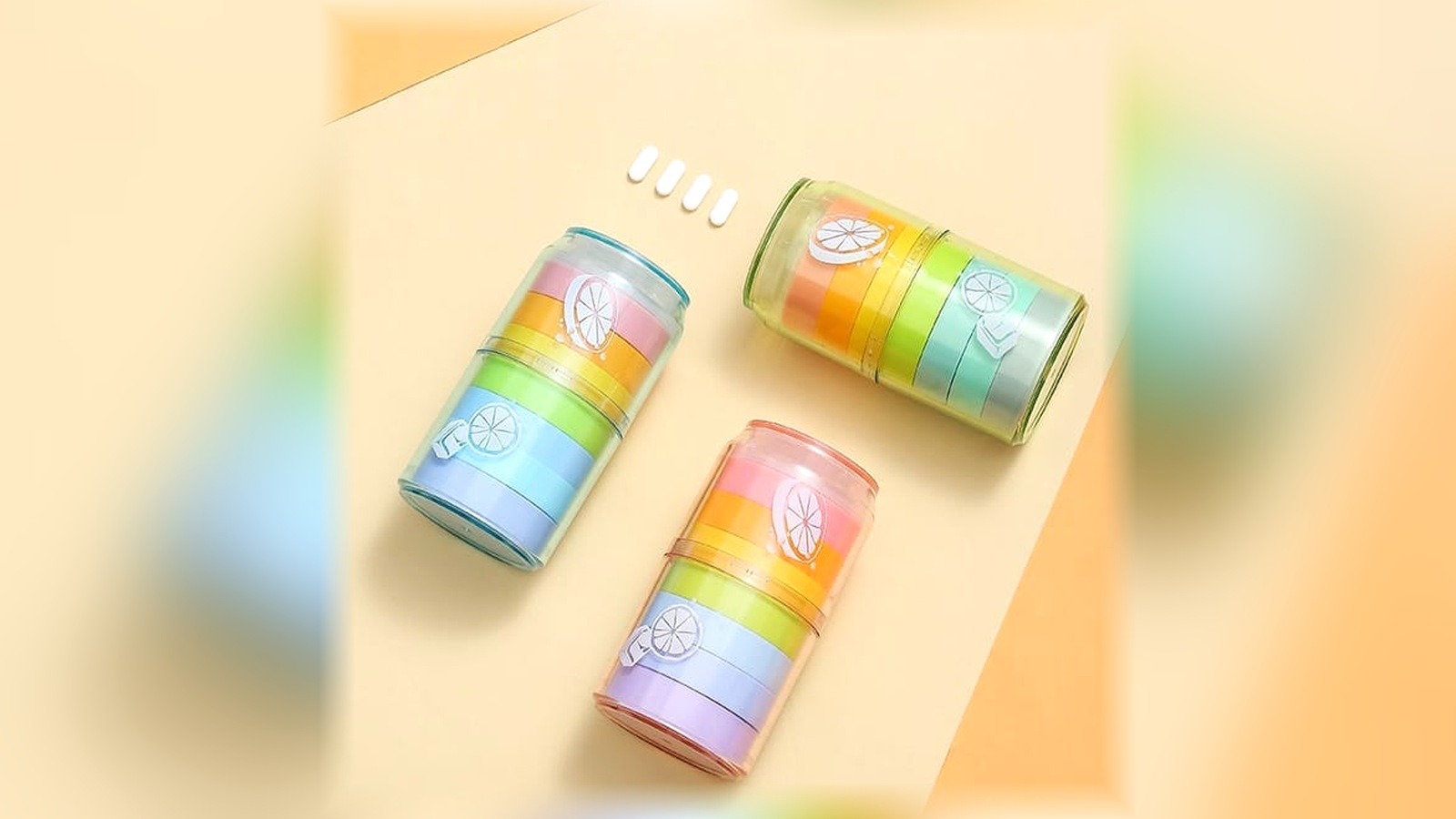
Current examples run from transparent daily medicine organizers to a rainbow weekly pill box whose tray colors do the branding work. Can-style designs such as the mini fruit pill organizer stack colored segments behind a transparent wall.
Two failure modes to write into the spec. Not every clear resin stays clear: some yellow visibly with UV exposure and time, so the transparency grade and the resin choice need to be named, not assumed.
The inner tray color set needs its own standard too — Pantone references plus retained master samples. A “rainbow” that ships with two oranges and no green is a listing photo that can no longer be used.
Novelty Silhouettes: Heart, Heptagon, and Shapes That Sell
Silhouette is the oldest premium cue in gifting. A heart-shaped plastic pill box or a heptagonal weekly case reads as a gift item rather than a medical supply. That is exactly why pharmacy and promotional buyers pay for it.
This family overlaps with the cute pill box market, where shape novelty is the entire purchase reason.
The trade-off is geometric and unavoidable: a curved or angular outline steals usable volume from every compartment, and corners that pills cannot reach become dead space. Buyers evaluating these pill box styles should ask the supplier to state the usable compartment dimensions against a reference pill size, not just the outer footprint.
Mold cost is the second variable. A distinctive silhouette is a dedicated tool, so tooling ownership, modification fees, and the order quantity that amortizes them belong in the same conversation as the design itself. For a survey of what else is new this year, see new pill organizer styles in the 2026 market.
Soft-Touch Surfaces: The Layer Buyers Forget to Specify
A matte soft-touch coating is the difference between a case that feels like packaging and one that feels like a product. It is also the least specified surface treatment in the category.
That is why some units turn shiny and tacky after a season of hand contact and cleaning wipes. Two clauses close most of the gap: coating adhesion by cross-hatch test, and resistance to wiping with a standard alcohol solution. Neither requires laboratory language in an RFQ — both are pass/fail checks a factory can run on a first-article sample.
The Packaging Layer: Window Boxes and the Shipping Trap
A color box with a window does more for perceived value than any surface treatment, because it frames the product instead of hiding it. It also carries a fulfillment cost that blind shipper boxes do not.
Under Amazon’s Ships-in-Product-Packaging program, bulky units that do not ship in their own packaging have carried per-unit fee loads in the $1.51–4.04 range since January 2026. The program’s packaging rules leave little room for a decorative window box.
Small formats must fit within roughly 6.0 × 4.0 × 0.375 inches, and the 2026 ISTA 6-Amazon test edition has applied since August.
A window box that cannot survive that path either gets over-boxed, which erases the shelf presentation, or arrives crushed, which is worse. The practical question for a buyer is therefore not “window or no window” but “which channel ships this SKU.”
Gift and pharmacy retail can justify the full presentation box. Marketplace-only SKUs need a packaging design that passes transit testing with the window intact. This is also where closure durability matters, because a presentation box that opens in transit tells its own story — a topic covered in which pill box latch stays shut on the road.
Three Places Buyers Overpay for “Premium”
- Chrome-look plating on plastic. Plated plastic can look metallic in hand, but plating adds a process, an environmental compliance burden, and a scratch visibility problem on a product that lives in pockets and bags. Anodized aluminum achieves the same cue with fewer liabilities.
- Printed branding on wear surfaces. Logos and day labels printed on friction points fade — faded labeling is a documented complaint share in this category — and a half-worn logo reads as counterfeit, not premium. Specifying engraving, embossing, or label placement away from handling zones costs nothing at quotation time.
- Luxury closure hardware. Heavy clasps and magnetic snaps photograph well, but a magnetic closure has its own specification discipline, covered in why magnetic pill organizers fall off the fridge. Hardware that fails in month two is the most expensive kind of premium.
A Five-Line Appearance Add-On for the Next RFQ
- Color: Pantone references for all colored parts, plus retained master samples, checked per batch under a defined light source.
- Surface: named treatment per part (anodize with sealing, soft-touch coating, clear resin grade), each with a pass/fail first-article check.
- Markings: process and placement for all logos and day labels, with friction zones excluded.
- Packaging: which SKUs ship in window boxes, the transit test each packaging design must pass, and who owns the failure if it arrives crushed.
- Reference unit: one signed golden sample per style, held by both sides, as the arbiter for every color and finish dispute.
Among this year’s pill box styles, the expensive look is a purchasing document, not a mood board. Each visual cue above survives contact with production only when it is written as a checkable line — and the factories that can hit those lines are the ones worth the premium band they charge for.