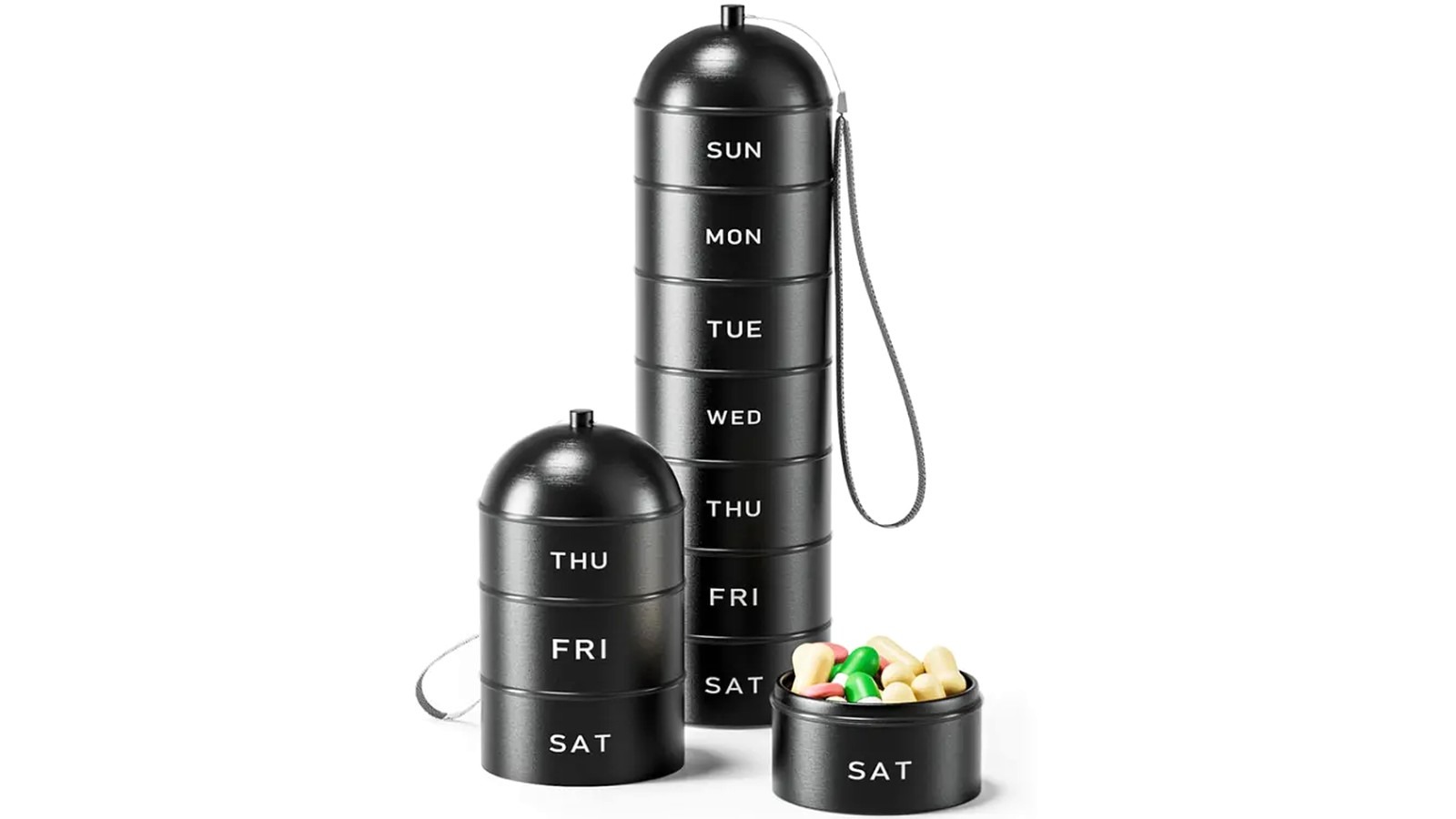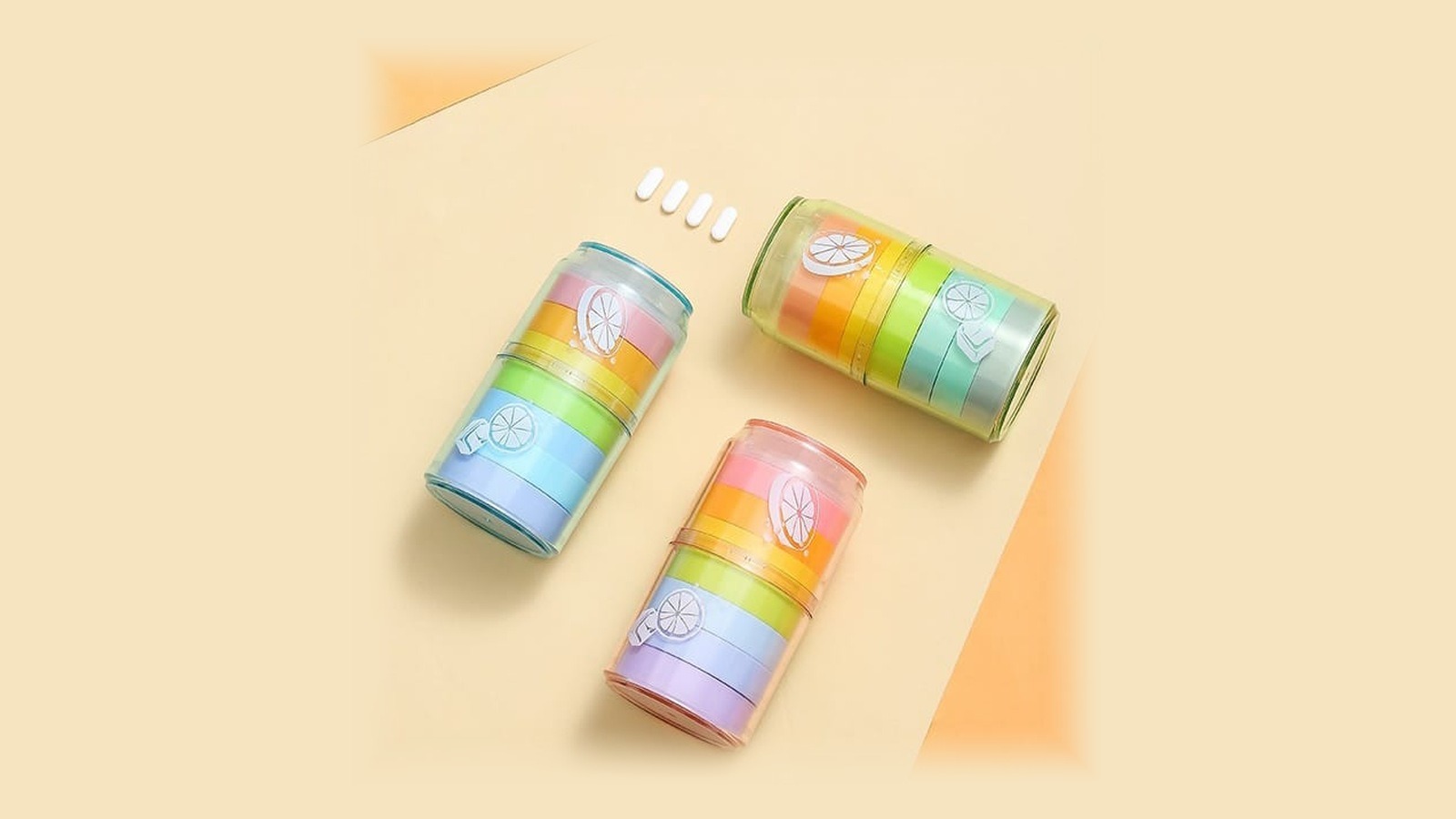
If two people in the same home take medication, buy two pill organizers — not one bigger one. The decision is not about capacity; it is about whose pills end up in whose hands.
A single shared box asks both people to read the same day labels and trust that neither picked up the other’s dose. Poison-control centres and drug-safety agencies put it more plainly: keep each person’s medicines in a separate, clearly labelled organizer.
A two-pack makes that rule easier to follow because the hardware itself is two distinct objects.
That answer has a boundary. One organizer still makes sense for a single patient with a complex schedule, and for a caregiver who fills and administers every dose. The two-pack wins when two people self-manage their own regimens under one roof.
What the Safety Guidance Actually Says
The clearest public warning comes from SafeMedicationUse.ca, which documents incidents where family members took each other’s medicine from a shared organizer. It recommends separate containers marked with each person’s name.
Poison-control centres at OHSU and UPMC, and clinical guidance quoted by CION, repeat the instruction: never keep two people’s medicines in one box. The warning is about wrong-person dosing, not compartment count.
A 14-cell pill organizer would technically hold two people on a twice-daily schedule. What it does not provide is a physical boundary between their doses — only a printed label that can be misread. A colour-separated pair turns a labelling rule into a hardware rule: one shell per person, one colour per regimen.
For a buyer, the useful consequence is that colour is not decoration. It is the primary error-prevention feature, and that changes the entire specification conversation.
What Retail Publishes About Two-Packs — and What It Skips
The two-pack is now a visible retail format, and the way it is sold is informative. NBC News Select described a seven-day, two-case set at $7.99 as being for “you and your significant other,” noting the two cases are different colours and can be used separately.
Golden Age Gadgets goes further with a “Best Two-Pack for Couples” section, arguing that one colour per person eliminates mix-ups. The Blogger’s FAQ answers whether one organizer can serve two people with a flat no, adding that two-packs exist for exactly this reason and cost less than buying two singles.
A Kickstarter organizer folded single-unit and two-unit options into its reward tiers — a small but clear signal that the pair has become a product decision in its own right, not just a quantity discount.
What none of those pages state is how the two cases are made. Is each colour a different resin, a painted shell, or a swappable insert? Are the two units from the same mould and production lot? Can a name be written on a surface that survives a year of handling? The purchase is described entirely in benefits and never in acceptance criteria.
Three Checks Before You Specify a Pair
Colour that is part of the product, not a sticker. Ask whether the two colours are separate resin batches or post-process finishes, and whether they can be swapped in future orders. A family set should keep its colour mapping stable across reorders — if next season’s blue arrives as teal, the error-prevention logic breaks.
Consistent colour across a run is the same cavity-to-cavity discipline covered in the batch consistency guide.
A name field that survives cleaning. Colour separates the two people; a name label identifies them when a third person fills the box. Ask for the label surface, the print method and an abrasion result on the finished part — not a claim about the raw resin.
Faded day markings are a documented category complaint, at roughly 7.4% of reviews, and a name that becomes unreadable is worse than a day that does.
Tactile and high-contrast options are a separate accessibility decision, discussed in the braille and marking guide.
Both boxes must pass the same four gates. Each half is a complete organizer: it must load the pills the user takes, give them back, stay shut in a bag, and keep its lid through the product’s life. Those tests are set out in the practical pill box guide.
A pair doubles the exposure — two closures, two sets of hinges. A marginal latch that is a minor annoyance on a single box becomes a 50% chance of a failure somewhere in the set. Closure formats and what to ask about them are compared in the latch guide.
Where a Two-Pack Pill Organizer Creates New Problems
Buying two boxes removes one failure mode and adds two others. The first is capacity confusion. Size mismatch is the most common complaint in this category — about 29% of complaints and roughly 71% of returns — and the cause is almost never the outer dimensions.
It is the gap between how a compartment is advertised and the pills a person actually takes. Two pill organizers do not solve that; they give each person their own version of the problem.
Ask for usable internal dimensions at the narrowest point, then run a load test with a reference regimen, as in the pocket pill case sizing guide.
The second added cost is fill time. Seven or fourteen lids per person means twice the opening and closing of a single-box household. A design that is pleasant to fill once a week becomes tedious twice, and users start skipping compartments. Test this on samples before committing to a format.
One boundary should be explicit in the brief: a family two-pack is an organizational tool, not a child-resistant container. Splitting doses between two cases does not make either one resistant to a child, and that claim belongs in a separate compliance conversation.
The B2B View: Selling the Pair
For a supplier or private-label buyer, the two-pack pill organizer changes the unit of analysis. You are no longer quoting one moulded box; you are quoting a matched set with a colour mapping the customer will rely on for years.
That has three commercial consequences. Colour becomes a SKU property, not a finish option — it needs a name, a code and a lock against drift between runs. The retail carton has to teach the colour rule, because the separation logic only works if the user assigns one box to one person at the start.
The pair also changes unit economics: a lower per-case price is easier to accept across two people, but the margin sits across two pieces, so a defect in either half affects the whole set.
Market data supports treating the pair as a format rather than a promotion. IndexBox reports that private-label products account for roughly a quarter to a third of unit volume in the basic compartment segment, where competition runs on specification and lead time rather than styling.
Accio’s channel notes recommend value bundles with travel cases as a differentiation route, and consumer coverage has already framed the two-pack around couples and shared households. The format is established; what is missing is a supplier-side specification.
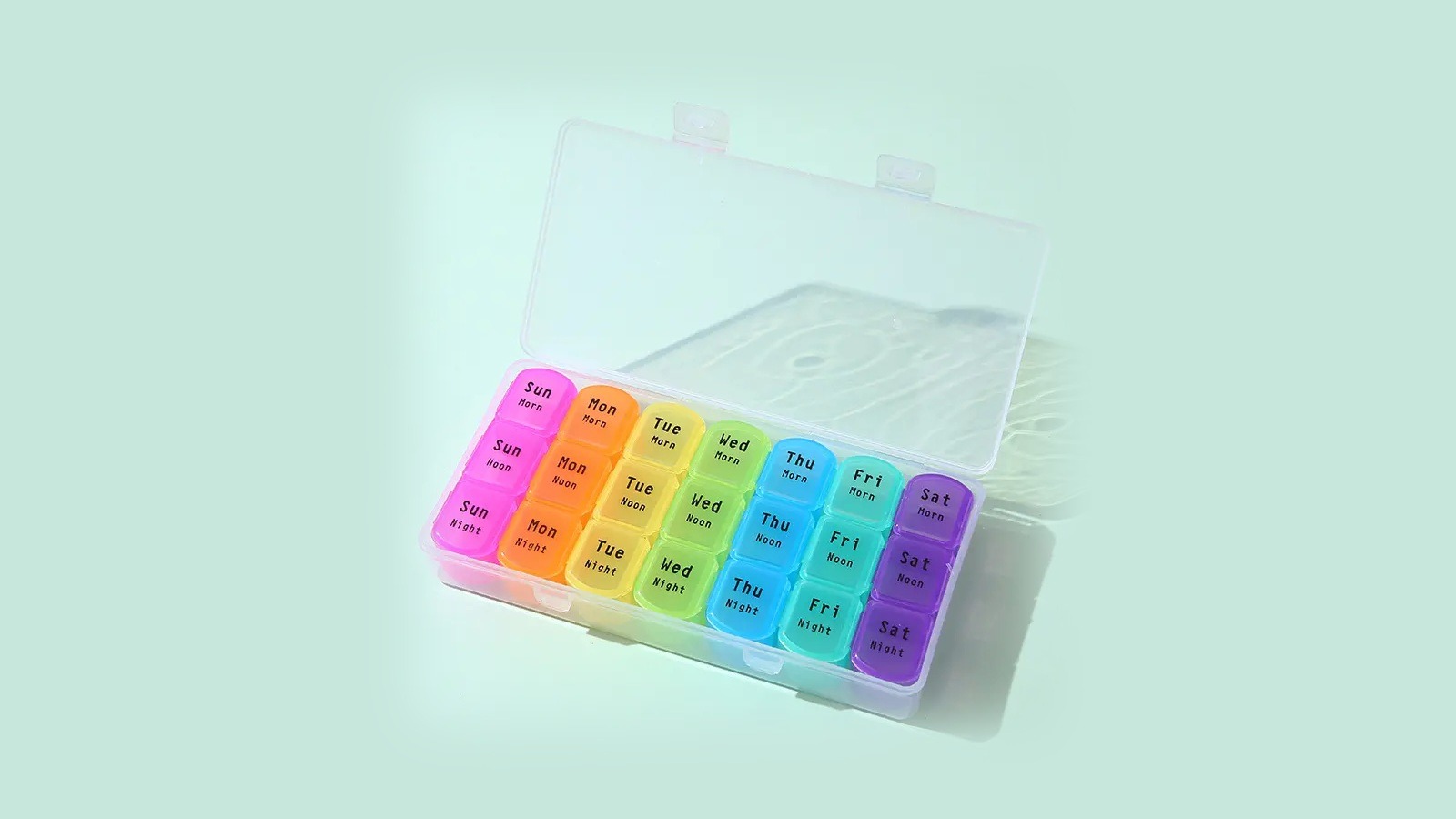
No novel mould is required. Standard weekly formats are the natural base — see the rainbow weekly pill box for a colour-differentiated shell.
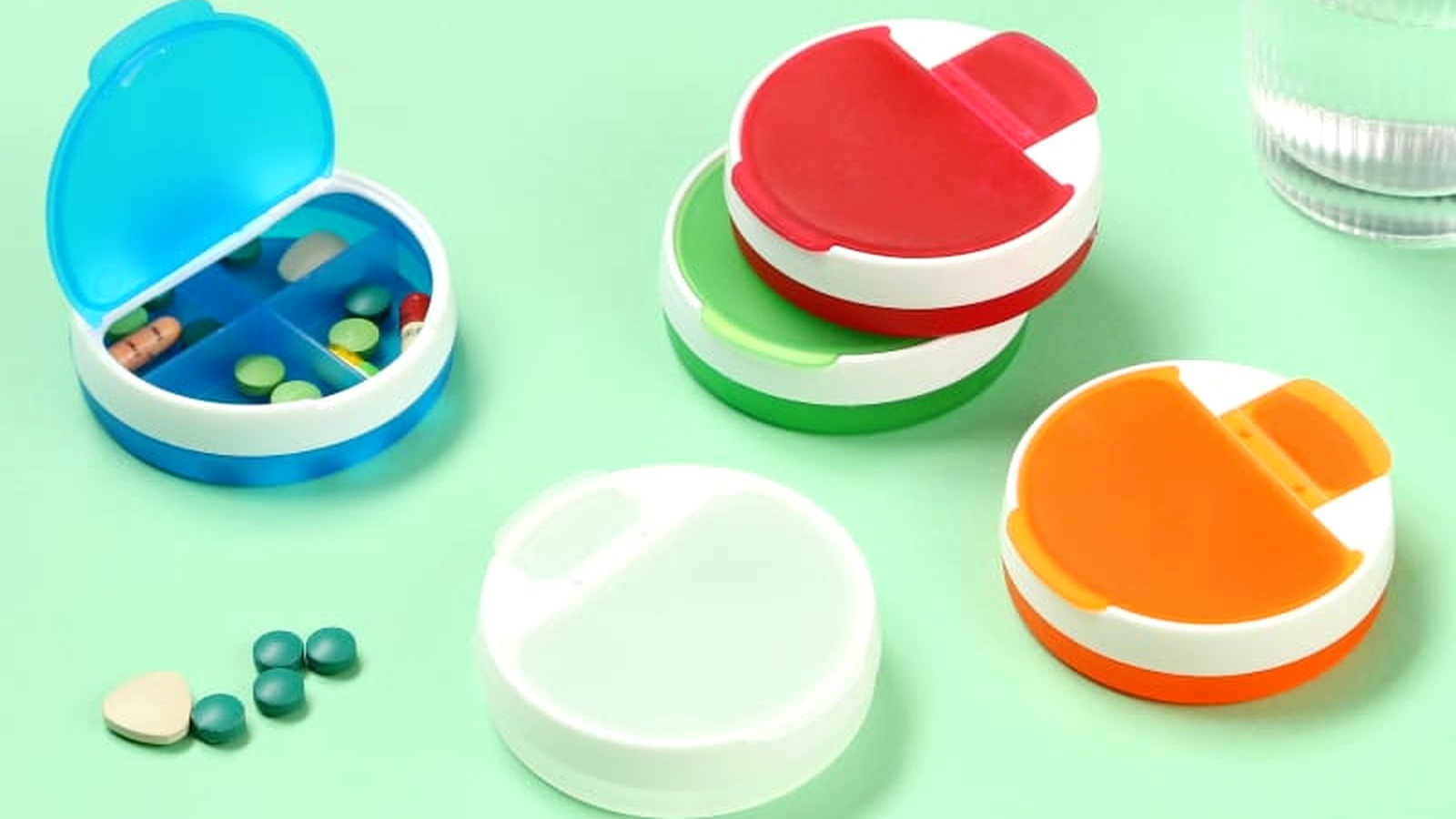
The small three-compartment daily case suits a compact per-person build. The value is added in how the pair is specified, labelled and packed.
What to Write Into the RFQ
- Set definition: two units per pack, with named colours assigned to fixed positions — not a random assortment.
- Colour control: resin or finish for each colour, a reference sample, and a stated tolerance for reorder runs.
- Identification: label surface, print method, and an abrasion result on the finished part.
- Capacity basis: usable internal dimensions at the narrowest point, plus a load test against a reference regimen.
- Closure and life: retention-force window on the finished box, a cycle count with a post-cycle check, applied to both units.
- Packaging: a carton that states which box is for whom, and whether the two cases ship separately without losing the colour mapping.
- Consistency: colour, fit and closure feel across the run, checked cavity to cavity.
- Boundary: a written note that the set is an organizer, not a child-resistant container.
A family two-pack is a simple purchase on the shelf and a specification problem in a purchase order. The specification is what keeps the second pill organizer from becoming the one nobody uses.