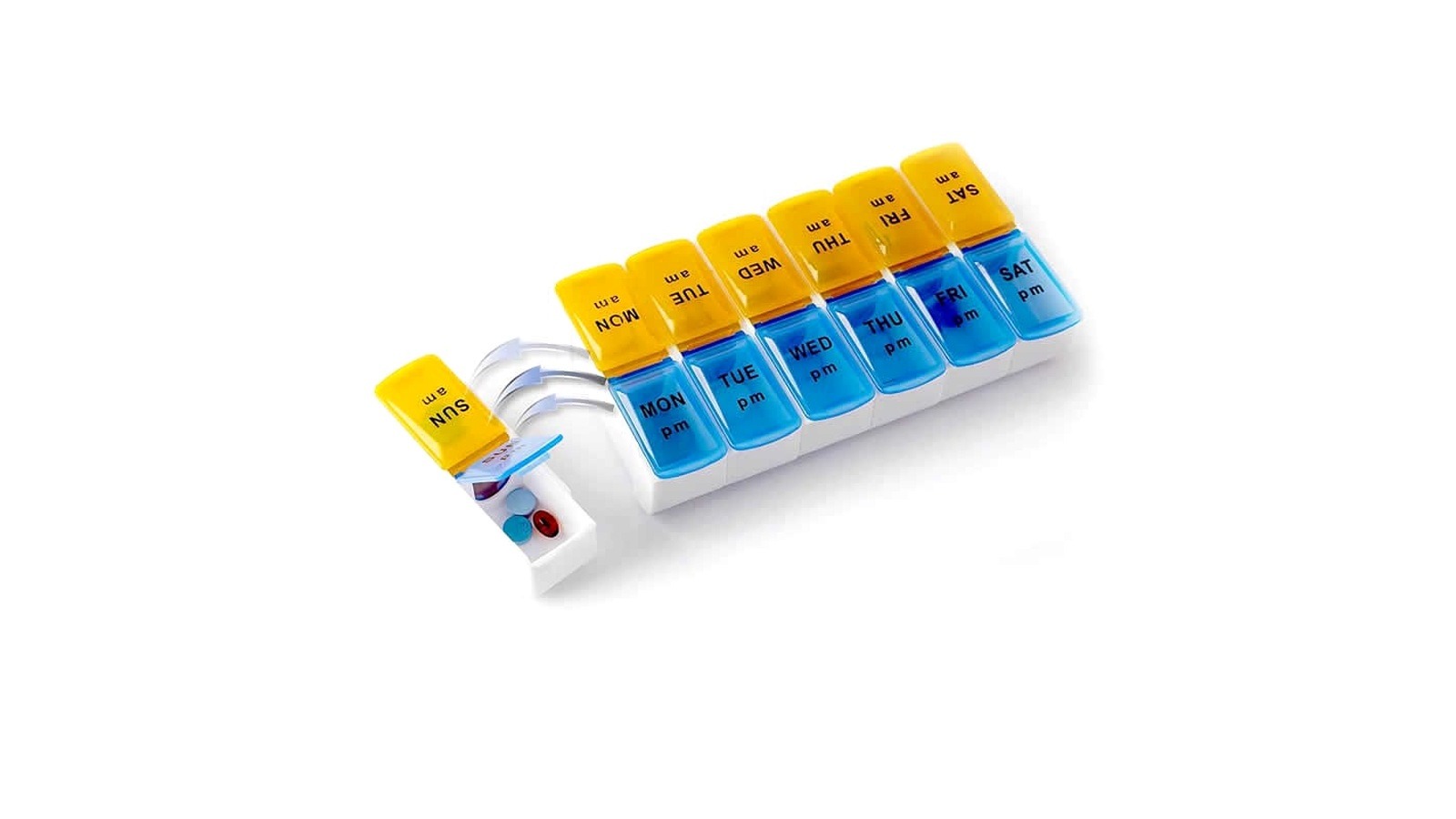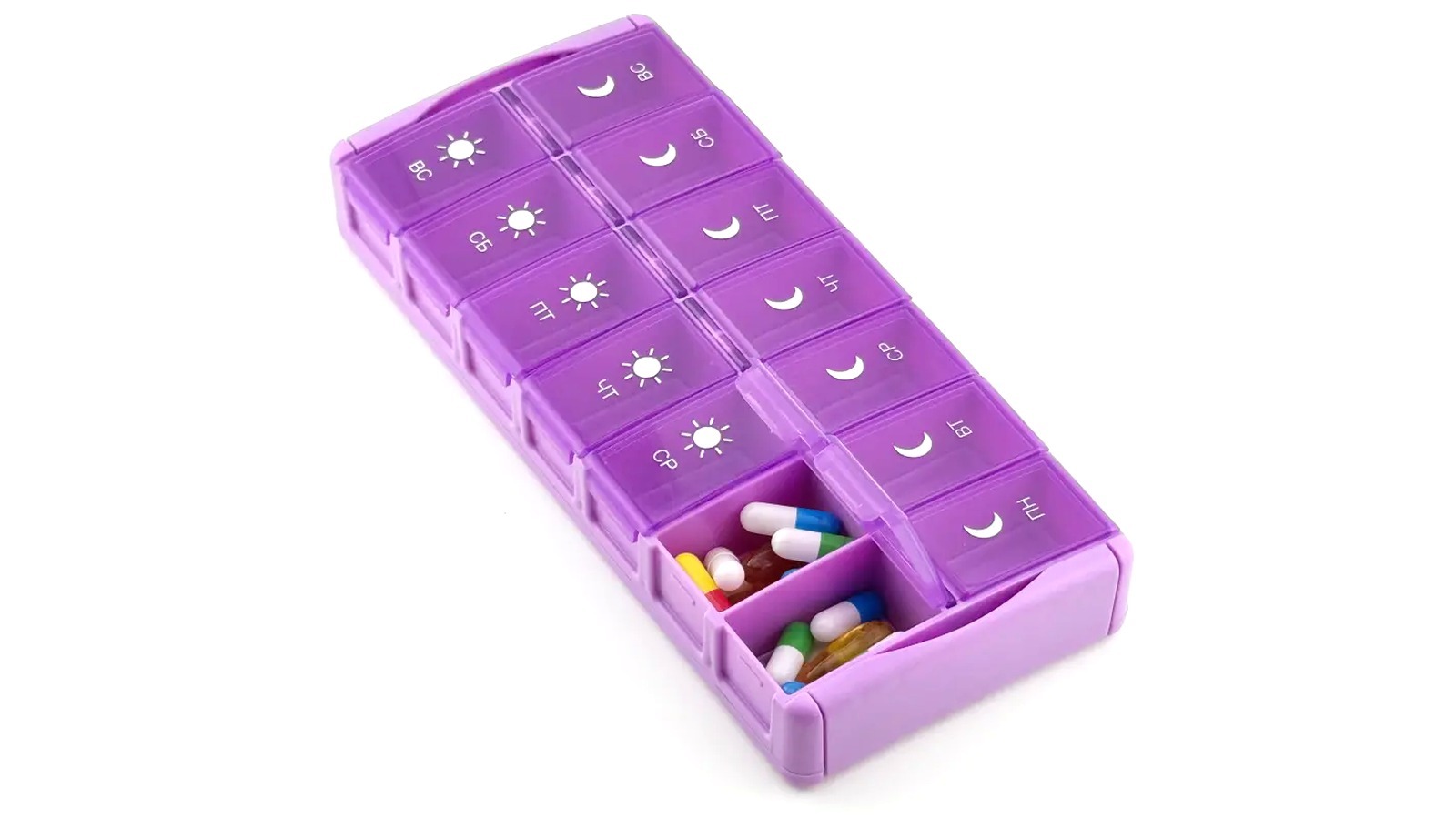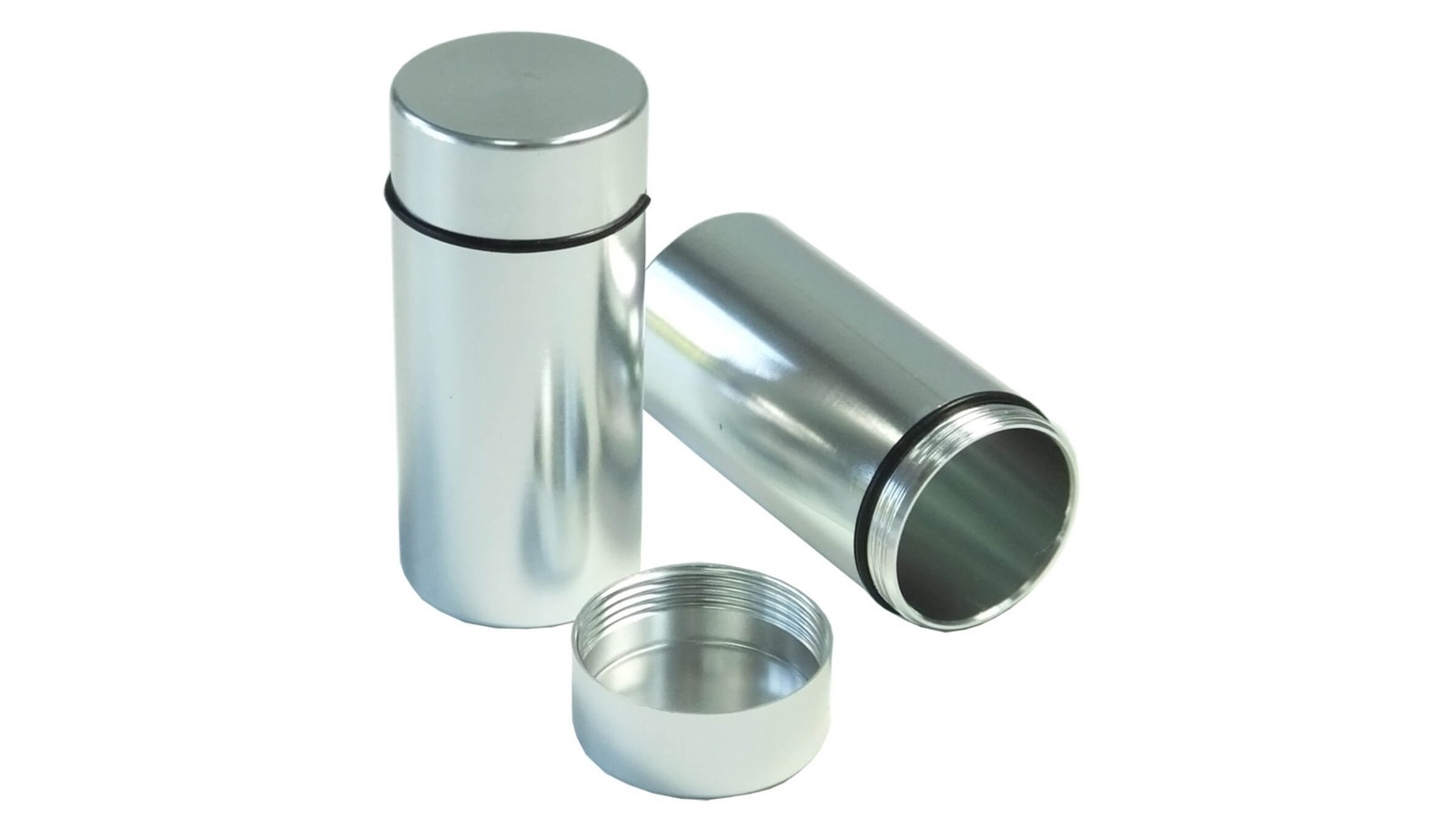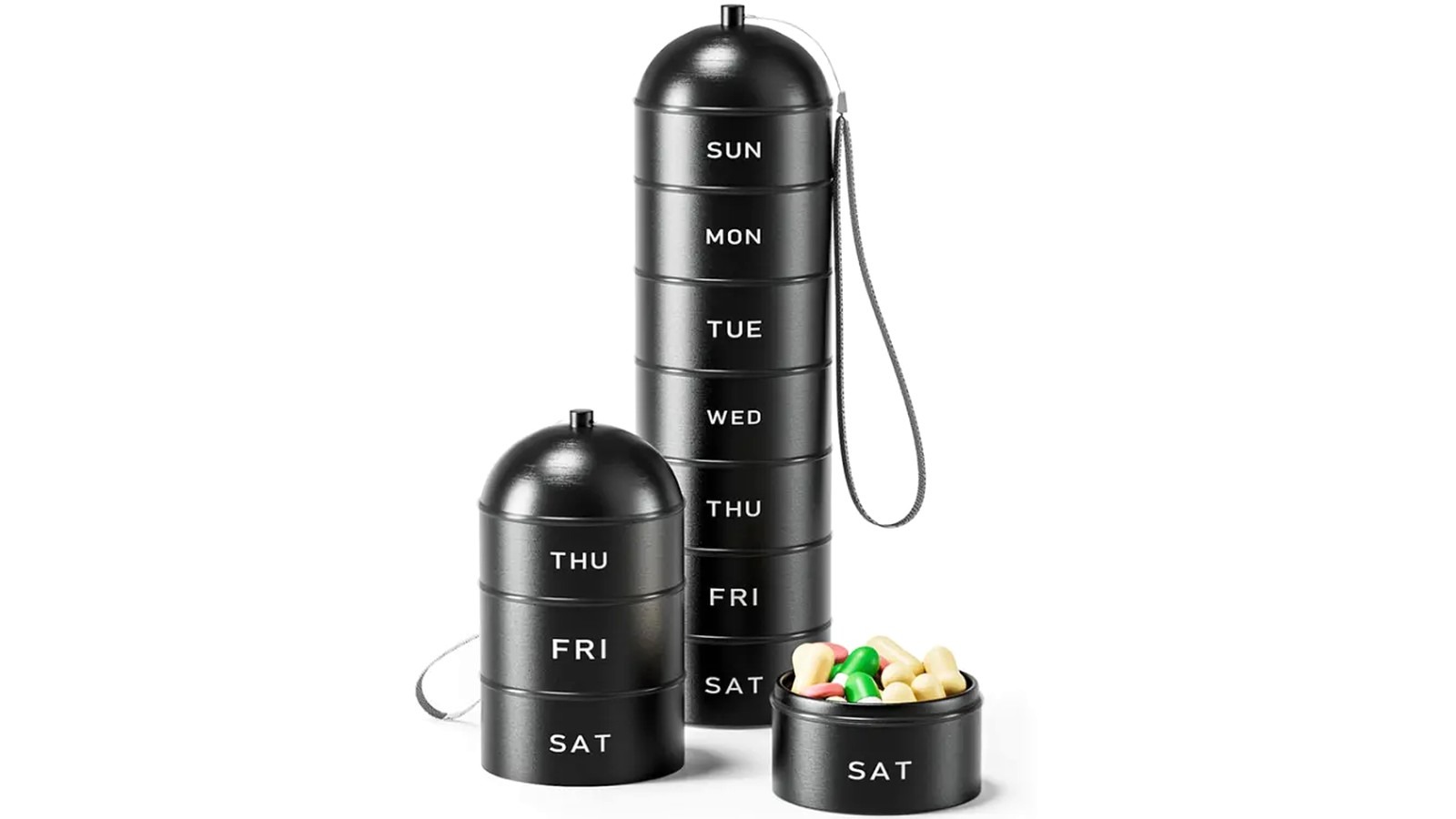
No honest calendar answer exists. Public sources put replacement anywhere from three months to two years, and at least one publisher contradicts itself across two articles in the same month. That spread is not a rounding error. It is what happens when a number is copied forward without the specification behind it.
A pill organizer does not expire on a date. It retires when a specific part stops doing its job: the hinge loses tension, the day marking stops being readable, the gasket hardens, or the compartment surface turns abrasive. Buyers who ask when to replace a pill organizer get months. Buyers who ask which part fails get a number they can inspect.
Why the Published Timelines Disagree
Six figures sit on page one: three months, three to six months, six to twelve months, one year, eighteen to twenty-four months, and one to two years. Not one of those pages names the test that produced its number.
Two of them come from the same publisher, on pages written weeks apart — six to twelve months in one guide, eighteen to twenty-four in another. That is not a nuance. It is one copied claim colliding with a different copied claim.
The shared error is treating “plastic” as one material. In moulded organizers, polypropylene homopolymer, copolymer, PPSU and ABS differ by an order of magnitude in flex-fatigue life.
The resin grades and their trade-offs are compared in the PP, ABS and PS material guide. A month count without a resin grade and a wall thickness is a guess with a citation.
The three-month figure usually comes from hygiene anxiety, not material testing. The reasoning is that a box handled daily accumulates residue. That concern is real, but it belongs to the cleaning schedule, not the replacement schedule. A box that cleans up completely has not expired.
One source is more useful than the rest: a cleaning guide that refuses to give a month count and lists failure signals instead — a lid that no longer latches, plastic that clouds or cracks, day markings that wear off, residue that will not wash out.
That is the right shape of answer, even without the engineering behind it. The routine itself is covered in the pill case cleaning guide.
The Four Parts That Actually Retire
A box fails at its weakest moving part, not as a whole. Four components decide the retirement date, and every one of them can be checked on a sample before an order is placed.
The hinge and the latch
Most weekly organizers use a thin living hinge, commonly 0.25–0.40 mm thick. Published engineering guidance puts flex life above one million cycles for PP homopolymer, 500,000–800,000 for copolymer, 300,000–500,000 for PPSU, and under 100,000 for ABS. Thicker is not stronger: molecular orientation drops past roughly 0.38 mm.
Marketplace claims sit far below those figures. Five unrelated listings repeat “10,000 cycles” for the hinge, while one brand quotes 100,000 cycles for printing on a different line. These are seller claims, not test reports. None states the bend angle, the load, or the failure criterion.
The procurement action is to ask for the tooling, the bend angle, the cycle rate, the failure definition and the sampling plan. Latch geometry and what to specify are covered in the closure guide.
The day label
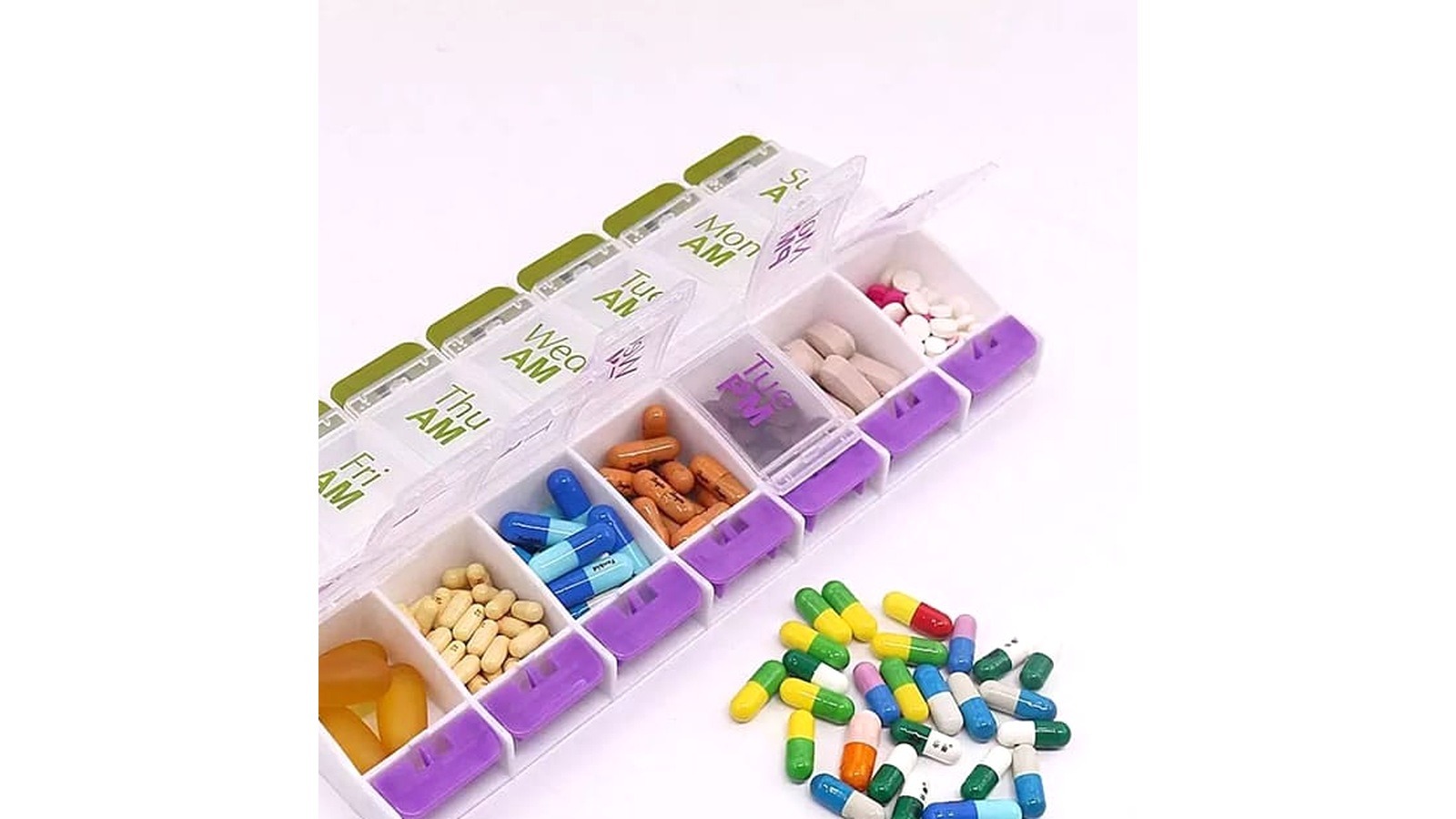
Faded or scratched day markings account for about 7.4% of category complaints, and the cause is usually print, not use. Silk screen, UV varnish and pad printing sit on the same shell with very different abrasion resistance, and the UV-cured format is the only one with a public cycle figure.
Ask which process is used, what the abrasion result is on the finished part, and whether the marking survives the cleaning agent the user will actually apply. A print that fails after ten wipes is a one-quarter-life product.
The process comparison is in the faded-label guide, and the wider options are in the UV printing guide.
The gasket or seal
Where a box claims moisture protection, the gasket is the real expiry part. Elastomers fail by compression set: the seal takes a permanent deformation, stops springing back, and the lid closes without preload. The box still looks fine, which is why the failure is missed.
Specify the gasket material, its compression-set limit, and a re-check after heat and cleaning cycles. A desiccant cannot compensate for a hardened seal. It manages vapour inside a closed system, not a leak, as the gasket and desiccant guide explains.
The compartment surface
Repeated opening and tablet edges raise surface roughness, and roughness holds residue. This is why a box can look clean and still be past its service life. The useful specification is a surface-finish grade plus a cleaning-agent compatibility list, not a hygiene claim.
What “10,000 Cycles” Really Means
The same phrase covers three different tests. In one listing it is the hinge. In another it is the UV-printed day marker. In a third it is a claim about the whole product with no test named. The numbers differ by ten- to a hundredfold because the conditions differ, not because the parts do.
A buyer can collapse the ambiguity into one RFQ line: hinge, 180° open-close, stated load, stated rate, failure at visible whitening or separation, AQL stated. Report cycles to failure on finished parts. The same pattern works for the label and the gasket.
If the organizer is also sold as child-resistant packaging, life becomes a compliance question. 16 CFR §1700.15 requires the closure to stay effective for the product’s useful life. A latch that grips when new and loosens after cycling does not qualify.
Ask for opening-force and closing-force data after cycling, not only a pass certificate. The regulatory filing list is separate, and is covered in the U.S. safety regulation guide.
A Replacement Part Beats a Replacement Box
Detachable is not replaceable. A lid that pulls off but cannot be bought as a spare turns a repairable box into a disposable one, and the user finds out at the worst moment.
Three supply models exist. Pouch systems sell refill packs. At least one metal weekly model ships with three spare lid sets. Most hard-shell models treat a broken lid as the end of the box. Only the first two change the retirement economics.
Put spare-part availability in the contract: which components are sold separately, at what price and MOQ, and whether a spare set ships with the first order. That answer separates a one-year product from a five-year platform.
The difference between pre-purchase inspection and end-of-life retirement is drawn in the four-gates guide.
The economics are easy to miss. A spare lid set costing a few percent of the unit price extends service life by years. A box that must be replaced whole turns every lid failure into a new sale at a higher price point. The first model lowers the buyer’s total cost; the second raises short-term revenue and caps retention.
Why Retirement Timing Is a Procurement Number
For a retailer, replacement timing sets the reorder curve. For a care provider, it sets the annual exchange budget. For a pharmacy, it sets the refill conversation. A product with a predictable retirement point can be sold as a subscription or a two-pack. A product that fails at random cannot.
Durability tiers follow the same logic. A metal or thick-wall model with replaceable parts serves the high-retention buyer. A low-cost shell serves the accessibility channel, where frequent replacement is expected. Both are legitimate. They need different specifications, not different marketing.
What to Put in the RFQ
- Resin grade and hinge wall thickness, with a flex-fatigue target stated as cycles to failure at a defined angle and load.
- Day-marking process, abrasion result on the finished part, and resistance to the named cleaning agent.
- Gasket material, compression-set limit, and a re-test after heat and cleaning cycles.
- Surface-finish grade inside the compartments, plus a list of compatible cleaning agents.
- Spare-part availability for lid, divider and gasket: sold separately, price, MOQ, and whether included with the first order.
- Sampling plan: cavity-to-cavity consistency and AQL for the hinge and label checks, using the method in the batch consistency guide.
- If child resistance is claimed: opening and closing force after cycling, tested against the standard text used by the laboratory.
None of this produces a month count, and that is the point. A decision to replace a pill organizer on part-level evidence survives a supplier change, a resin change and a new mould. A decision made on a copied number does not.
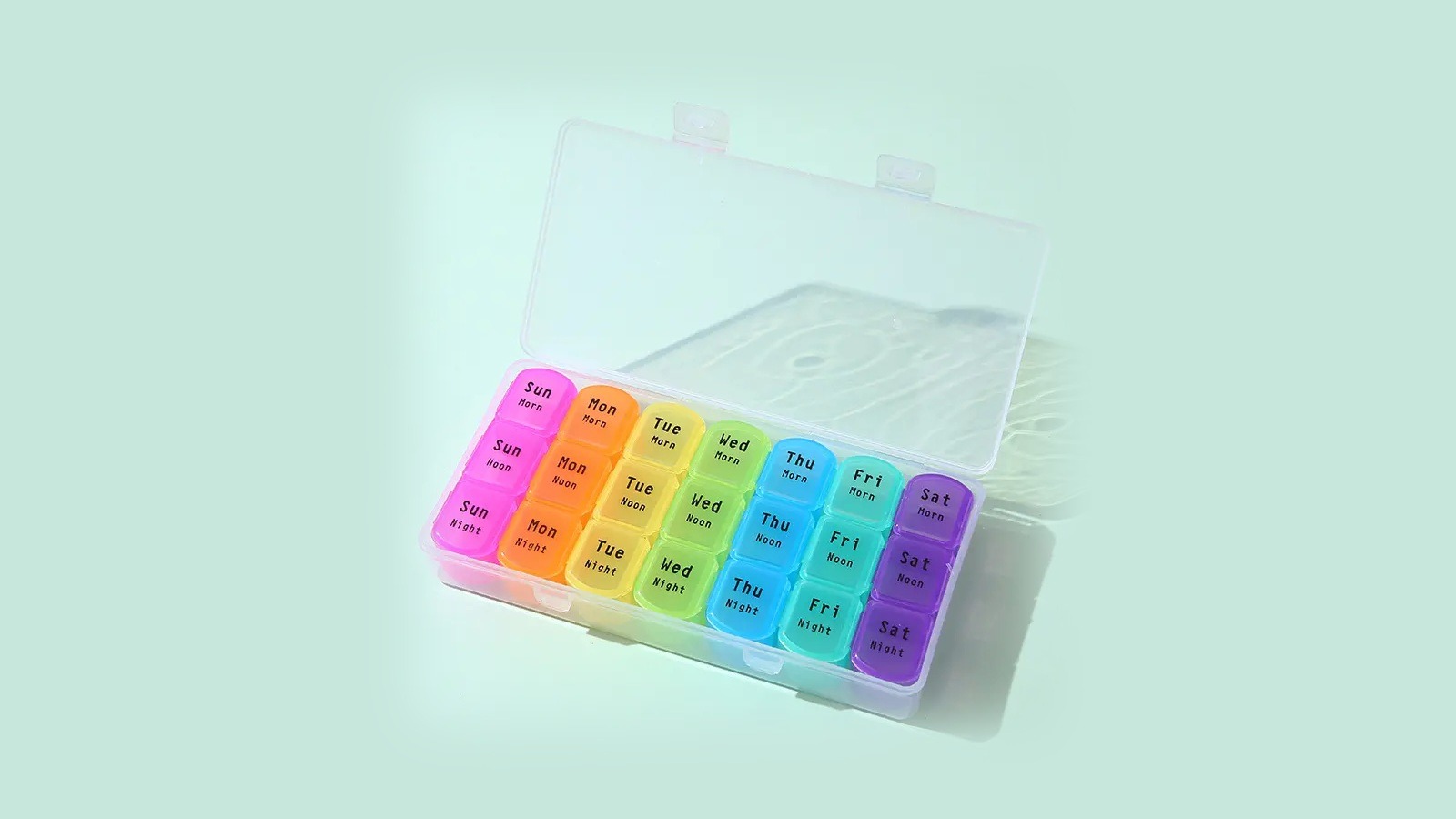
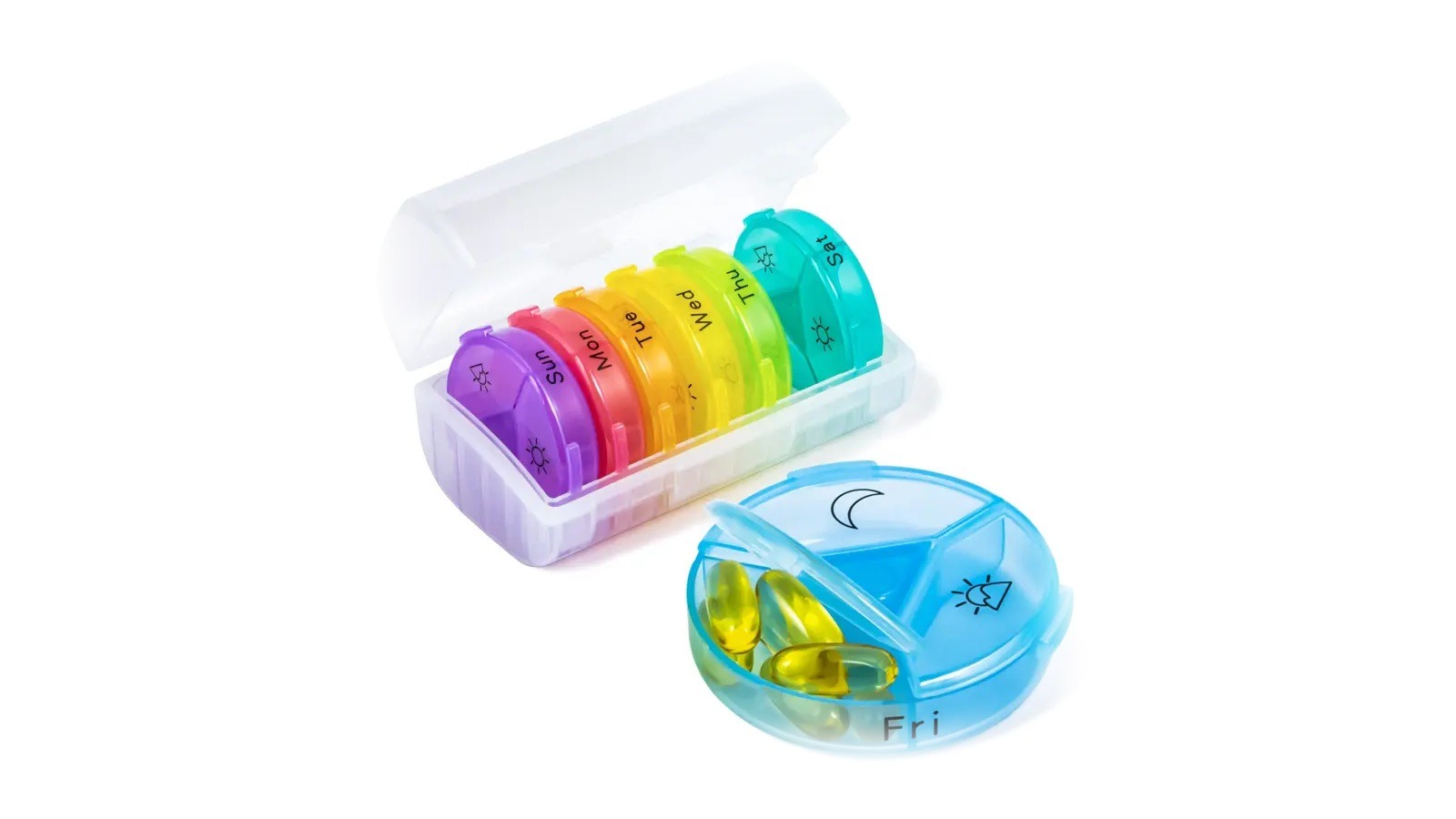
The 21-compartment weekly organizer and the portable weekly pill box cover the two formats most often specified for this check.
A labelled three-times-a-day case and a compact travel shell. Both can be quoted with hinge, label and gasket data on the finished part.