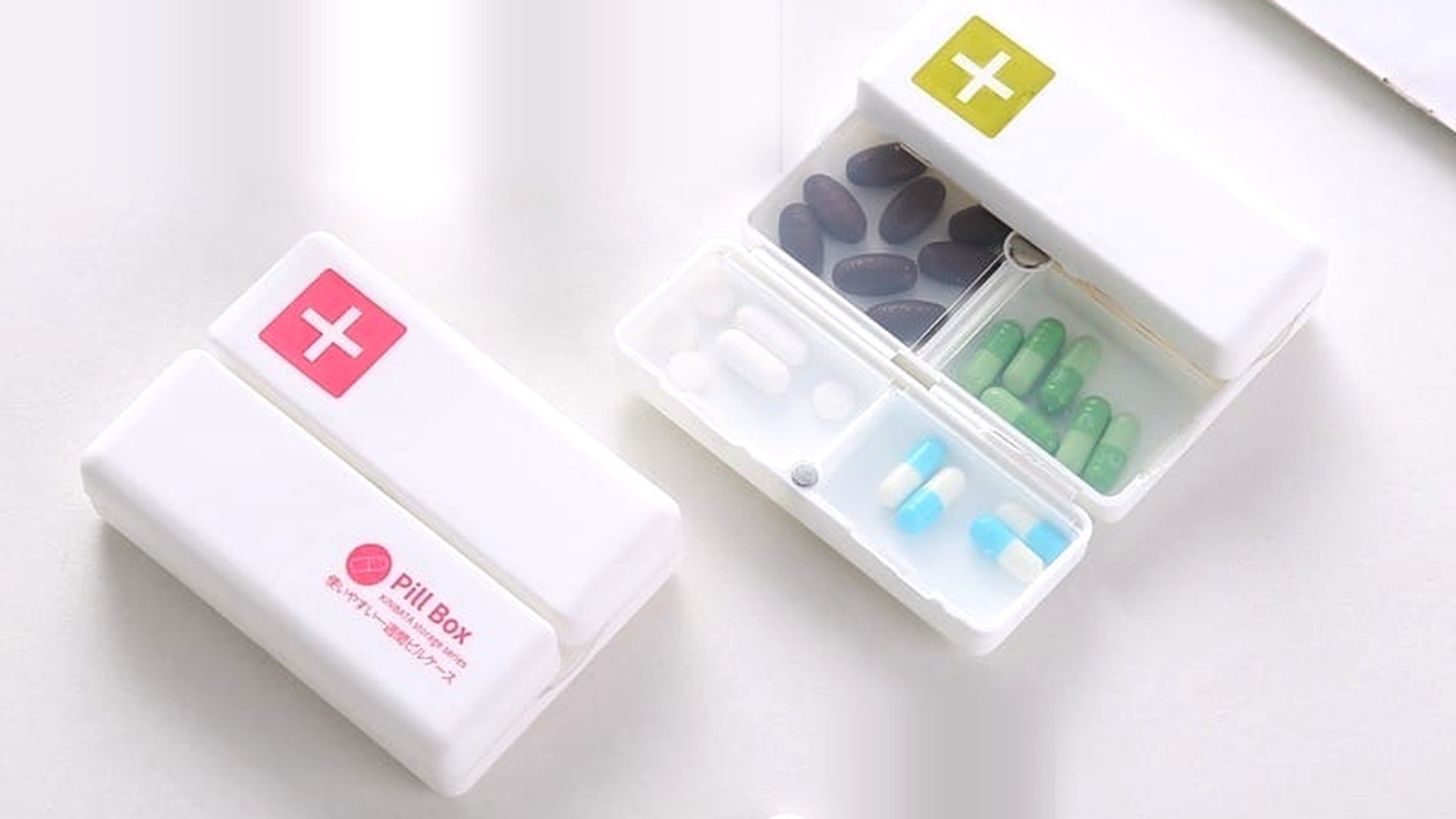
A pill sitting in the wrong compartment looks like a filling mistake, but plenty of them travel after the lid is closed. A tablet leaves Monday, rides a vibration or a tilt through the day, and lands in Tuesday. By the time anyone notices, half the week has been dosed on trust.
Keeping pills from switching days is not a labeling chore. It comes down to three measurable dimensions — how far the dividers stand above the pill pile, the gap between the tray and the closed lid, and how precisely a rotating tray lands on each slot. All three can be specified, measured and tested before you commit to a tool.
What Switching Actually Is
The failure this guide covers is migration with the lid shut. A pill climbs or slips past a divider into the neighbouring compartment while the box looks properly closed. That is a different problem from a latch that pops open in transit, which has its own acceptance logic in which latch actually stays shut on the road.
It is also different from capacity. Whether a compartment holds the day’s regimen is a sizing question, covered in the pocket pill box sizing guide. Here the box is big enough, closed, and the pill still moves. Those three failures get blamed on the same user, and only one of them is geometry.
Accessibility checklists describe the consequences bluntly. A blindness-service checklist classifies the mixing as cross-contamination — powders from one pill stick to another and change how they work — and traces a chain that starts with lids that are hard to open: users give up closing them, and neighbouring compartments share one open tray.
The Failure Chain Is Already Written Down
A published patent describes the mechanism. US12551410B2, a pill dispenser application, states in its background that a pill may wedge between a partition top and the cover’s bottom surface — and when the cover rotates, the pill may be ground and damaged, driven into other cavities, or leave debris that taints other compartments by odor.
One wedged pill, in other words, can become three failures at once: a crushed tablet, a wrong dose, and a smell that spreads to the pills next door. The document is cited here as a published patent’s own account of the problem, nothing more.
The public web still treats all of this as a filling discipline. Pharmacy blogs and supplier posts teach the same behavioural answers — work from the bottle, fill one medication at a time, check the labels. Useful habits, but none of them touch the geometry that lets a pill cross a wall that is closed.
Three Dimensions Decide It
First, partition height. A divider only works while it stands above the pile. Overfill a compartment and the tallest tablet gains a ramp; the next tilt walks it over the wall. Headroom above the tallest dosage form the SKU will carry is a specifiable number, not a styling choice.
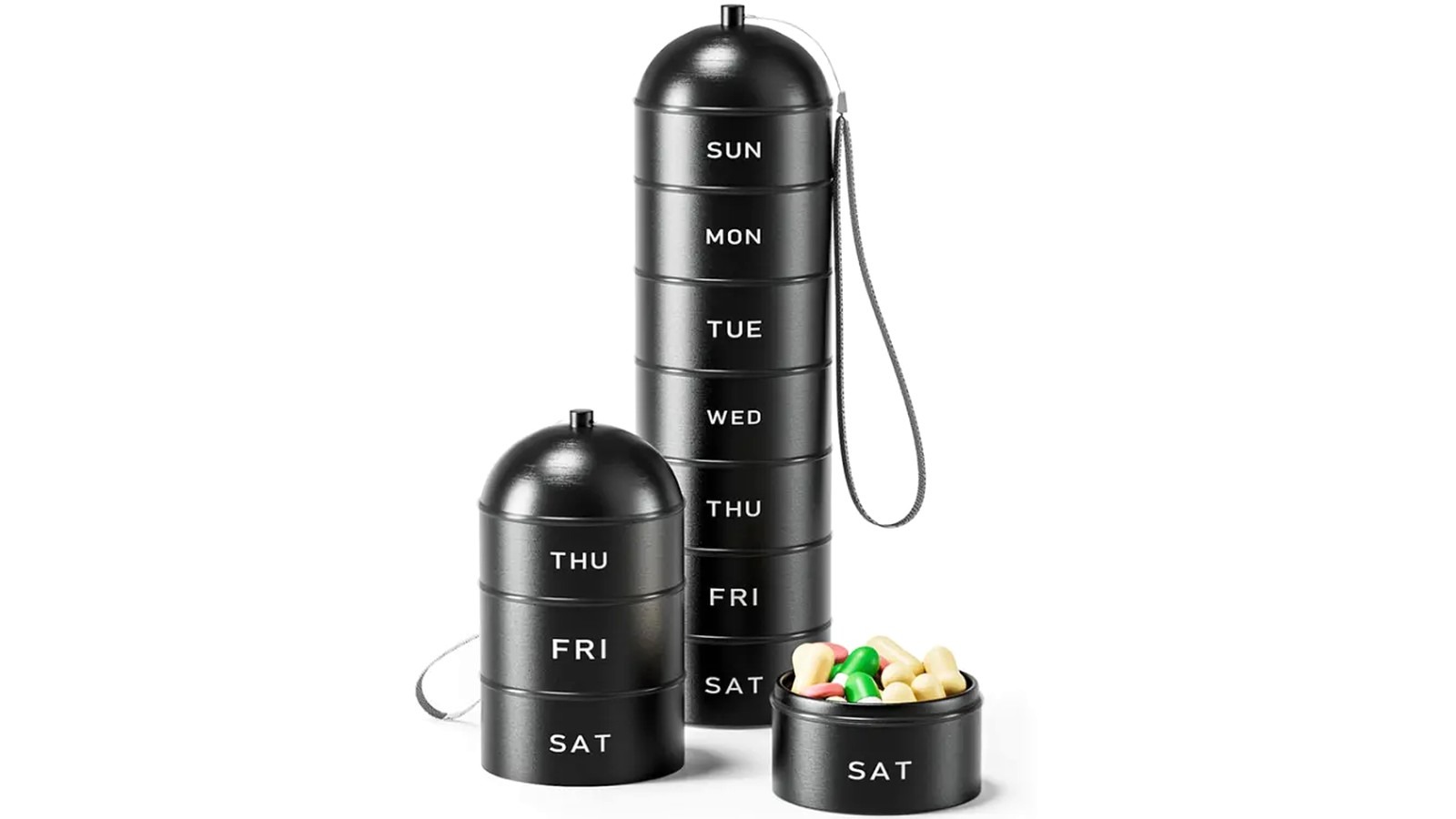
Second, the lid-to-tray gap. Two independent brands of rotary weekly organizers write the same threshold into their listings — a gap of less than 1 mm between the compartment tops and the upper lid, marketed as an anti-mix design.
The claims are supplier marketing, not test data. They do prove the dimension is commercially adjustable, and a number this tunable belongs in the purchase order rather than only in ad copy.
Third, detent accuracy on rotating trays. A long-term user review of a 28-day carousel records small pills going into the wrong days when the device is shaken to free stuck medication, and a tray that released the bedtime slot instead of the evening one. When positioning drifts, the box does not just mix days — it mixes times of day.

Review-site numbers make the threshold plausible. One automatic-dispenser review describes a tray-to-cover seal under two millimetres keeping small tablets in their slot instead of migrating into a neighbour — affiliate, unverified. Between one and two millimetres is where the market argues; your figure is set by resin, tool and tolerance stack.
The Pills That Jump First
Form factor drives the risk. Review aggregations of carousel dispensers report the worst jamming with gel capsules, large oval tablets and sticky medications — exactly the shapes that wedge between a partition and a lid, where the patent’s grinding chain begins.
Small tablets fail the opposite way: they do not jam, they migrate quietly. The same 28-day carousel review calls a single loose tablet in the wrong slot the kind of quiet error that persists for a month — again affiliate-sourced, unverified. Nobody hears a pill cross a wall.
Transport makes both worse. A weekly box rides in a bag on its side for hours, so pills rest against the lid instead of the floor, and every step tests the gap. Shaking and noise share a root with this failure — the rattle-in-a-bag problem and the switching problem meet at the same loose pill.
The Acceptance Test That Stops Pills From Switching Days
The test is a shake test. Fill every compartment with the dosage forms the program actually ships, close all lids, run a fixed protocol — duration, axes, drop count — then open and count each compartment. The pass criterion is zero migration, and the protocol is whatever both sides sign, because no category standard exists for this box.
The verification line reads: in-house check on finished parts, third-party report where the program justifies it.
Then measure the gap instead of believing the claim. With lids closed, run feeler gauges between each compartment top and the lid at several positions, including the loosest cavity on the plate. Two brands already publish “less than 1 mm” — ask your supplier what their number is and how it is measured.
For rotating designs, cycle the tray through full travel and record where each slot actually lands against the window. Sample across cavities and shifts, because tolerance drift is what lets one good sample lie — the same reasoning as specifying cavity balance.
What to Write Into the RFQ
- Lid-to-compartment gap: the number, the gauge and the measuring method, checked with lids closed.
- Partition headroom: divider height versus the tallest dosage form the SKU will carry.
- Detent tolerance: slot-to-window positioning error over full tray travel, for rotary formats.
- Shake-test acceptance: dosage forms, protocol, duration, and a zero-migration criterion on finished parts.
- Verification: in-house test records, plus a third-party report on finished parts where the program justifies it.
- Claims discipline: any anti-mix wording on packaging or listings needs the number behind it documented.
Habits still matter — one bottle at a time, labels checked, a fixed refill day. But no routine survives a gap that passes tablets through a closed wall, and behaviour advice is all the first page of search offers. If the sample passes the shake test yet pills stay hard to reach, that is retrieval — the four-gate check in what makes a pill box practical.
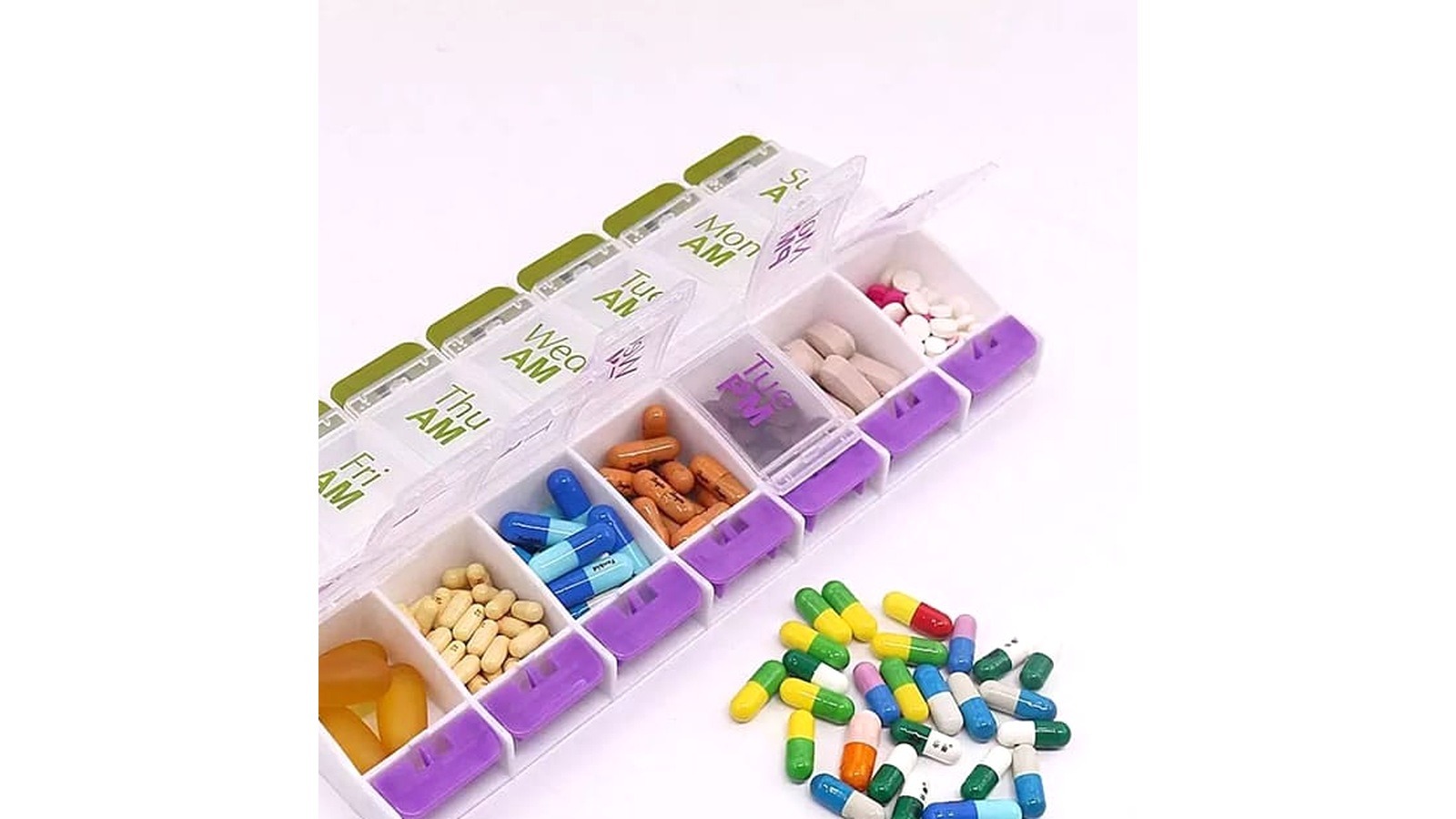
For fixed-fill weekly formats, the 14-compartment AM/PM organizer and the four-row 28-compartment case show the two layouts the shake test and gap check apply to.
The three-times-a-day weekly adds a third wall per day. Same lids, same walls, same acceptance logic — and the cheapest day to stop pills from switching days is the day before the tool is cut.
Same lids, same walls, same acceptance logic — and the cheapest day to stop pills from switching days is the day before the tool is cut.