Pill Box Manufacturing: What Buyers Must Vet Before Ordering
Pill box manufacturing runs through five stages: mould design, injection moulding, assembly, inspection and packing. In my experience the money leaks at stage one and stage four, not at the moulding machine everyone asks about. Vet tooling and inspection properly and the rest of the programme tends to hold.
What Pill Box Manufacturing Looks Like Stage by Stage
This is the sequence I walk overseas buyers through when a factory quotes a programme on a 150–250 ton machine.
- Mould design — 10–15 days. Gate, draft and shrinkage get frozen here.
- Trial shots (T1) — 2–3 days. First article check and hinge fit.
- Moulding — 25–35 second cycle. PP or PS, in-line vision on flatness.
- Assembly — Hinges, gaskets, pad printing, desiccant.
- Final check — AQL sampling, polybag, carton drop test.
Where the Money Actually Leaks
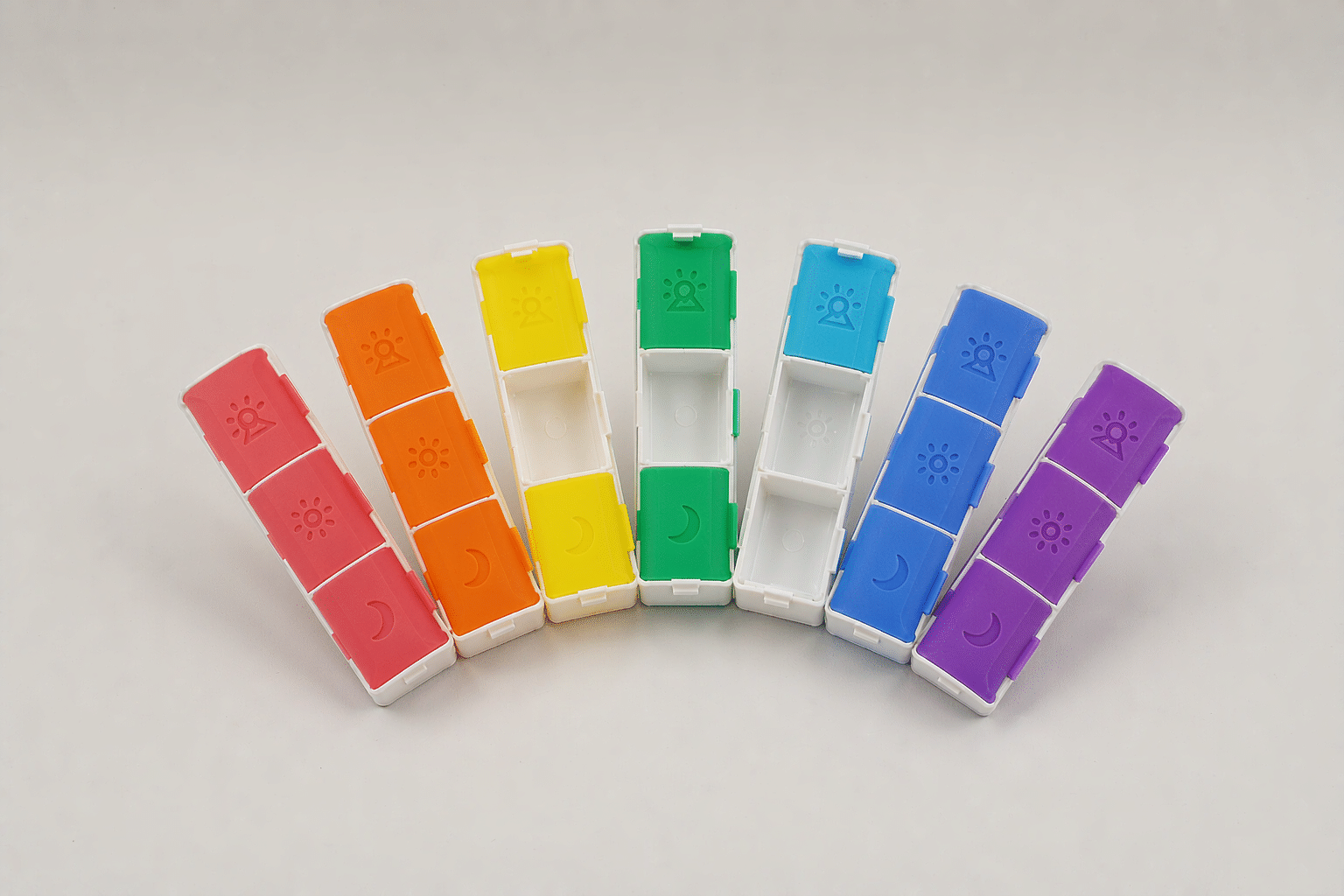
Resin is only 30–40% of unit cost on a 3-compartment daily box. The rest is cycle time, scrap rate and shots lost to warped hinges.
A plant running 8% scrap on a 34-second cycle is roughly 20% more expensive than one running 3% on 31 seconds, at the same resin price. I have audited two plants six kilometres apart with almost exactly that spread.
Tooling Decisions You Cannot Undo Later
Cavity Count, Steel Grade and Draft Angles
Cavity count sets your per-unit economics. A 4-cavity mould costs about 1.8× a 2-cavity one but nearly halves cycle cost per part above 50,000 pieces.
P20 steel is fine for 100,000–300,000 shots. Past that, specify 718H or S136, and harden the hinge pin area — it wears first.
Draft of 0.5–1° per side prevents dragging. Under 0.3° you scuff the outer wall and end up rejecting a shipment.
Why the Hinge Design Sets Your Returns Rate
A living hinge moulded into the same PP shot is cheapest and fails first: roughly 5,000–8,000 open-close cycles before it whitens and cracks.
A separate pin hinge adds a second mould and an assembly step, but pushes past 30,000 cycles. For pharmacy and hospital channels, that gap is the whole argument.
Process Control: The Numbers to Ask For
Cycle Time, Melt Temperature and Regrind Ratio
Ask for the process sheet — dated, signed, not a verbal assurance. On PP pill boxes melt temperature typically sits at 200–230 °C with mould temperature at 30–50 °C.
Regrind is the figure most plants will not volunteer. Above 20% regrind in the mix, colour drifts and impact strength drops measurably. Cap it at 15% in writing.
Warpage and Shrinkage on Thin Walls
PP shrinks 1.3–2.0%. On a 1.2 mm compartment wall that shrink is exactly why lids stop snapping shut once the mould warms up.
Ask for a shrinkage report from the T1 shots before you sign off the mould. It costs nothing. It has saved me one full re-cut, and that was the cheap part.
Assembly and In-Line Checks
Gaskets and Moisture Sealing
On moisture-proof builds the gasket is the product. A 0.3 mm groove error turns a sealed pill box into a leaking one at 40 °C in a July warehouse.
If your market is humid, ask for a desiccant chamber and a full 40 °C / 75% RH exposure test, not a two-hour check.
Printing That Survives Alcohol Wipes
Pad printing on PP needs flame or plasma pre-treatment. Without it the logo wipes off the first time a nurse uses an alcohol swab.
Ask for 50 double rubs with 70% IPA and no visible fade. Get the sample that was tested, not a photo of it.
Secondary Operations You Should Price In
Ultrasonic welding, hot stamping and laser etching sit outside most standard quotes. Ask which operations are in-house. Outsourced secondary work adds 3–5 days and a second quality signature you cannot audit.
Sample Approval Stages That Protect You
Sample rounds are the cheapest stage of pill box manufacturing and the one buyers skip most often. Three sign-offs matter, and only one of them is binding.
T0, T1 and the Golden Sample
Tooling normally delivers two or three sample rounds. T0 only proves the mould closes; T1 proves it can hold dimensions across a full shot sequence.
The golden sample is the part production gets measured against, so sign off at T1 with a dimensional report attached — never on the hand-picked part someone walked into the meeting.
Keep Your Own Sealed Reference Part
Keep a sealed golden sample in your own office, not the factory showroom. When a shipment arrives that looks slightly off, that sealed part settles the argument in one measurement.
Final Inspection, AQL and Paperwork
AQL Levels That Make Sense
Use AQL 0.65 for critical defects (sharp edges, broken hinges), 2.5 for major (colour drift, print offset) and 4.0 for minor cosmetics.
Tighter cosmetic limits look rigorous on paper. In practice they generate rejections no factory can control, and you end up paying for that argument in unit price.
Reports to Hold Before the Container Ships
Hold FDA food-contact or EU 10/2011 migration reports on the resin grade actually purchased. Certificates issued against a different grade are worthless at customs.
The audit logic in our guide on FDA pill box compliance applies to every part of the box.
Vetting the Factory, Not the Catalogue
Questions That Expose a Trading Company
Ask the tonnage of the machine running your mould, the resin brand and grade on your last batch, and for a dated in-process inspection record.
Traders answer the first question fast and stall on the second. If replies come back within the hour and stay vague on tonnage, you are talking to a middleman. See our pill box manufacturer selection guide.
Open a Real Housing Sample Twenty Times
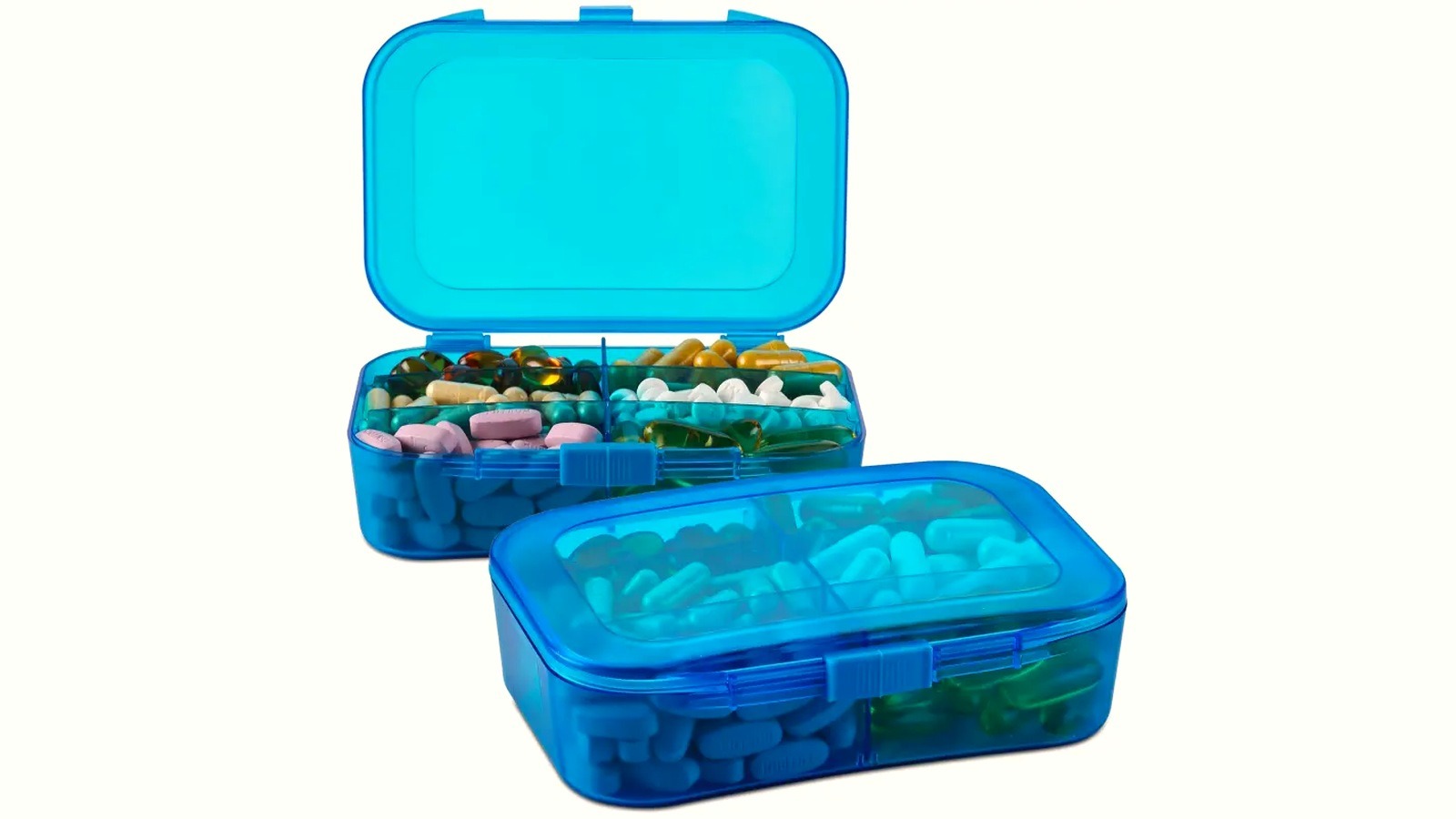
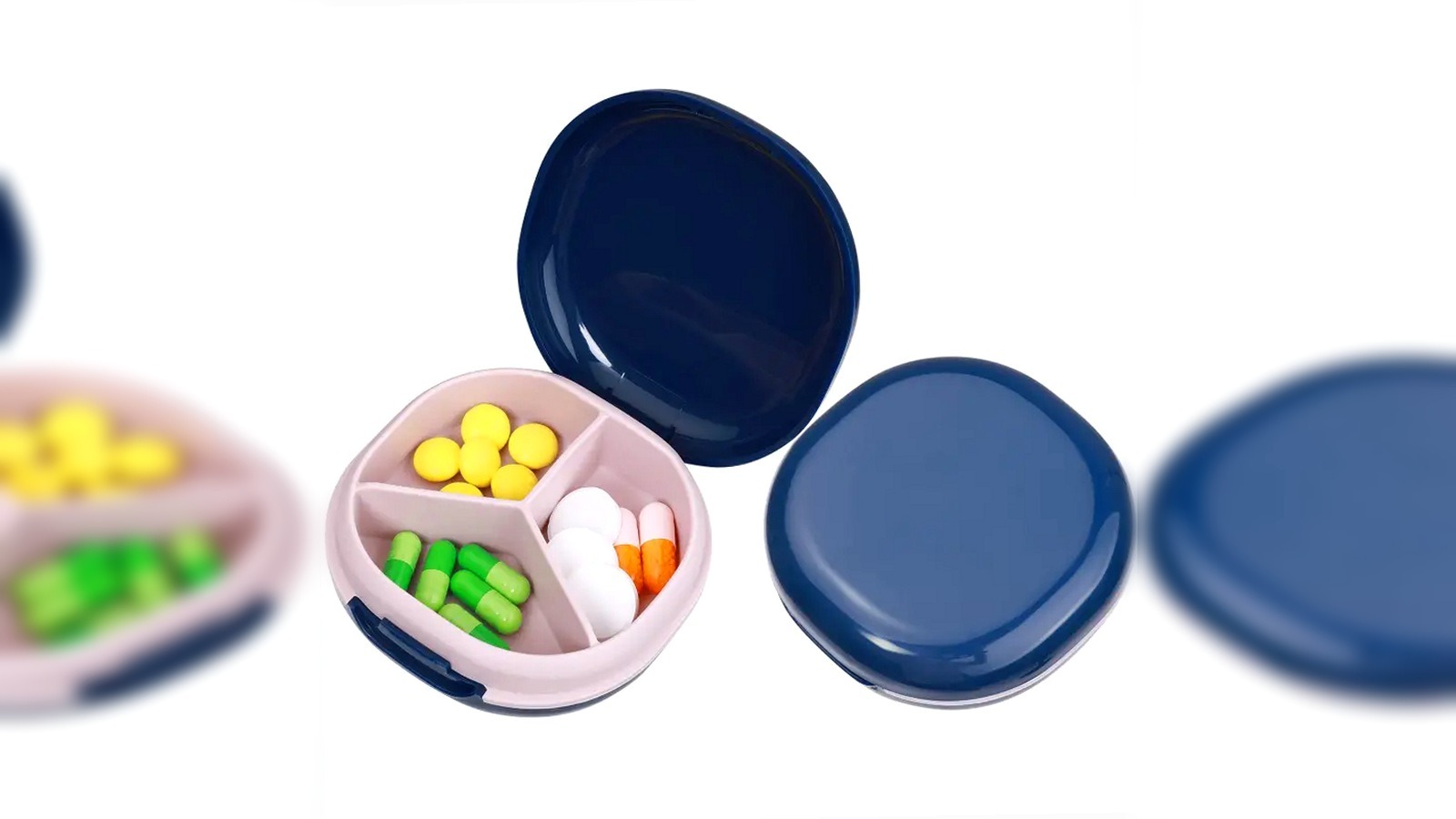
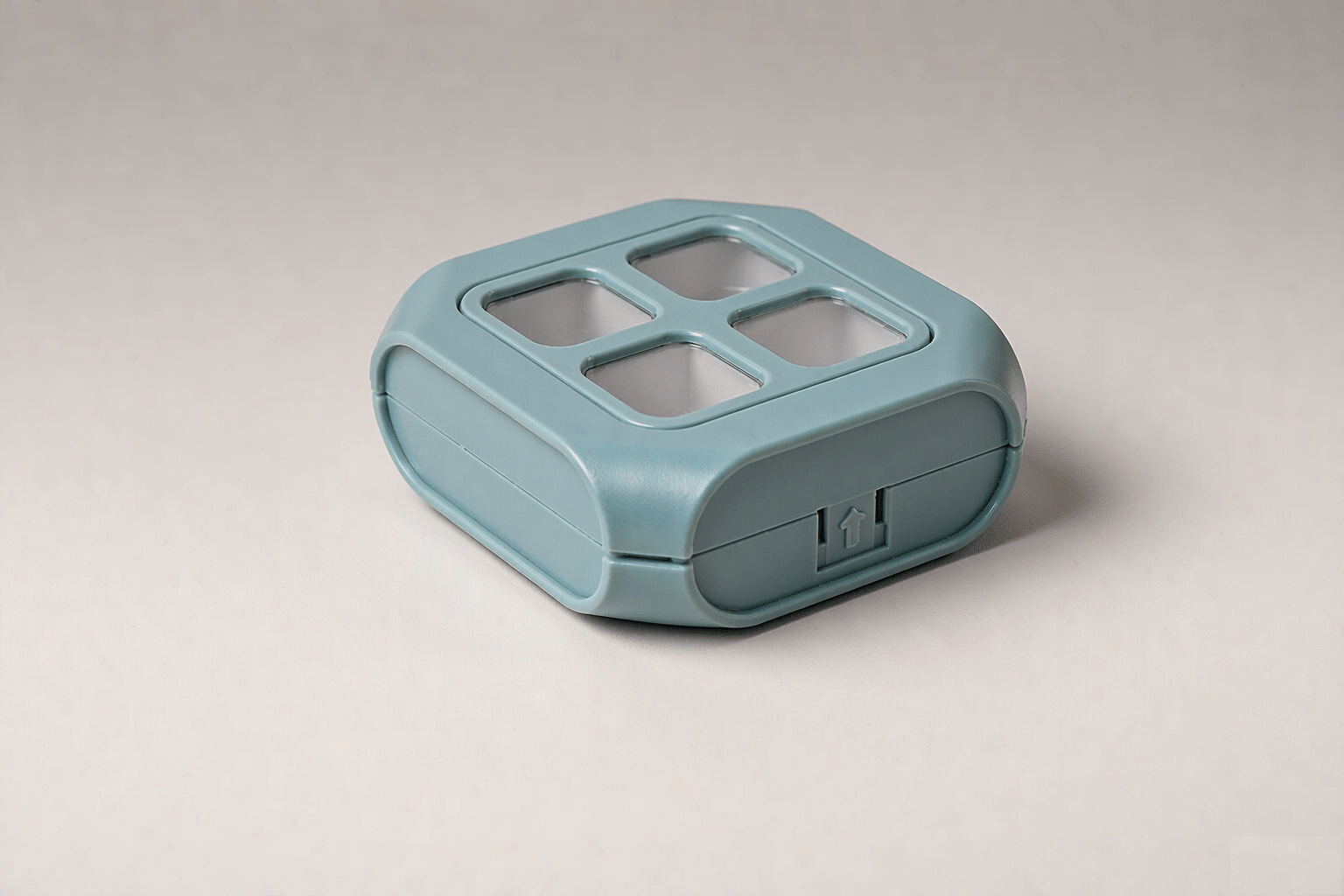
Request a production unit of an existing part, like this 3-compartment daily pill box, and work the lid twenty times before you discuss price.
Hinge stiffness, lid click and gate marks tell you more in five minutes than a factory tour video tells you in fifteen.
Cost Drivers and Lead Times in Pill Box Manufacturing
| Line item | Low-cost | Export-grade |
|—|—|—|
| Mould steel | P20, 2-cavity | 718H, 4-cavity |
| Hinge | Living hinge | Pin hinge |
| Regrind cap | Unspecified | 15% max, in writing |
| Inspection | Visual only | AQL 0.65 / 2.5 / 4.0 |
| Tooling | USD 4k–6k | USD 9k–14k |
| Mould life | ~100k shots | 300k+ shots |
New mould lead time runs 30–40 days, then 20–25 days of production. Anyone quoting 15 days total is offering a stock item, not your design.
Red Flags in a Pill Box Manufacturing Quote
- A quote with no tooling line item. The cost hides in the unit price and reappears at reorder.
- “AQL 0” promises. No injection plant delivers zero defects; they are buying your order.
- Test reports without a date, a resin grade or a lab name.
- A brand-new mould promised in under 20 days, with no DFM review scheduled.