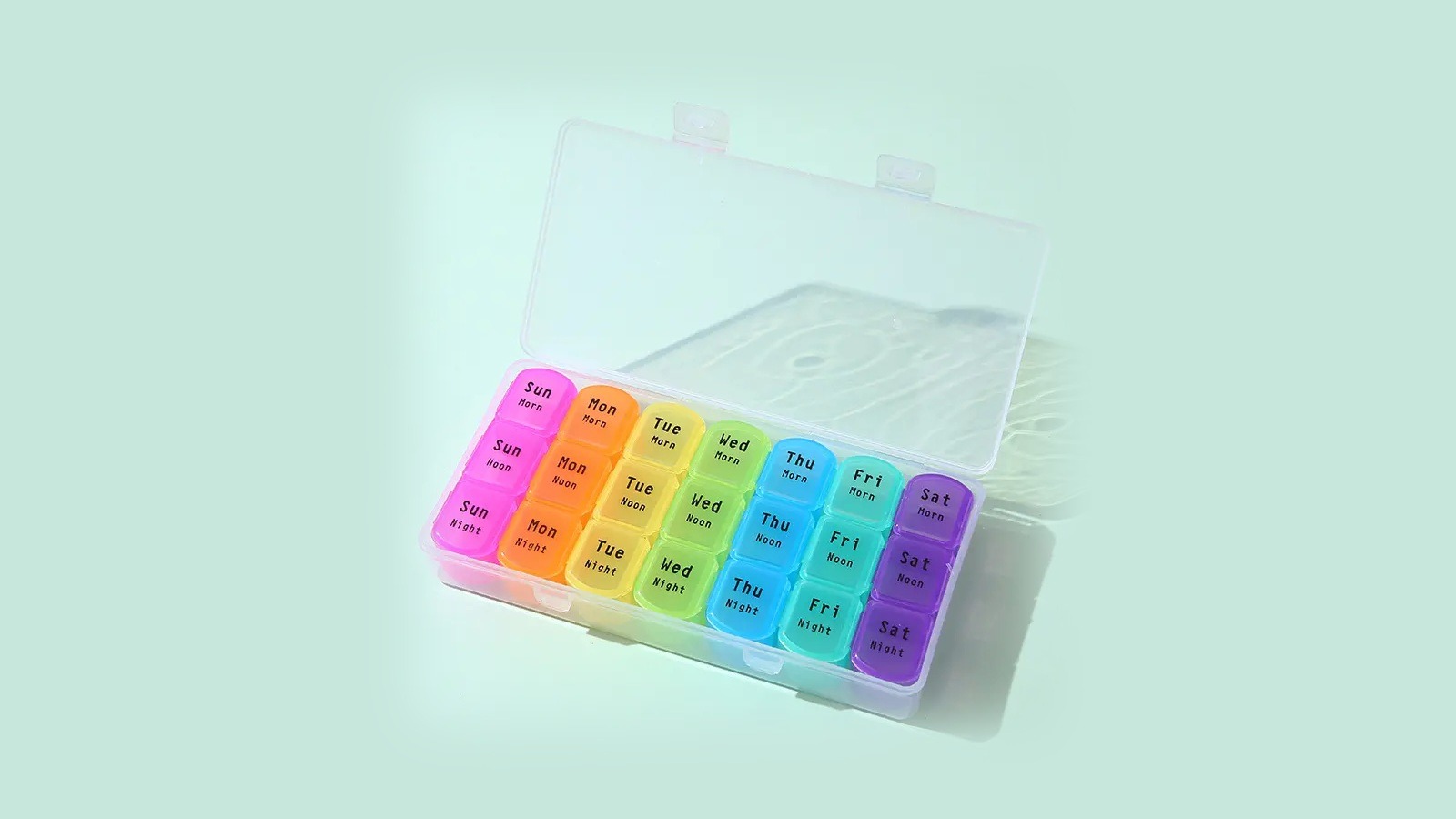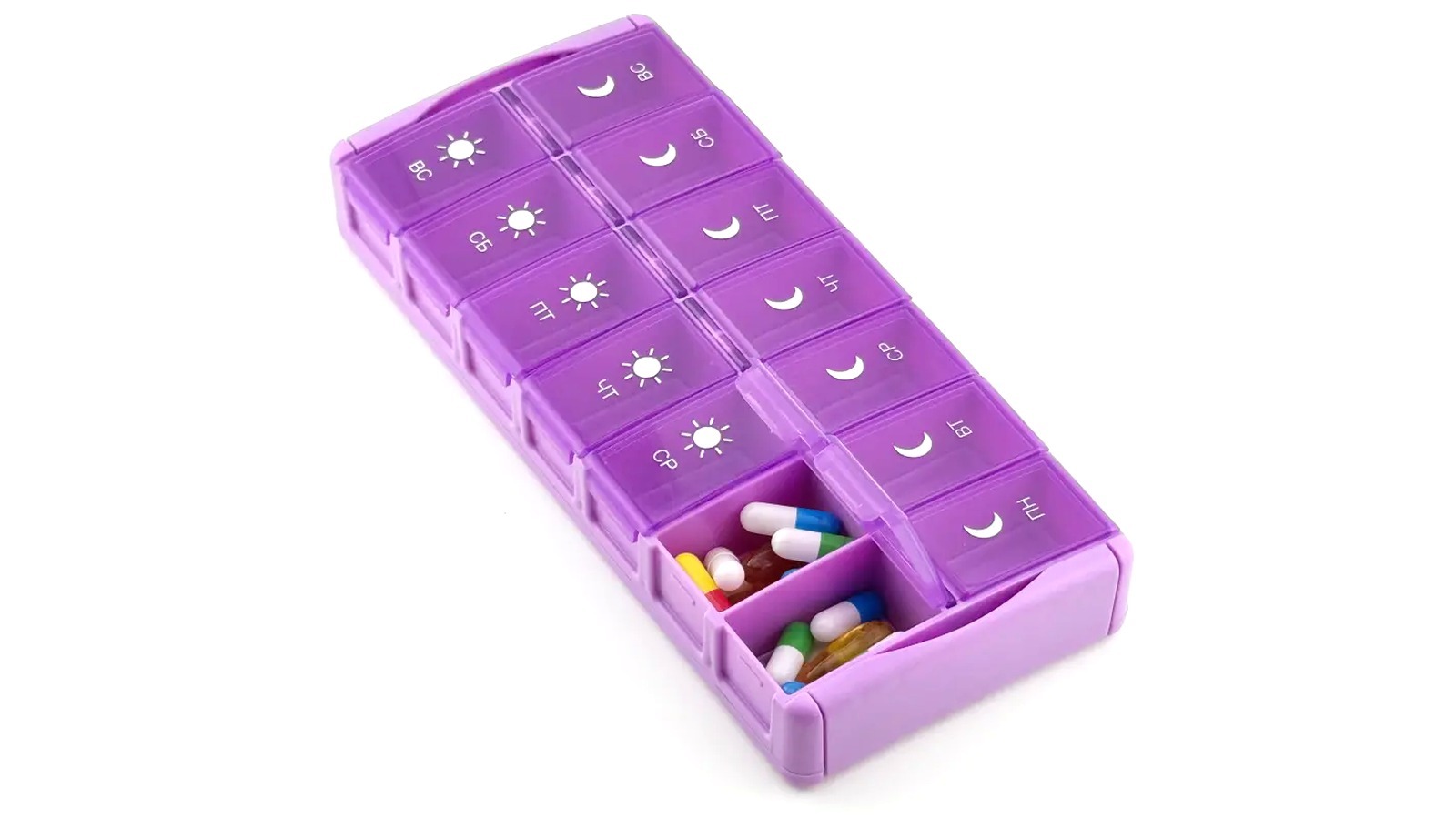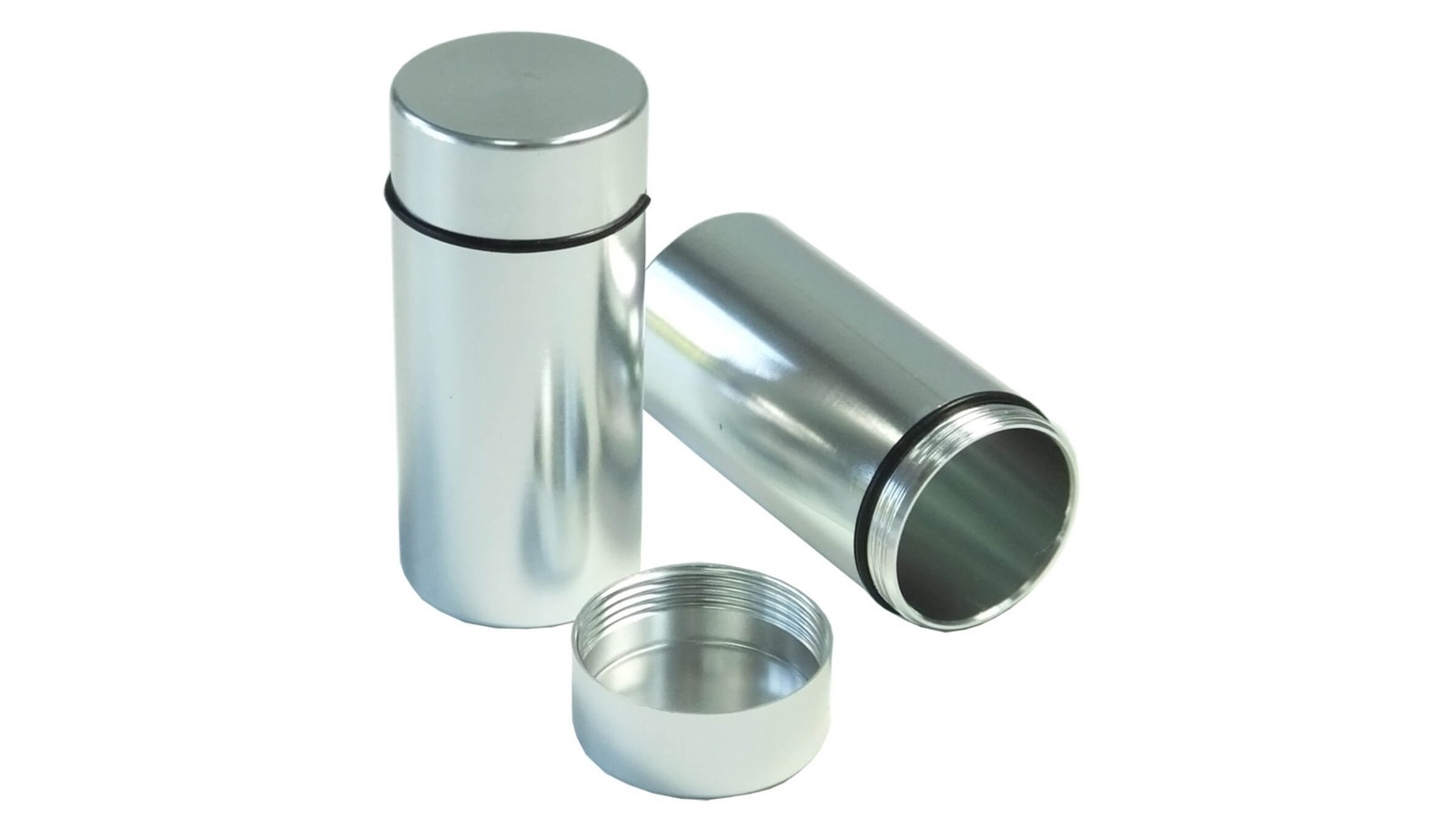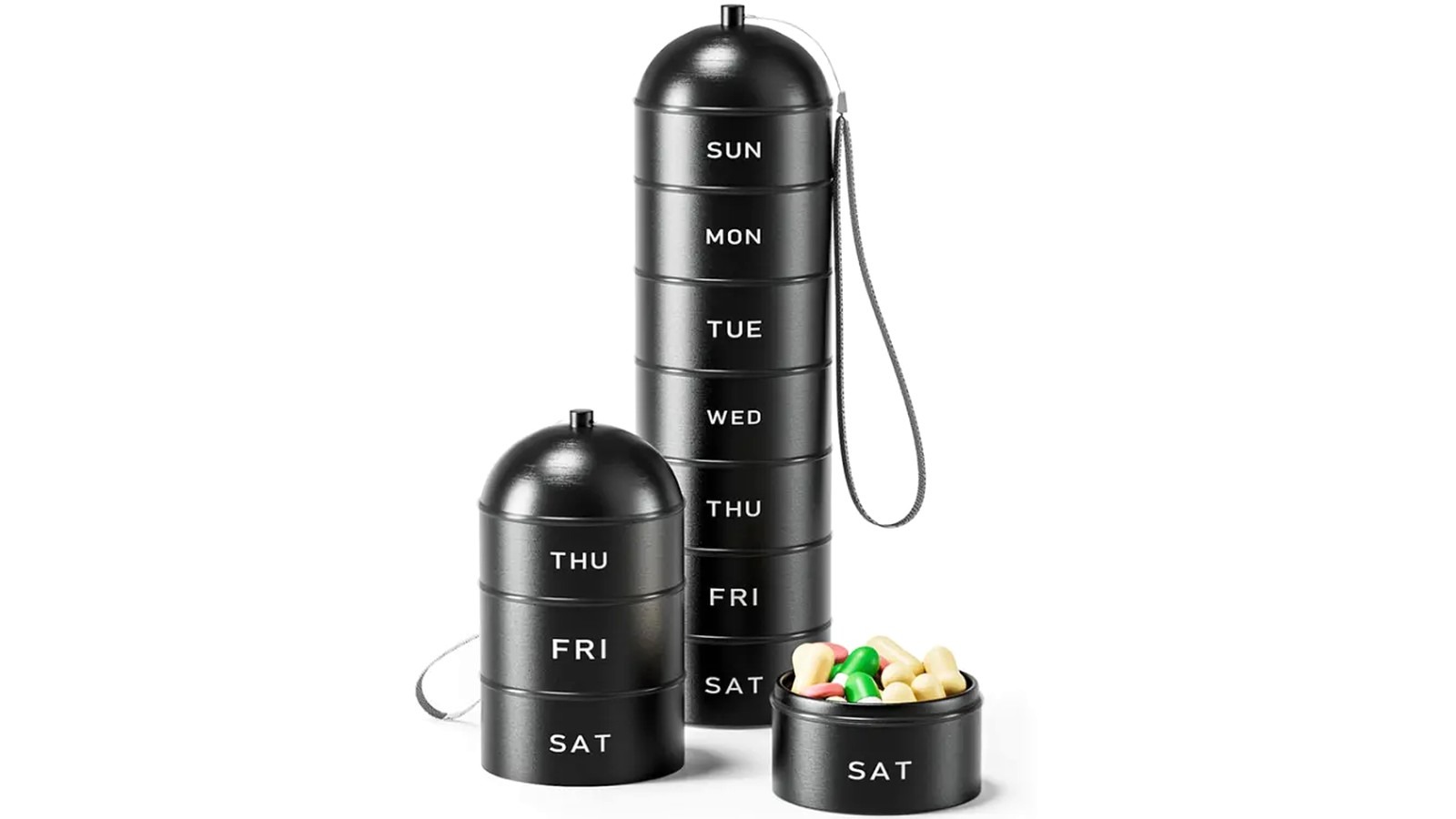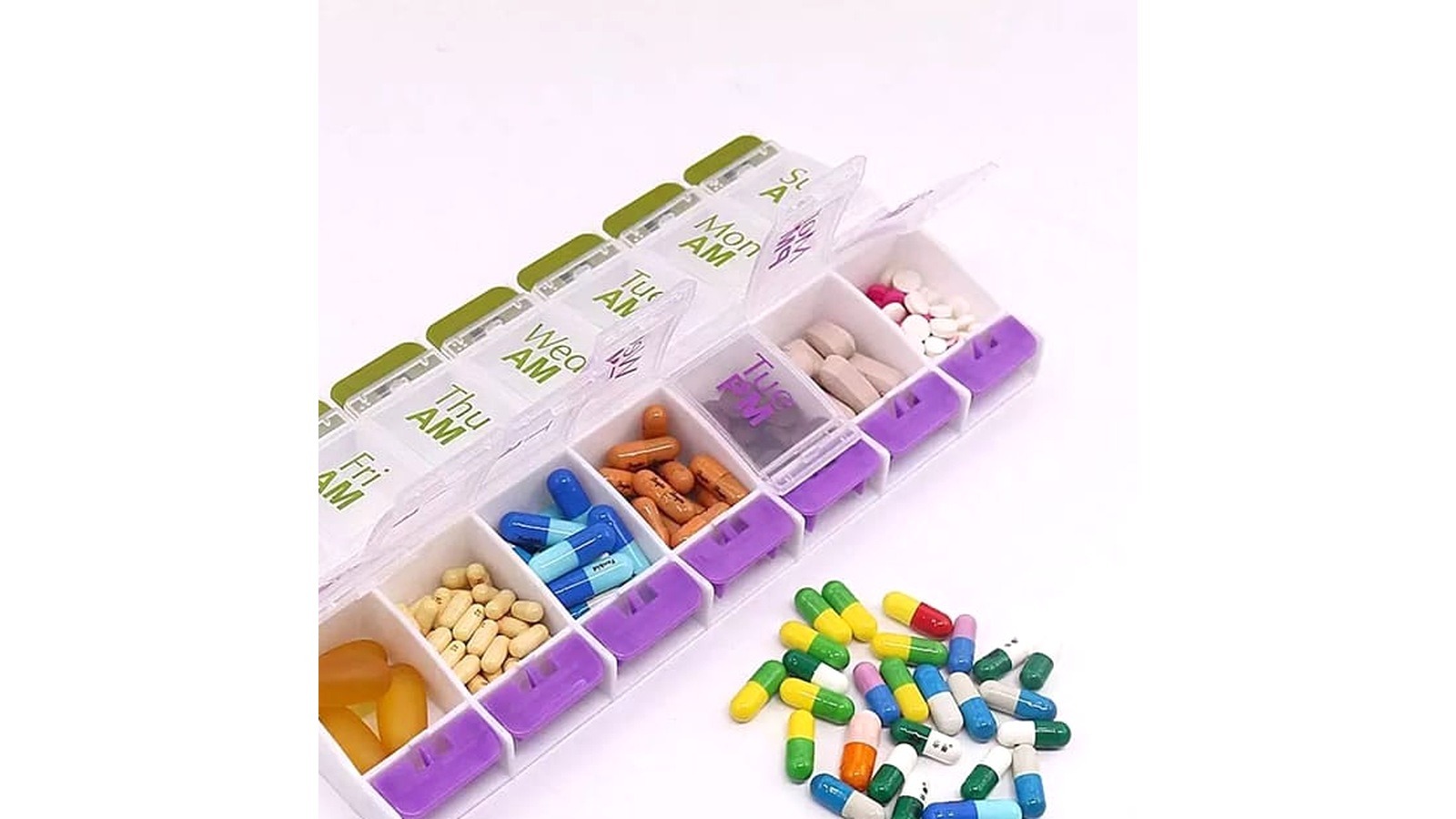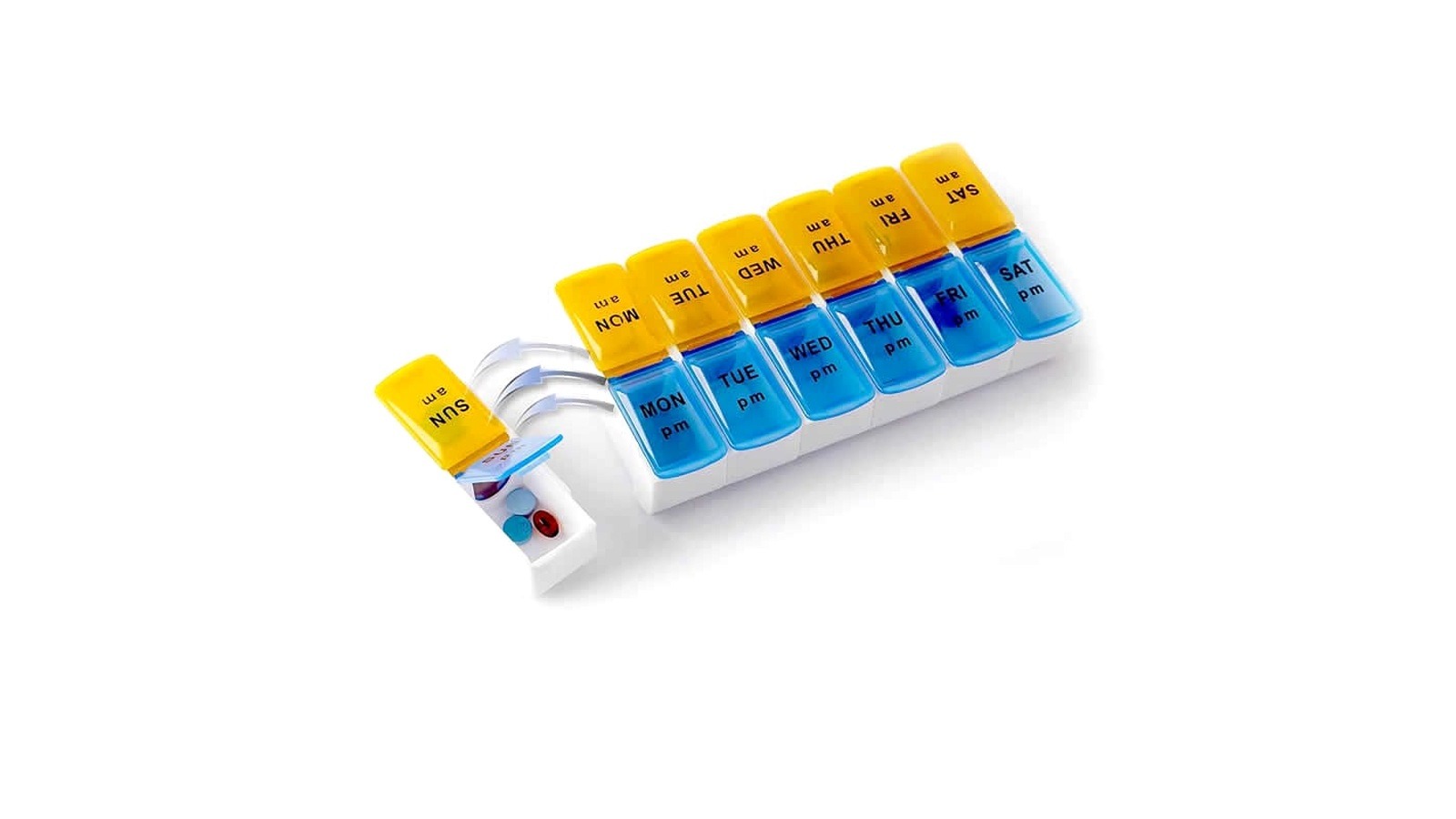
A pill box sounds like an odd corporate gift until you look at what promotional suppliers already stock: public price ladders from sub-dollar mini cases at MOQ 5,000 up to monthly planners at MOQ 50. So the answer is yes — a custom pill box works as a corporate gift, because nothing else at this price gets opened every day for months.
The yes comes with a condition. The gift inherits every product risk the category has: closure complaints run at 25.3% of reviews, and lid problems are the most negative dimension reviewers mention. A branded box that pops open in a purse advertises the giver’s carelessness. The logo goes on after the box passes the checks a retail buyer would run.
Why a Pill Box Outperforms the Average Giveaway
Most giveaways buy seconds of attention. A medication organizer is opened one to four times a day for as long as the regimen lasts. At unit prices between roughly $0.50 and $3 for the common weekly formats, that is a cost-per-impression most swag cannot approach — and each impression happens while someone manages their health.
The audience fit is narrow but deep. Public supplier catalogs name the buyers outright: aged-care providers, pharmacies, insurers running wellness roadshows, HR teams, and supplement brands. One aged-care not-for-profit documented distributing 500 branded boxes in a client medication-management campaign — a real deployment, not a hypothetical.
Retention follows practicality. A pen dies in a drawer; a box that fails the four practical gates — loads right, empties clean, stays shut, lid survives the year — gets binned with the logo on it. That is why spec work matters more for a gift than for a retail SKU: the recipient never chose the product, so the giver owns every flaw.
What the Market Publishes — and What It Leaves Out
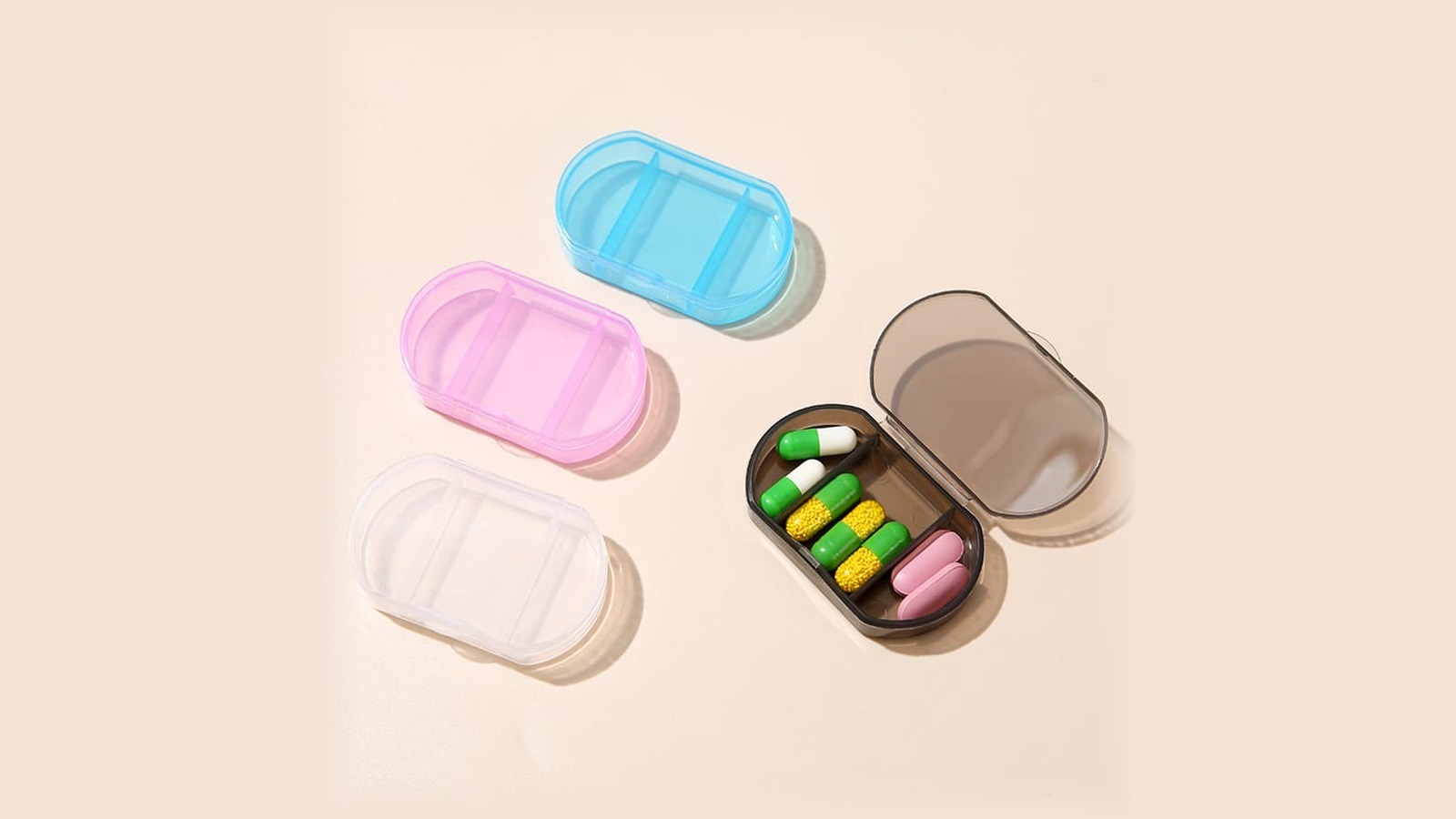
Price data is public and unusually complete. Tiered lists across promotional distributors and one factory FAQ span roughly $0.51 to $18.43 per unit, with MOQs from 24 to 5,000 and setup fees near $40–84 per decoration. Production runs from 1 to 40 days depending on who you ask — distributors quote days, factories quote weeks.
The product shapes the price. Public catalogs sort into three archetypes: novelty minis near the dollar line, weekly organizers at $1–2.50, and monthly planners near $18 — with bamboo and recycled variants at a premium. A pill box corporate gift shortlist usually lands in the middle band, where print quality separates keepsakes from the bin.
The same brief can be sourced two ways. Distribution-tier pricing puts a printed weekly organizer under $1 at MOQ 250; factory-direct pricing starts near MOQ 3,000 with longer lead times and lower unit costs. The cost structure behind each route — tooling, decoration, margins — is covered in the custom manufacturing guide.
What no catalog publishes is acceptance criteria. None of the sites reviewed state a hinge cycle rating, a lid-gap tolerance, or a print adhesion test for the logo. The closest public figure is one listing rating its UV-printed day markers at 10,000 cycles — a number attached to a printed label, not the closure or hinge a recipient depends on.
That silence turns the pill box corporate gift brief into a specification exercise. Everything a catalog implies — “durable polypropylene”, “long-lasting use” — is a claim, not a number. The four checks below convert the claims into RFQ lines.
Colour choice does more work on a gift than a retail SKU. Translucent frost shells, common in the under-$1 tier, soften print contrast; solid white and black carry the sharpest logo edges. Ask whether Pantone matching sits inside the setup fee — catalogs quote decoration as a per-unit add-on with setup billed on top.
The Four Checks Before the Logo Goes On
Closure first. Review aggregations rank lid problems among the most consistent negatives, and closure failures account for roughly a quarter of complaints. For a gift the stakes invert: a retail buyer returns a faulty box; a gift recipient just stops carrying it, brand impression gone. Closure formats are compared in the latch guide.
Print durability beats print area. Suppliers publish imprint areas in four conventions — pad print 25×40 mm, curved direct prints 30×55 mm, full-length bands 150–180×15–17 mm — but almost never a wear rating. Ask for what the day-marker listing got: an abrasion figure for the logo. Label fading sits at 7.4% of category complaints.
Material grade matters because the gift will carry real medication. The baseline is food-contact-grade PP or ABS with documents on finished parts — not a “FDA certificated” badge — shorthand, not a report. The resin choice also sets how long the gift survives; the trade-offs are in the plastics safety guide.
Then run the everyday test on the sample: fill it with a realistic regimen, open and close every lid twenty times, and leave it in a bag for a week. A pill box corporate gift that passes but feels cheap in the hand can be tuned on perceived value — the finish guide covers what signals quality on a budget.
Sample timing belongs on the calendar too. Gift campaigns anchor to fixed dates — onboarding weeks, awareness months, conference seasons — a shipment that misses the date is dead stock. Order samples eight weeks out: proof, decoration and production run one to six weeks depending on route, and artwork revisions eat days nobody budgeted.
The Compliance Lines a Gift Order Adds
Ink sits closest to the pills, so keep decoration on exterior surfaces where possible. If print must face a compartment interior, ask for a migration test on the finished part, not a certificate for raw resin. Supplier pages writing “food grade” state an intent to comply; what travels is a grade declaration plus a lab report on the moulded parts.
EU-bound campaigns add a packaging layer. PPWR applies from 12 August 2026 and sets recyclability and heavy-metal limits on the packaging around the gift — the polybag, the gift box, the insert card. The buyer’s filing list is in the PPWR guide.
A green claim needs the same discipline as any other. Bamboo and recycled tiers photograph well, but the eco-materials guide separates materials that hold up from ones that only look sustainable — and a gift that cracks in month two makes the green claim part of the failure story.
One boundary belongs in the brief: a giveaway organizer is not a child-resistant container. If the campaign involves medications that require CR packaging, the gift travels alongside the original container instead of replacing it. The promotional role and the storage role stay separate.
There is a volume honesty check too. A program shipping 5,000 boxes is a production run with gift packaging, so retail sampling rules apply at full strength — pilot 50 to 100 units from the actual production cavity before committing the full order.
What to Write Into the RFQ
- Material and grade: food-contact PP or ABS, with compliance documents issued against finished parts.
- Decoration: print method per surface, imprint area, ink system, and an adhesion result (cross-hatch or tape test) on finished parts; a wear rating if the supplier claims one.
- Proof: a signed pre-production proof — several distributors offer free proofs, so make it contractual rather than a courtesy.
- Price architecture: a tier table at 100 / 250 / 500 / 1,000 / 2,500 units, the setup fee, and whether plates are reused free on reorders.
- Lead time: counted from artwork approval, with the express premium quoted explicitly — public lists put rush surcharges near 25%.
- Packaging: polybag versus gift box, insert cards, and whether variable-data printing (individual names, not just a logo) is available for personalisation tiers.
- Logistics: blind shipping if an agency fronts the campaign, with carton quantities matched to the distribution plan.
- Consistency: colour and fit across the whole run, because a gift order is still a production order — the cavity-to-cavity argument in the batch consistency guide applies unchanged.
The cheapest day to protect a gift campaign is the day the specification is written.
The 14-compartment weekly removable organizer and the three-compartment daily case bracket the two tiers most programs land on: a desk planner for the regimen, a pocket case for the road. Same logic covers both — the logo makes failure louder.