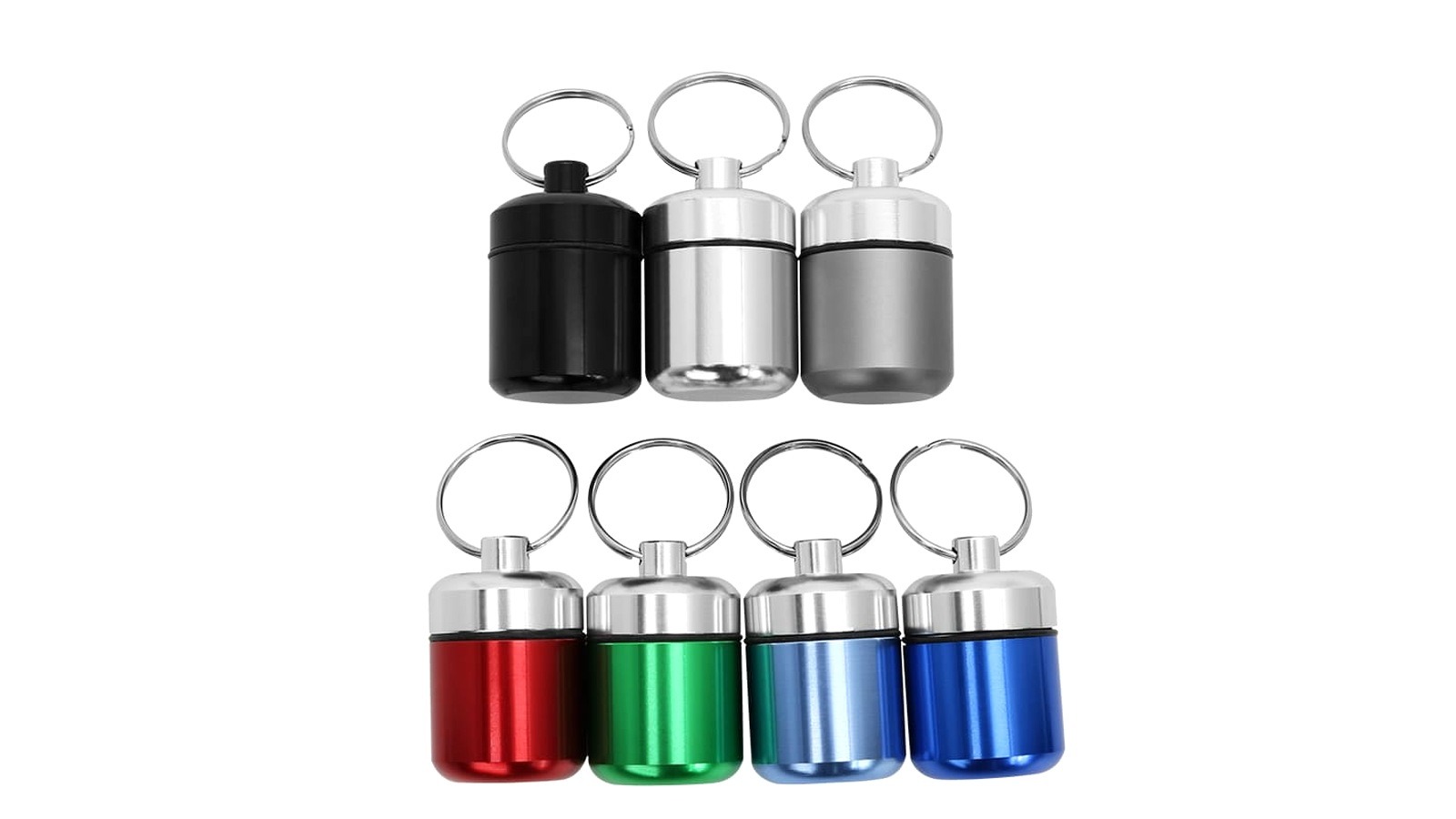
Sample Was Perfect, the Bulk Order Was Loose: Specifying Pill Box Batch Consistency
The most expensive quality problem in pill box sourcing is not a broken latch design. It is a sample that closed perfectly, followed by a production run where every box feels different: one lid tight, the next loose, one compartment dead, the rest fine.
In most cases the drawing is right and the design is fine. What failed is batch consistency — and it lives in the mold, not on the print.
This article explains why one multi-cavity mold produces parts that feel different, why mixed packing hides the pattern from your inspector, and which seven clauses turn pill box batch consistency from a vendor adjective into a written, checkable requirement.
The Complaint Is Rarely “Bad Lids.” It Is “This Lid.”
Review data across weekly organizers shows the pattern. Buyers rarely say every lid failed. They say “one compartment that doesn’t stay closed at all,” or that “some of the lids will easily open and are not tight enough” while others work fine. One buyer reported the Wednesday row arriving with a broken latch — “the rest of the item is fine.”
Aggregated complaint statistics point the same way: lids not staying shut account for about 25.3% of closure complaints, and lids that are hard to open for about 22.6%. These are not two defects. They are the two ends of one snap-fit tolerance band: the same design, landing on different sides of the window, cavity by cavity and batch by batch.
There is also a time dimension. One user described lids that were hard to open “when it was new” until they “loosened up just enough.” Opening force is not a constant; it drifts with wear. A specification that accepts a single “typical” value tells you nothing about where each unit starts — or where it ends up.
Why One Mold Makes Different Parts
A weekly organizer lid set is rarely molded one part at a time. Multi-cavity molds produce 8, 14 or 28 lids per cycle, and the melt does not fill every cavity identically — even when the runner layout looks symmetric, flow imbalance makes a simple 8-cavity mold fill unevenly. Cavities end up with different dimensions, weights and snap-fit feel.
Two more physical effects widen the spread. A 5–10 °C difference across the mold plate already changes part dimensions and surface finish, because edge cavities lose heat faster than center cavities. And tool wear diverges over the life of the steel: cavities erode unevenly, so parts that matched at shipment one drift apart by shipment twelve.
Molding-industry references rate single-cavity tools as having the highest part-to-part consistency, and multi-cavity tools as “good to excellent — with balanced design.” That is why the cavity count on a mold quote is your first consistency signal, and one reason quotes for identical pill box molds vary so widely.
There Is No Universal Imbalance Limit
The industry measures cavity imbalance with controlled short-shot studies: weigh every cavity over consecutive shots, then compute an imbalance rate as (heaviest − lightest) ÷ average cavity weight × 100%.
There is no universal acceptance limit for consumer organizers — the allowable rate depends on part weight, tolerance, material and process capability. A supplier who quotes a limit without stating its rationale is reciting a number, not controlling a process. Ask for the limit, and for the reason it holds.
Mixed Cartons Make Inspection Blind
One sentence from molding-industry sources is the sharpest thing written about this problem: “When defects follow a specific cavity number, mixing all parts together makes the pattern harder to see.”
Translate that to a purchase order. If cavity 3 of 8 runs loose and the factory blends all eight cavities into one carton, your AQL sample sees random scatter — a defect rate that looks stable, with no pattern to correct. Cavity-mixed packing quietly disables sampling inspection.
The same logic runs in reverse during root-cause work: if one cavity keeps producing outliers, the fix is in that cavity’s runner, gate, cooling channel or core — not in retuning the whole machine. That is exactly why traceability matters: you cannot fix a cavity you cannot identify.
End users already feel this and work around it. One buyer, sourcing for an elderly parent, wrote that they “carefully trimmed a bit off of each of the latches” to make the box usable. When customers finish the manufacturer’s tolerance work with scissors, the opening-force window has effectively left the factory out of spec.

Seven Clauses That Turn Consistency Into Paper
None of the following requires new engineering. It requires writing. Each clause converts a familiar complaint into a checkable line in the purchase specification, which is what pill box batch consistency should look like on paper.
- Cavity balance study. Require a short-shot study that weighs every cavity across consecutive shots, reports the imbalance rate, and states the rationale for the limit claimed.
- Cavity-number traceability. Cavities numbered in the tool and tracked in batch records; cartons packed and labeled by cavity group, never blended.
- Stratified sampling by cavity. Incoming inspection draws from identifiable cavity batches, not only from the overall lot AQL.
- Force written as a range. Opening and closing force accepted as a min–max window, measured on new units and again at an agreed cycle count, so force decay is part of acceptance.
- Golden sample. A sealed reference set retained by both parties — the arbitration standard when shipment six and sample one disagree.
- Change notification. Resin, cavity count, mold, factory and country of origin are spec items; any change requires advance written notice. The complaint “the packaging said made in Mexico, the units are made in China” is what happens without this clause.
- Mid-life re-verification. For long-running orders, one scheduled cavity-balance retest at an agreed milestone of tool life, because cavities wear apart over time.
What This Article Is Not About
This is not about latch design — which closure mechanism stays shut on the road is a separate engineering choice with its own trade-offs. It is also not about factory-level quality systems; our manufacturer’s view of quality standards and bulk sourcing covers certifications and inspection at the system level.
Batch consistency sits between the two: same design, same drawing, same QC system — and still, part to part, a different box. That gap is where most “the sample was perfect” stories end, and it is closable with paper.
If you take one question into your next RFQ, make it this: “Can you pack and label by cavity number?” A factory that already runs cavity-tracked batch packing answers in seconds. One that cannot is telling you exactly where its next inconsistent shipment will come from.