+86 13777026667
pillboxmanufacturer@gmail.com

Comprehensive Analysis of the Top 5 Pill Box Certifications: A Compliance Guide for US and EU Markets

REACH

Table of Contents

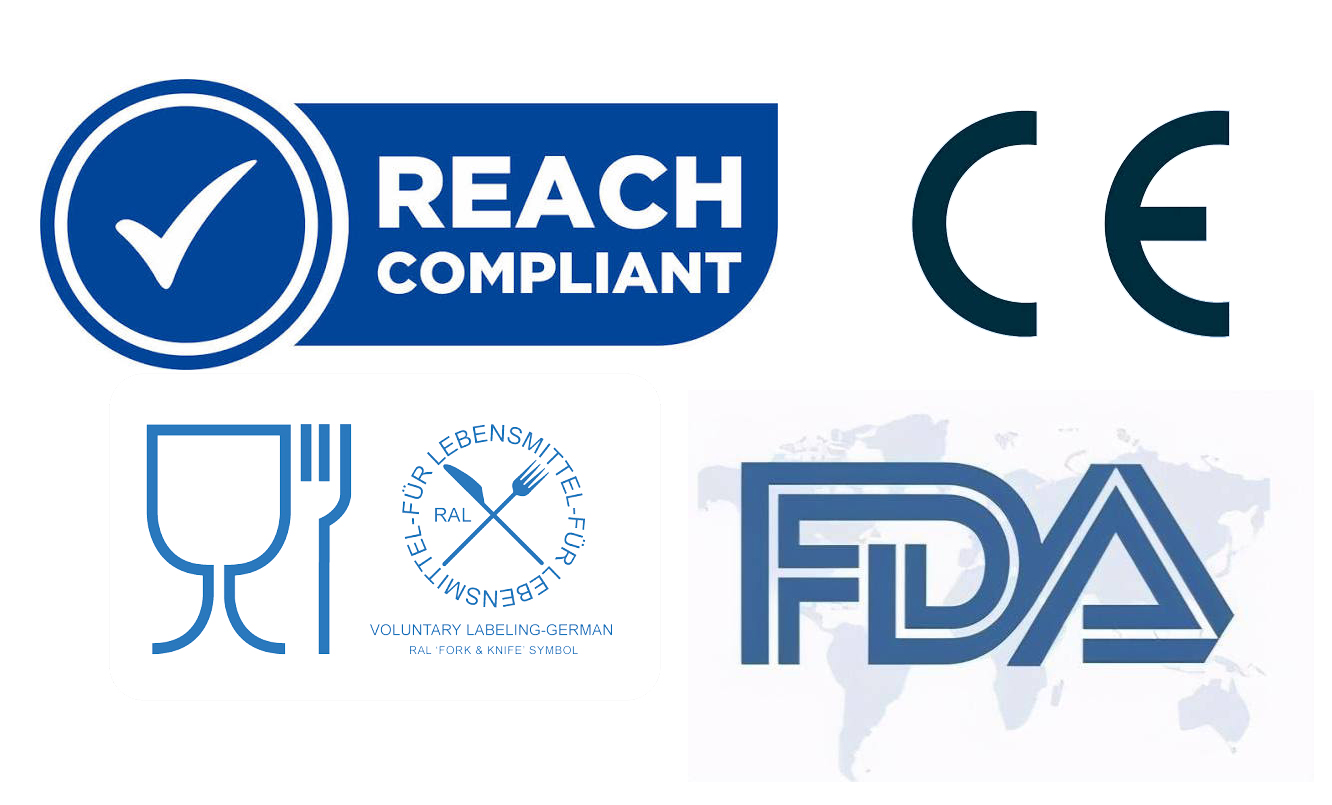
In the global landscape of pharmaceutical packaging and health product trade, the US and EU markets occupy a core position due to their massive consumer base and extremely high entry standards. For pill box manufacturers, successfully entering these two major markets requires crossing the “five major compliance barriers” established by LFGB, FDA, CE, DoC, and REACH. These five certifications are not only mandatory prerequisites for the legal circulation of products but also strategic cornerstones for enterprises to build brand moats and win the trust of global buyers and end consumers.

US Market: The Safety Defense Line Built by FDA Certification

To enter the US market, compliance with the U.S. Food and Drug Administration (FDA) is the first unavoidable hurdle. It is important to clarify that the FDA does not directly issue so-called “certification certificates”; its regulatory nature is more akin to a comprehensive system of “registration + testing + compliance review.” For traditional paper or plastic pill boxes, the core lies in ensuring that packaging materials meet strict FDA standards for food-contact or pharmaceutical packaging materials (such as 21 CFR Part 176/177), and pass rigorous assessments including migration tests and biocompatibility tests. For smart pill boxes with medication reminders and remote monitoring capabilities, which are classified as medical devices, enterprises must adhere to 21 CFR Part 807 and apply for FDA 510(k) clearance to demonstrate “substantial equivalence” to legally marketed products.

EU Market: The Legal Validity of CE Marking and DoC Declaration

To enter the European Economic Area (EEA), CE certification is the mandatory passport for legal product sales. The CE mark is not a general quality certification but a safety conformity mark declaring that the manufacturer’s product meets all applicable EU directives (such as LVD, EMC, MDR, etc.). Standard pill boxes must prioritize Electromagnetic Compatibility (EMC), while smart pill boxes must comply with the stricter Medical Device Regulation (MDR). Closely linked to the CE mark is the EU Declaration of Conformity (DoC). The DoC is a legal document signed by the manufacturer or their EU Authorized Representative, which must include manufacturer information, product identification, applicable EU regulations and harmonized standards, and a clear statement of legal validity. Signing and properly retaining the DoC is a crucial step in establishing a closed-loop quality system spanning “R&D, production, testing, and declaration.”

Chemical Control: The Dynamic Compliance Challenge of REACH Regulation

Beyond the CE certification targeting product functionality and safety, the EU REACH regulation is another mandatory threshold that pill box manufacturers must cross. The core principle of REACH is “No Data, No Market,” with its control focus on SVHC (Substances of Very High Concern) testing and the Annex XVII Restriction List. Pill box manufacturers must ensure that the SVHC content in their products is compliant; if it exceeds 0.1%, they must inform downstream importers and submit SCIP notifications. Due to the highly dynamic nature of REACH regulation, with the SVHC list continuously updated (such as the addition of n-hexane in 2026), enterprises must establish a regular re-testing mechanism to adjust supply chain materials and update compliance documents in accordance with the latest regulations.

German Market: The Rigorous Quality Endorsement of LFGB Certification

As the most important fundamental legal document in Germany’s food hygiene management sector, LFGB certification is highly respected in the industry. Passing LFGB testing means that the product strictly complies with the requirements of the German Food and Commodities Act and is authoritatively proven to be “free of chemically toxic substances.” LFGB testing items are extremely comprehensive, covering sensory evaluations for odor and taste transfer, tests for transferable components and leachable heavy metals, and detection of harmful chemical components and heavy metal content. Products that pass the test are authorized to bear the highly recognizable “Fork and Glass” symbol. This intuitive visual endorsement can significantly enhance European consumers’ purchase confidence.

Conclusion: Compliance as the Strategic Cornerstone of Global Competition

Whether dealing with traditional paper and plastic pill boxes or emerging smart pill boxes, meeting the compliance requirements of these five certifications is the first step in a company’s global expansion. This not only helps businesses avoid risks such as product recalls, hefty fines, or even criminal liability due to non-compliant sales, but also significantly enhances brand bargaining power and competitiveness in the high-end international market. For pill box manufacturers, planning budgets in advance, monitoring regulatory updates, and strictly controlling production processes are the best strategies for transforming compliance into a competitive market advantage.

Facebook
Twitter
Email
Print
SEND US YOUR MESSAGE

SEND US PRODUCT INQUIRES