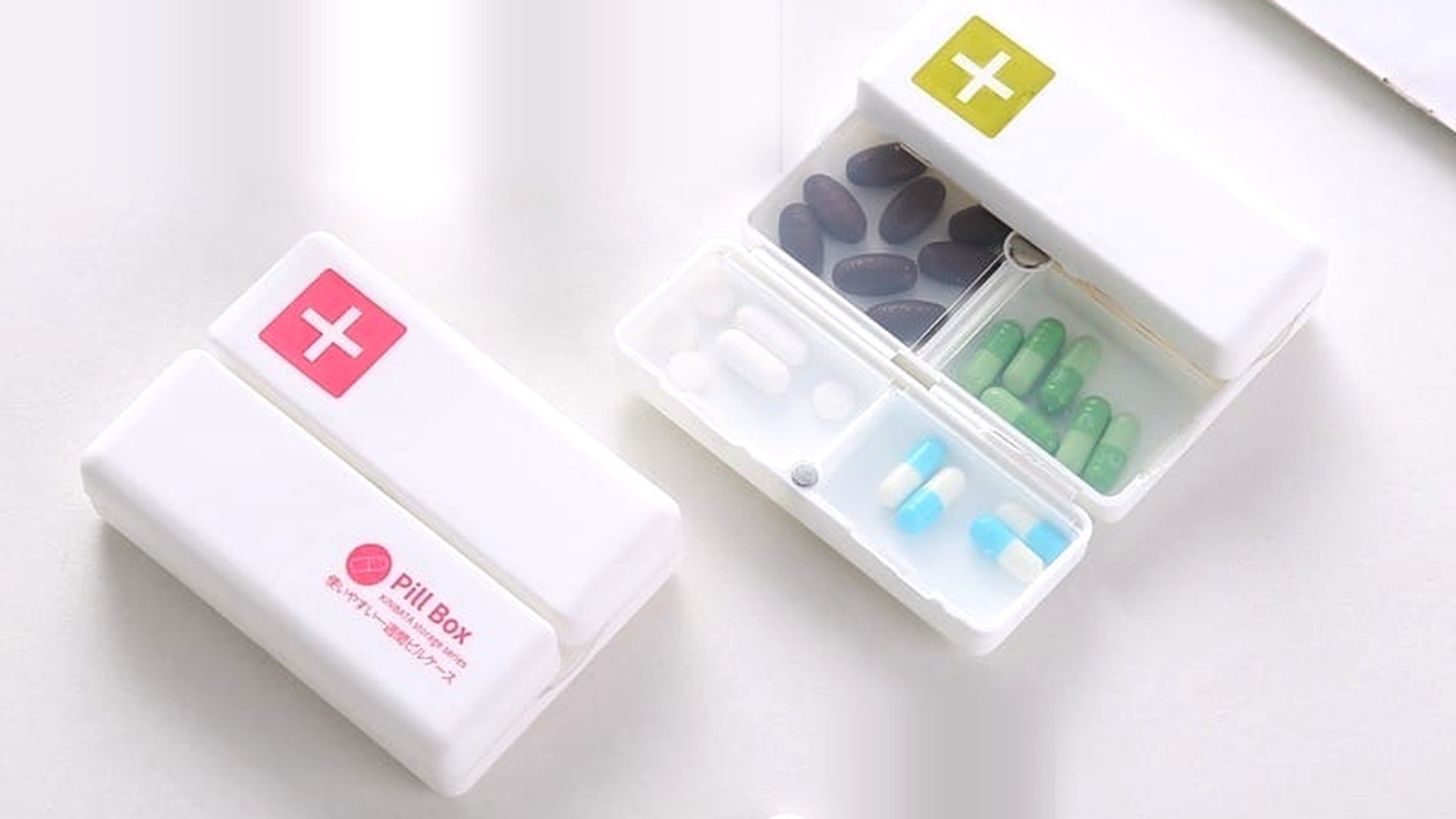
A pill organizer in a hot car is not one question but two. The box takes the heat one way — it can warp, loosen and stop sealing while still looking fine outside. The pills take it another way — they can quietly lose potency with no visible sign at all. This guide separates the two clocks.
The short answer for the medication: the storage label rules. MedlinePlus puts it plainly — heat, air, light and moisture may damage medicines, and it tells users not to keep medicines in the glove compartment of a car. The box is a separate, solvable question.
For the box, a summer cabin reaches temperatures most organizers were never specified for. What matters then is resin grade, lid fit and gasket recovery — all three are documentable before you order. That is what the rest of this guide pins down.
What a Parked Car Does to the Temperature
A parked car is an oven with windows. Public-health reporting widely cites roughly 60–70 ℃ inside a sealed cabin on a 35 ℃ day. Consumer-safety writeups on medication in cars draw the same line: original labeled containers held in the climate-controlled cabin are one thing, loose storage in a parked car is another.
Product labels agree. An EpiPen label specifies 68–77 ℉ with brief excursions to 86 ℉, and states outright: do not store in your vehicle’s glove box or trunk. Storage instructions on the bottle are the first specification a buyer inherits, whether the SKU is designed for cars or not.
Baylor College of Medicine’s summer guidance goes further — never leave medications inside an unattended vehicle. Heat compounds: aspirin kept hot breaks down into acetic acid and salicylic acid, irritating the stomach, well before its expiry date.
Pharmacy reporting adds a rule of thumb worth remembering when you price a “car kit” SKU: chemical degradation roughly doubles to quadruples for every 10 ℃ rise. A cabin that hits 65 ℃ is not a warm room. It is an accelerated-aging chamber that runs all afternoon.
The Pills Fail First, and Invisibly
Heat-damaged tablets rarely announce themselves. A 2017 paper in Frontiers in Endocrinology tracked eight patients whose thyroid test results stayed abnormal for months. The values normalized only after the medication was stored properly again — and the tablets had looked completely normal the whole time.
Sublingual nitroglycerin is blunter about it: Nitrostat is required to stay in its original glass vial, tightly closed. Some products simply tell you, on the label, that no secondary container is acceptable.
Soft gel capsules and coated tablets are the one visible failure mode — they soften, stick together and fuse. A caregiving service reported a box left on a dashboard for an hour in which “half the tablets had gone soft around the edges.” By the time damage is visible, the batch is far past saving.
Be clear about what a box can do here: nothing against heat itself. A sealed, light-blocking case slows moisture and light, not thermal degradation. Any supplier implying the box protects potency through a hot afternoon is promising something the chemistry does not support.
What Heat Does to the Organizer Itself
The box has its own failure chain, and it starts long before anything melts: the body warps, the lid stops mating with the rim, the latch loses preload, the gasket takes a permanent set. Every step is invisible from outside — the box still closes, it just no longer seals or holds.
Comparing materials honestly requires one question buyers often skip. Heat-deflection temperature (HDT) is measured at two loads — 0.45 MPa and 1.82 MPa — and the same resin can post numbers 40 ℃ apart between the two. Which load, which indicator, which criterion: those are the real spec lines.
Typical datasheet ranges make the spread concrete: PP runs 100–120 ℃ on the 0.45 MPa test but 50–65 ℃ on the 1.82 MPa test, ABS around 80–95 ℃, PS 70–90 ℃, PET 70–80 ℃, PC 130–140 ℃. The authority is always the datasheet of the actual grade the factory runs.
So a listing line that says “heat resistance up to 100 ℃” with no load and no method is marketing, not a spec. Ask for the grade, the indicator (HDT or Vicat), the load and the pass criterion — then compare like with like.
The Shells That Handle It Best
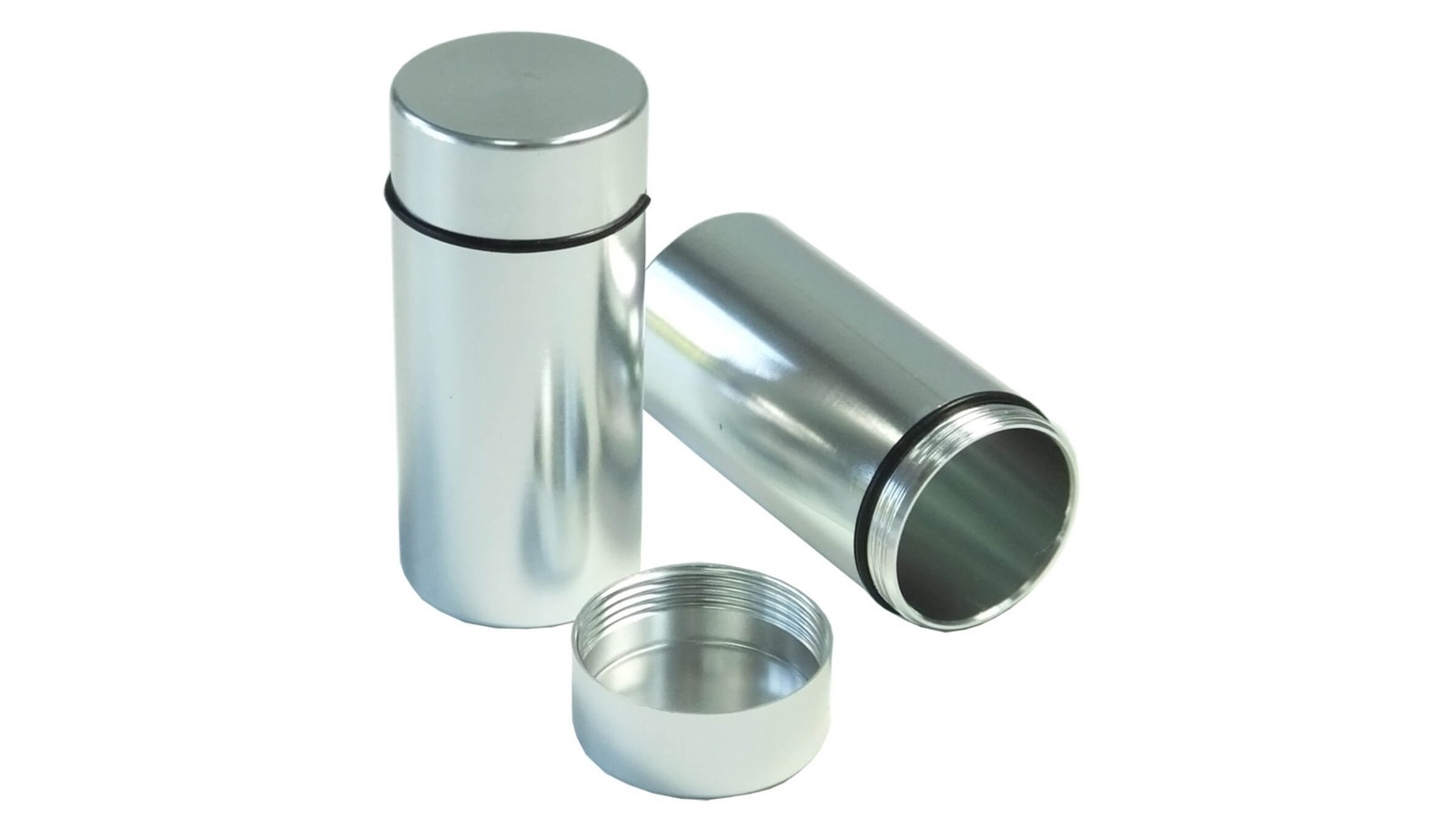
Aluminum sidesteps most of the warping chain. It conducts heat quickly — a metal case in the sun gets hot to the touch faster than plastic — but it holds its shape, and its closure keeps its geometry. Metal trades its own disadvantages, covered in how a metal pill box compares to plastic and leather cases.
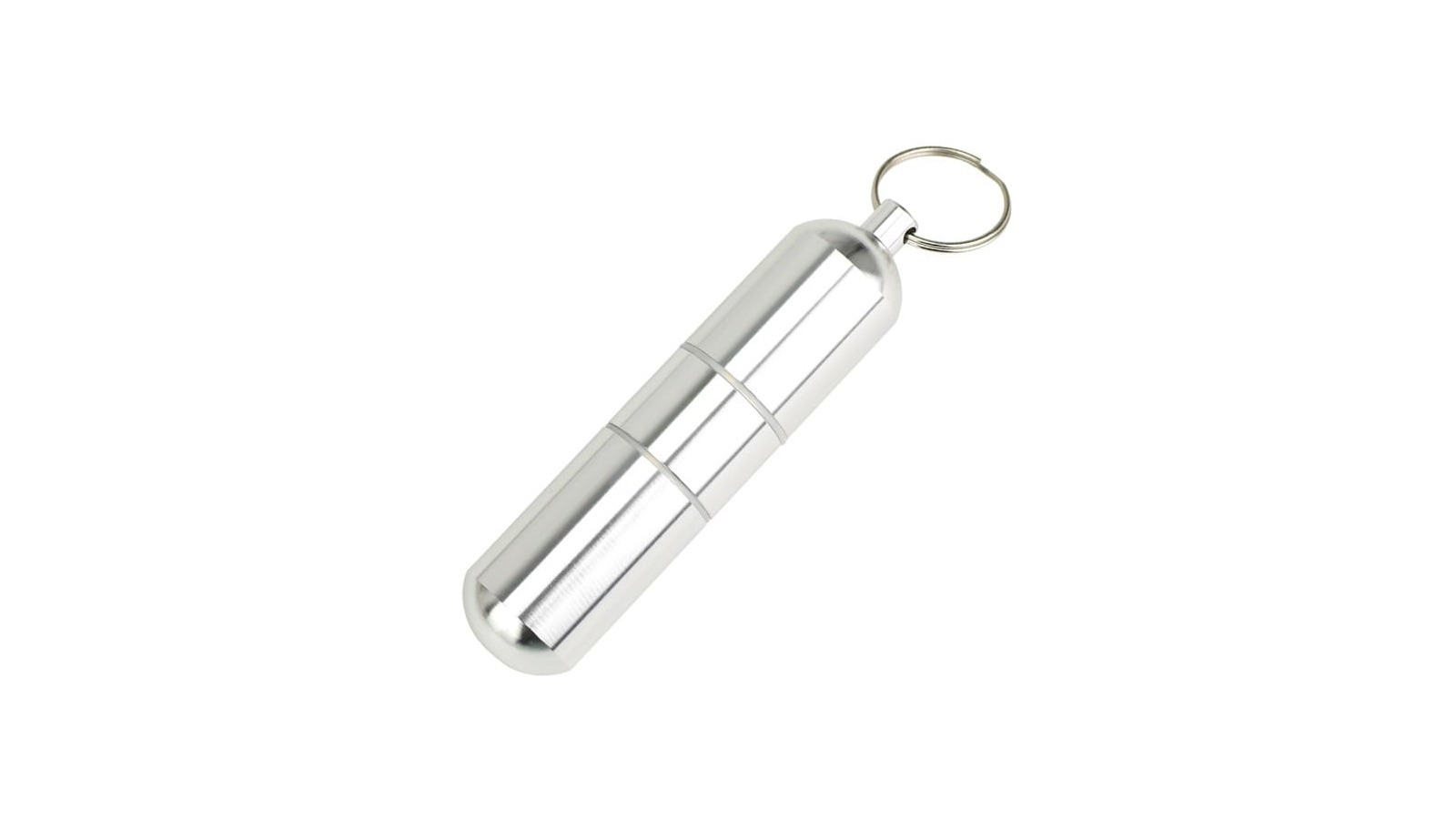
Shell colour is the second lever, and it works on the light half of the damage. An opaque or dark body keeps ultraviolet off the contents through the windshield. What amber, opaque and clear shells each do for medication is laid out in the shell-colour comparison.
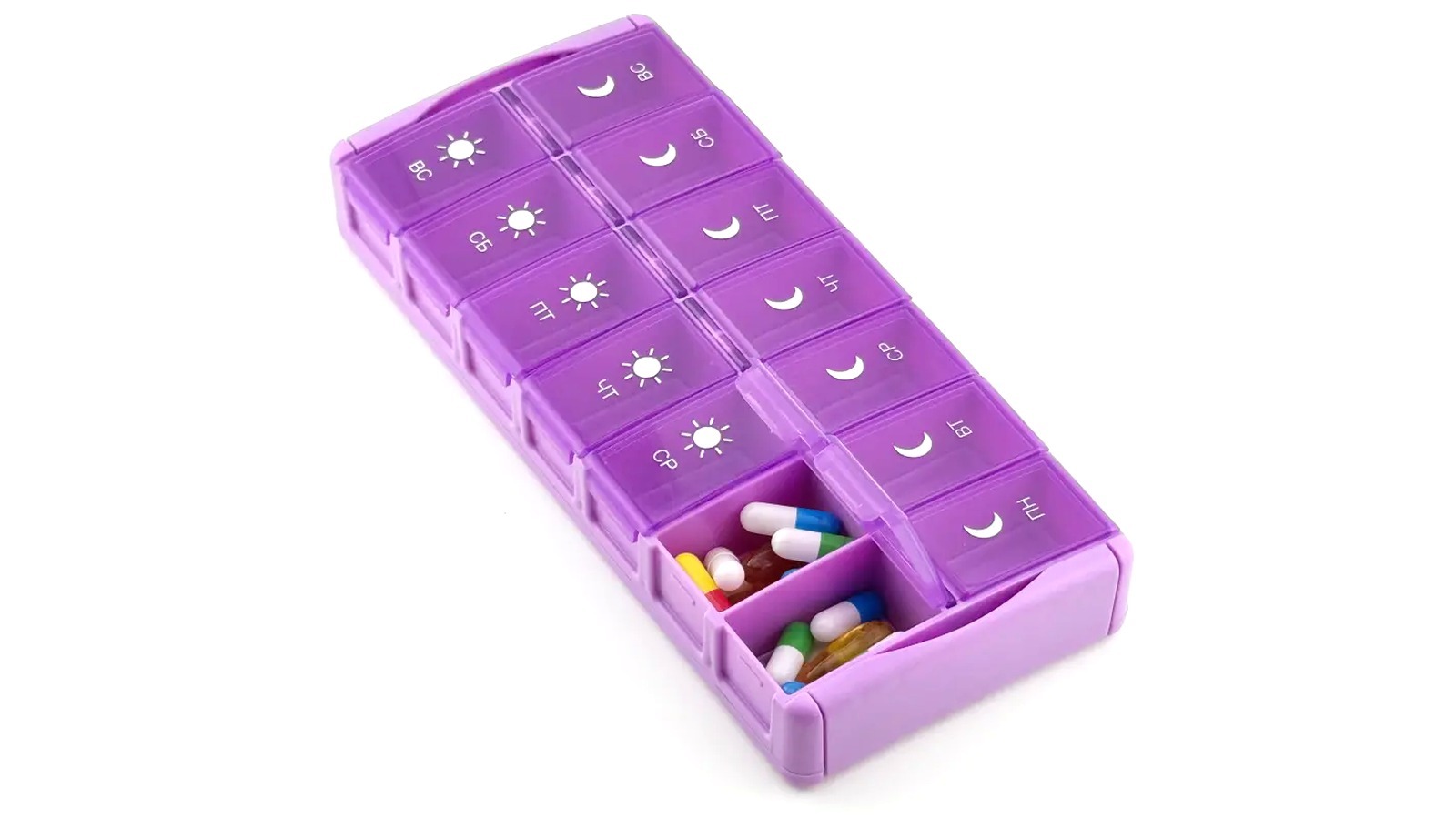
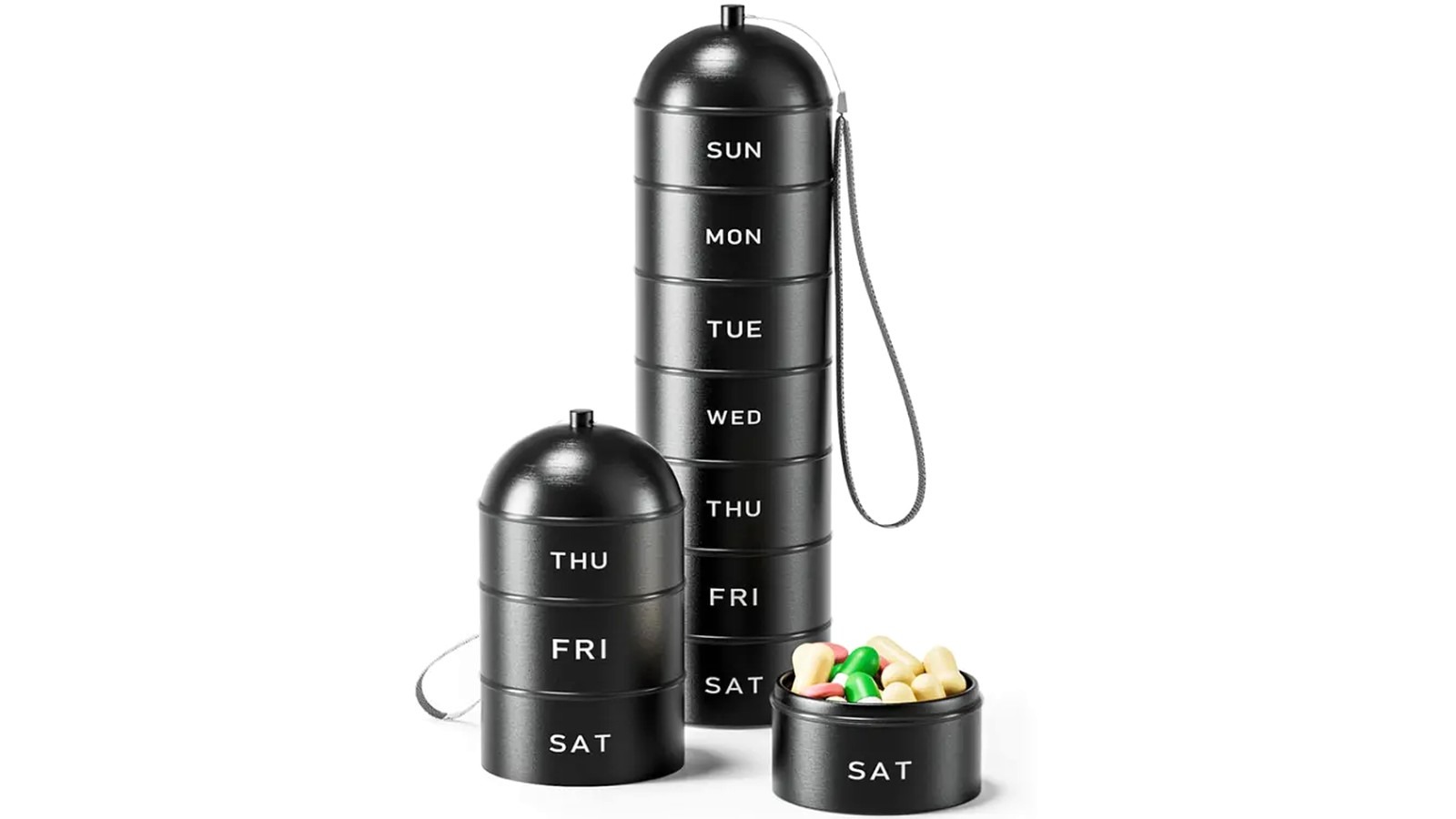
A dark weekly box is the honest version of a “car organizer” — light-blocking outside, specified inside. Products such as the black three-times-a-day weekly organizer show the pattern in a fixed-fill weekly format.
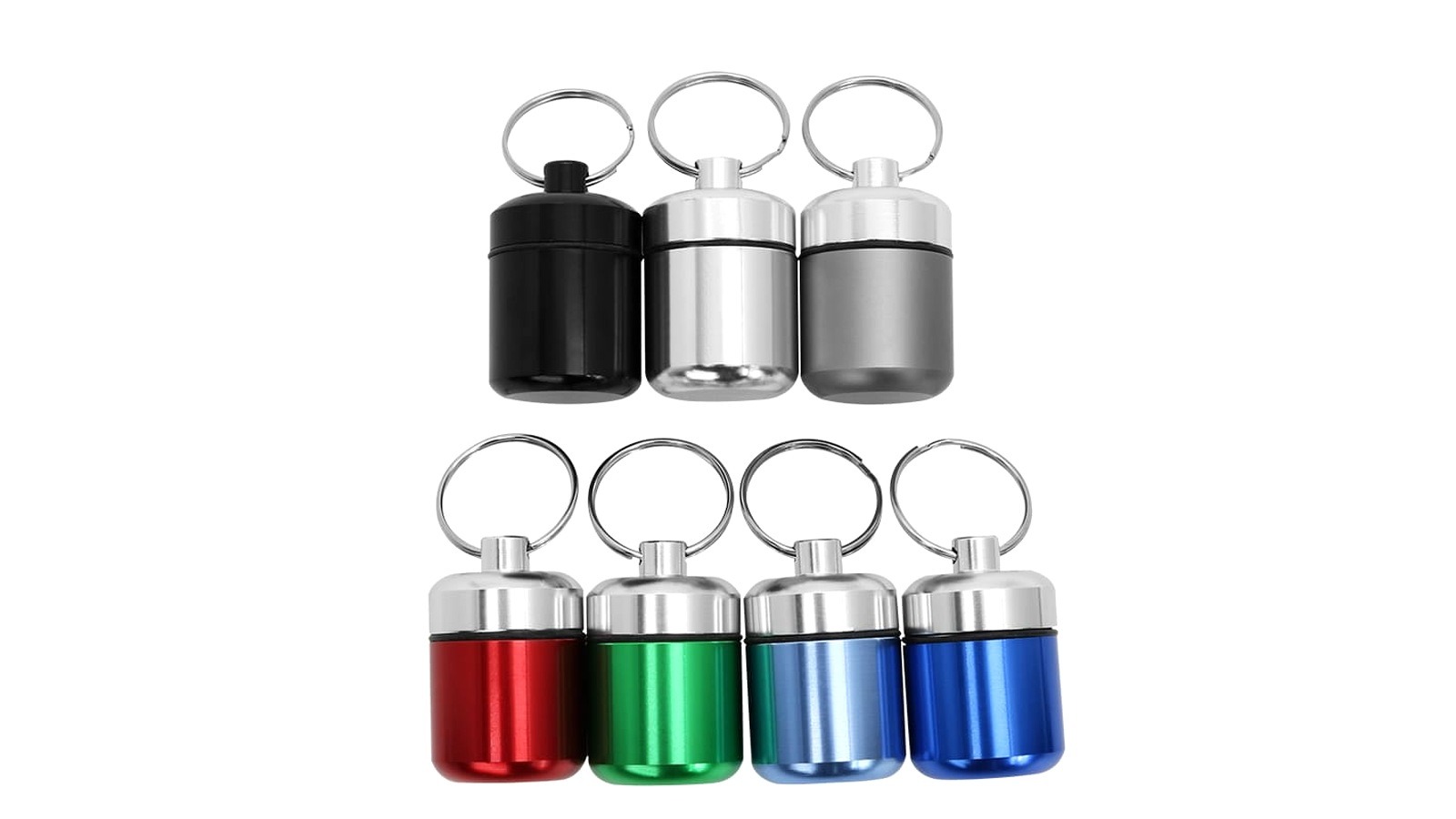
For buyers specifying metal, the aluminum alloy organizer is the reference construction: machined shell, positive closure, no plastic ladder to climb in the heat-deformation chain.
The Trade Nobody Prices In: Pre-Sorting Removes Four Protections
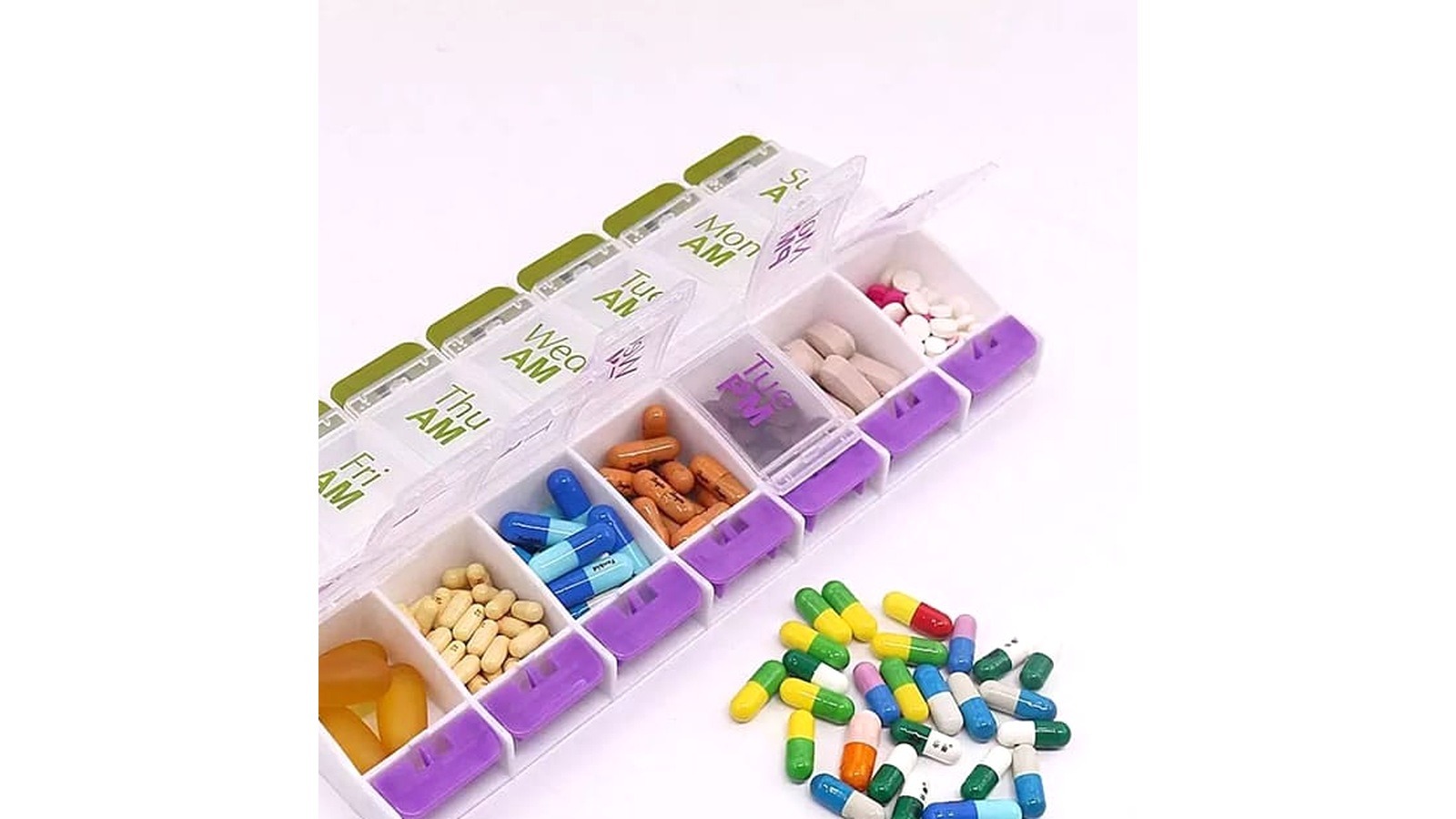
The real exposure of a pill organizer in a hot car is not the organizer. It is what pre-sorting already removed. An original pharmacy bottle carries four protections at once — a light-blocking wall, a neck seal, a desiccant, and fixed headspace. A weekly organizer strips all four on Sunday.
Then the box spends the week on a dashboard. Heat and moisture compound once the seal is gone, which is why gasket quality stops being cosmetic — how moisture-proof differs from waterproof, and how to verify each claim, is covered in moisture-proof versus waterproof pill boxes.
Two ground rules keep the marketing honest. First, no organizer replaces an amber bottle or a refrigerator — if a label says 2–8 ℃ or 68–77 ℉, the label and the pharmacist decide where the medicine lives, not the box.
Second, the practical compromise pharmacy services keep repeating: pre-sort only one to two days of ordinary tablets, keep the rest in original bottles at home, and carry the day’s pod instead of the whole week.
If the use case is genuinely about carrying medication on the move, that conversation has its own criteria — packing, crush protection and travel formats are covered in the travel pill organizer guide. This article stays on heat.
When Magnets Ride Along
One adjacent component fails in the same temperature band: magnets. A fridge-mounted organizer carried to the car meets the same cabin heat, and standard N-grade magnets are rated to about 80 ℃ — exactly where a summer cabin parks.
The fix is a grade change, not a design change: M-series magnets hold to 100 ℃ and H-series to 120 ℃, so the grade belongs on the purchase order. Why magnetic organizers misbehave on fridges is a different failure mode, covered in why magnetic pill organizers fall off.
What to Write Into the RFQ
- Resin grade and datasheet: name the grade, the indicator (HDT or Vicat), the load and the pass criterion. Reject any “max temperature” line that lacks all four.
- Post-heat-cycle geometry: lid-to-rim fit and latch preload after a heat cycle, plus gasket compression-set and recovery numbers — the three lines that decide whether the box still seals in September.
- Shell light transmission: opaque or dark body, chosen for the windshield scenario, not just for shelf colour.
- Magnet grade where applicable: N, M or H series, stated explicitly on the drawing.
- Verification: a factory in-house heat-cycle check on finished parts, plus a third-party report where the program justifies it. No category standard exists, so the factory either specifies this or does not.
- Claims discipline: nothing in the packaging or listing may imply the box protects medication potency in heat. The storage label owns that question.
That last line is the honest close. A pill organizer in a hot car is two questions wearing one sentence: can the box survive the afternoon, and can the medication? The first is a purchase-order paragraph. The second belongs to the label on the bottle — and the correct engineering answer is to carry less and leave the rest at home.