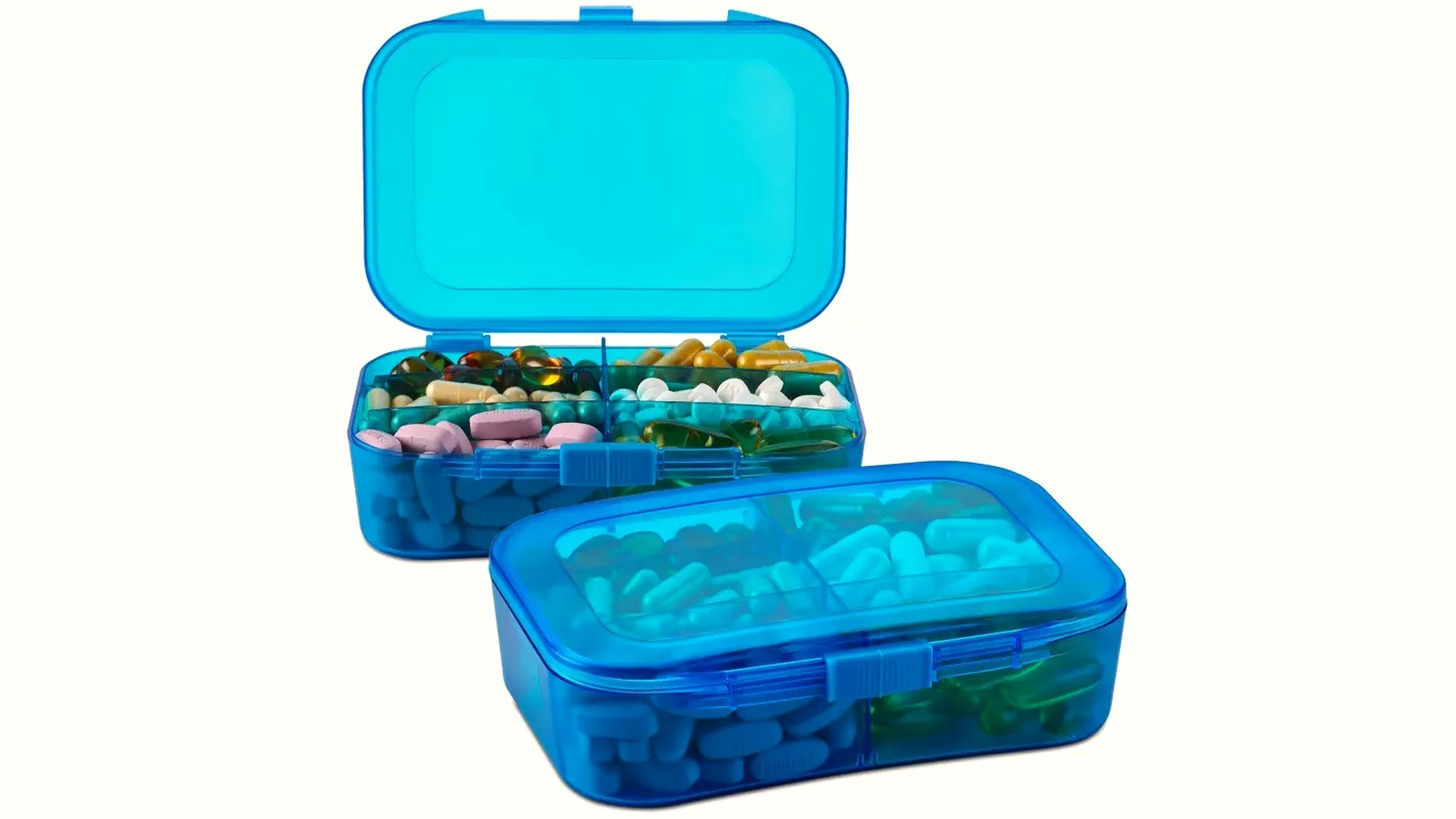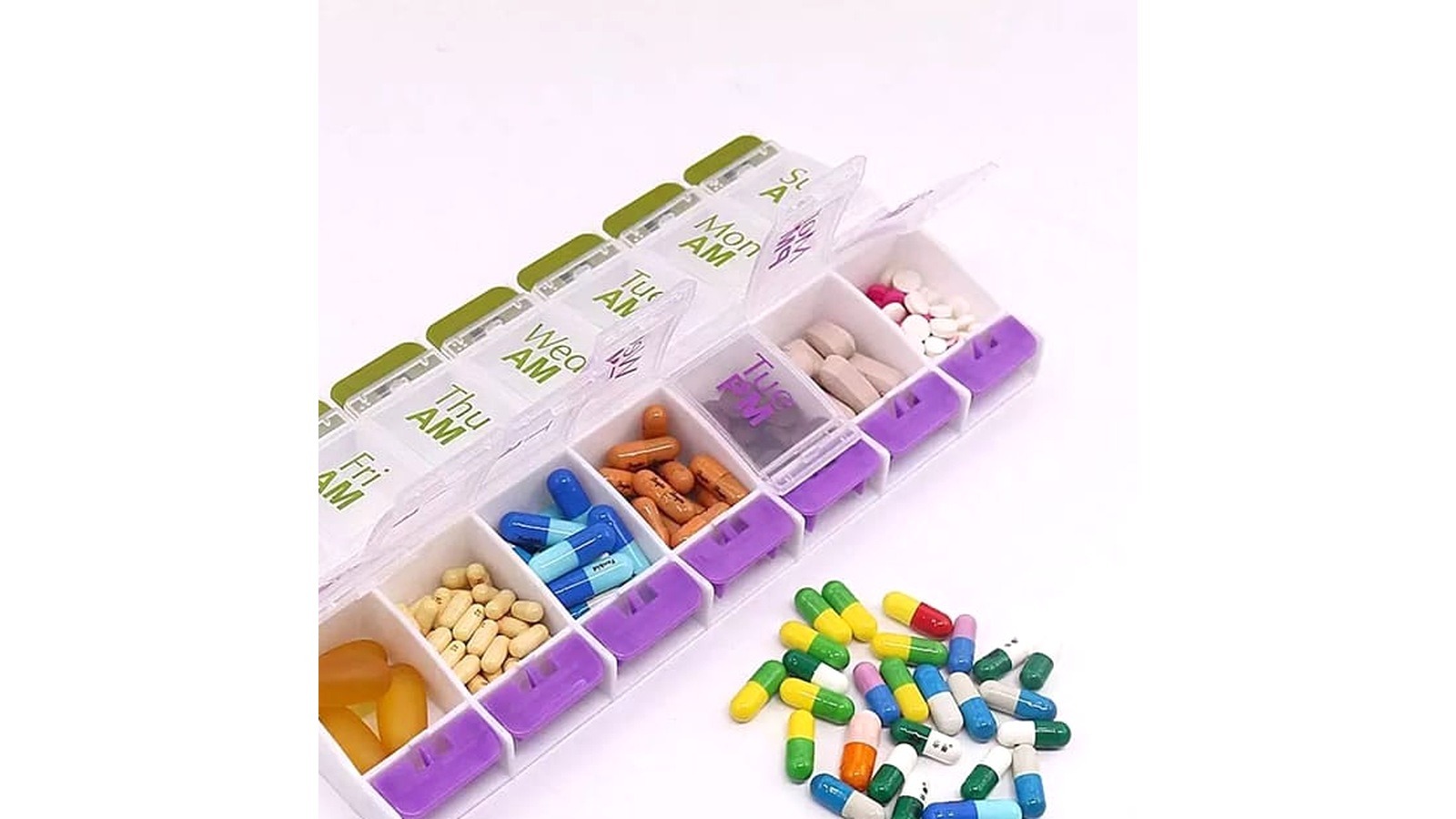
A good-looking pill box wins the click; a practical pill box avoids the return. The difference is testable, and most of it can be checked on a sample in ten minutes — no laboratory, no certificates.
This guide defines practical through four gates: the box must load with the pills the user actually takes, give them back without a fight, stay shut in a bag while opening with one hand, and survive the lid’s whole life. Appearance is the fifth gate, covered separately in which pill box styles look most expensive in 2026.
Buyers who specify “practical” as a feeling get samples that feel fine on a desk and fail in a pocket. Each gate below ends with a check that can be written into an RFQ as a pass/fail line.
Practical Starts With the Pills the User Actually Takes
Aggregated complaint statistics for this category put size mismatch at the top of the list — around 29% of complaints and roughly 71% of returns trace back to “it didn’t fit my pills.” That failure is almost never the outer dimensions.
It is the gap between how capacity is advertised and how pills are counted. Listings describe capacity with three different rulers: aspirin-sized tablets, fish oil capsules, and generic “capsules.” They are not interchangeable.
A fish oil softgel occupies several times the volume of a coated aspirin, and marketplace math on the same model has shown equivalences drifting four to fivefold. Some brand listings state two different capacities for the same compartment on one page — a symptom of copying claims between variants instead of measuring.
The practical specification is blunt. Require the supplier to state the usable internal dimensions of one compartment — wall to wall, at the narrowest point — and run a load test with the buyer’s own reference pills, not the factory’s demonstration tablets.
The phrase “aspirin-sized” carries no information and should not appear in a purchase order. For dose-dense regimens, models with genuinely large cells such as the large 7-day pill box exist precisely because standard cells fail this test.
The Compartment Must Give the Pill Back
Loading is half the interaction; unloading is where users form their opinion. A compartment that holds a pill but not a fingertip turns every dose into a shake-and-poke routine.
For users with tremor, arthritis, or limited vision, that makes the box unusable, not merely annoying. Geometry decides this, and the industry has known it for decades: a 1998 pill organizer patent already treated a rounded tray floor as a dispensing requirement, because pills sit in the corners of a flat-bottomed square cell.
The usable checks are three. The opening must accept an adult fingertip, not just the pill. The floor should be rounded or scooped rather than flat with sharp corners. And the cell should be deep enough that a finger can pinch a single tablet against a wall.
The pass/fail version takes one minute: fill a compartment with the reference pills, invert and shake once over a table. If the dose empties in one motion, the geometry works. If pills lodge in corners and need a second shake or a fingernail, the box fails the gate regardless of how it photographs.
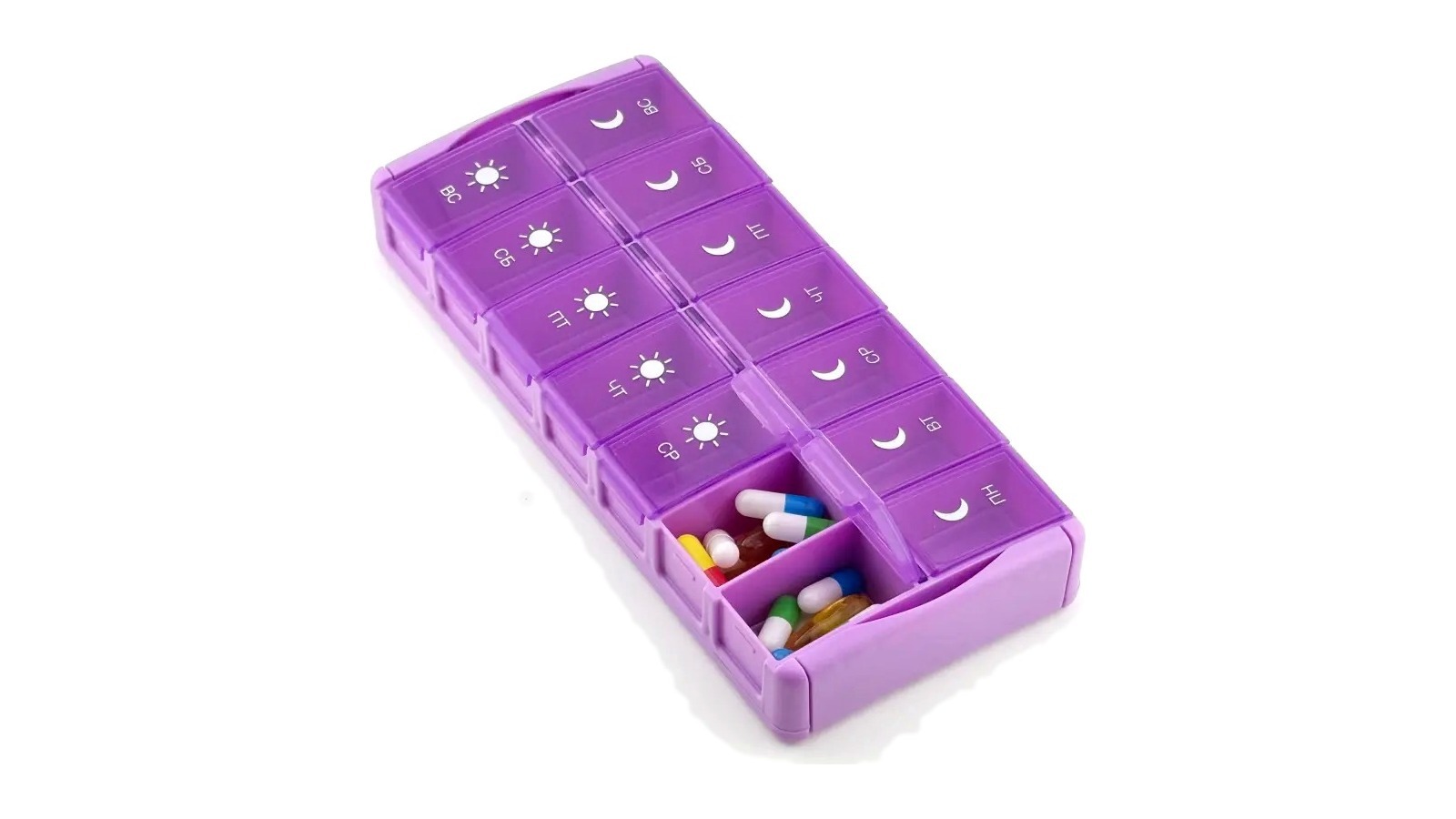
One-hand opening designs such as the push-button weekly pill box are built around this principle — the lid opens the cell wide enough to pour, not just to peek.
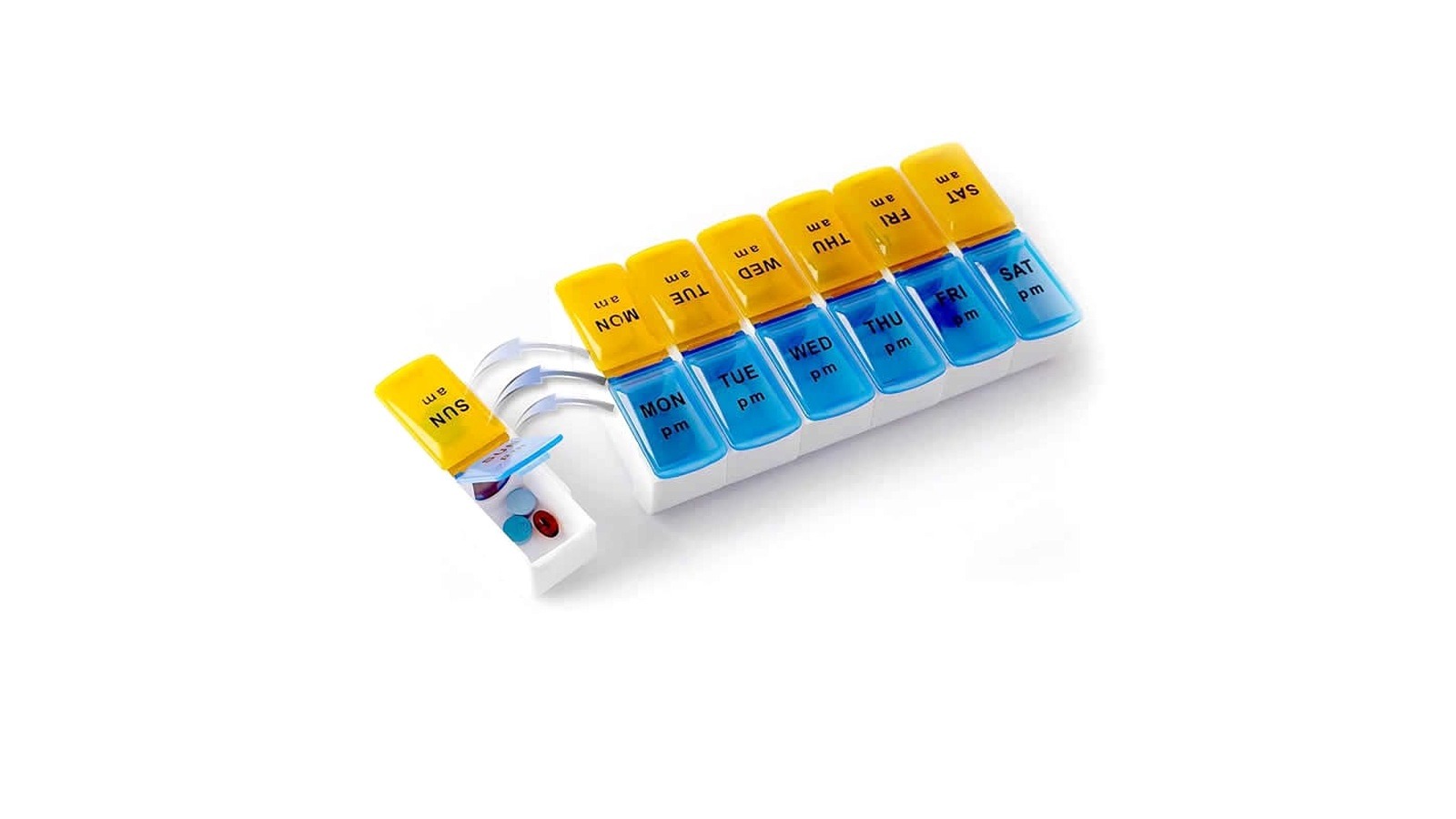
Shut in the Bag, Open With One Hand
Closing failures and opening failures sound like opposite problems, but complaint data treats them as the two ends of the same latch: weak closure sits around 25% of complaints and hard opening sits close behind.
The same engagement that holds the lid shut has to release under a thumb. When a design needs a coin, a fingernail, or a pry tool, the factory has already admitted the opening force is out of range.
The practical check has two halves. First, load the box, close it, and drop it about a meter onto a hard surface — a check many factories run in-house anyway, so ask for their method rather than a certificate. Lids that pop and scatter a week of pills fail.
Second, cycle the latch twenty times with one hand, the way a user with one free hand actually would. Stiffness that appears only on the tenth cycle is a real defect, not a break-in period. For latch geometry and what to specify, see which pill box latch stays shut on the road.
The Lid Is Where Practical Goes to Die
Across review aggregations, the lid is the one component where negative mentions approach unanimity — reviewers who mention lids mention them as a problem. The instructive detail is the failure mode.
Lids rarely snap in half first. They detach whole — a hinge pin walks out, a snap tab releases, and the lid comes off in a bag, never to be reattached.
That failure turns a practical product into a disposable one, because a detachable lid is not a replaceable one. Most brands sell no spare parts, so a lost lid retires the entire organizer.
The market has noticed: at least one brand now sells replacement lids as a separate SKU, which proves spare lids are a purchasing decision, not a manufacturing impossibility.
The buyer’s checks are two. Ask whether the hinge is designed against a stated cycle count and how it is verified. And ask what happens when a lid is lost — a supplier who offers a spare-lid SKU, or who packs spare lids with bulk orders, has thought about the product’s second year.
Designs where each day is a self-contained cell, such as the 14-compartment weekly pill box with removable day units, sidestep part of the problem by making the whole day unit the spare.
Removable Is Practical Only If Each Unit Seals
Removable day units earn their practicality in three ways: dose checking at a glance, one-handed refills, and taking a single day’s pills in a pocket. Reviewers of one removable-tray design made the catch explicit — the pods only stay spill-proof while clicked into the tray.
The check follows directly: pull one day unit out, fill it, close it, and shake it over a sheet of paper. If the day unit only seals as part of the assembly, that seal is a feature of the tray, not of the box — and buyers should know which product they are purchasing.
The same sample session should include a quick check that pills do not migrate between adjacent cells when the box is closed and tilted. Cross-day mixing reads as a defect to the user even when the dose itself was correct.
Where Pretty Still Earns Its Budget
None of this argues against appearance. A distinctive finish or a giftable shape lifts the first purchase, the listing click-through rate, and the price band a SKU can hold.
But appearance influences the first order, while the four gates above influence the reviews, the return rate, and the reorder. A practical split for most programs: settle the four gates first, then spend what remains of the budget on the surface. Spending in the reverse order produces listings that photograph beautifully and come back as returns.
Both sides of that split are covered in the pill box styles buyers perceive as premium. For the wider category context — formats, materials, and user groups — the existing practical pill box overview covers the taxonomy; this article deliberately sticks to what can be verified on a sample.
A Ten-Minute Practical Audit for Your Next Sample
- Load one compartment with the buyer’s own reference pills; confirm they fit without force and close without compression.
- Read the internal cell dimensions from the spec sheet and match them against the reference pill, not the listing claim.
- Invert and shake once: the dose should empty in one motion, without corner-trapped stragglers.
- Close, drop from roughly a meter onto a hard surface, and confirm no lid releases and no pills cross cells.
- Cycle the latch twenty times one-handed; note any stiffness, squeak, or partial engagement.
- Pull one removable day unit, fill and shake it alone; confirm it seals independently or accept that it does not.
- Ask the supplier for the hinge cycle method and the spare-lid answer before quoting tooling.
A practical pill box is not the one that survives the demo table. It is the one that survives the user’s actual week — loading real pills, opening with one hand, riding in a bag, and coming back for a reorder instead of a refund.