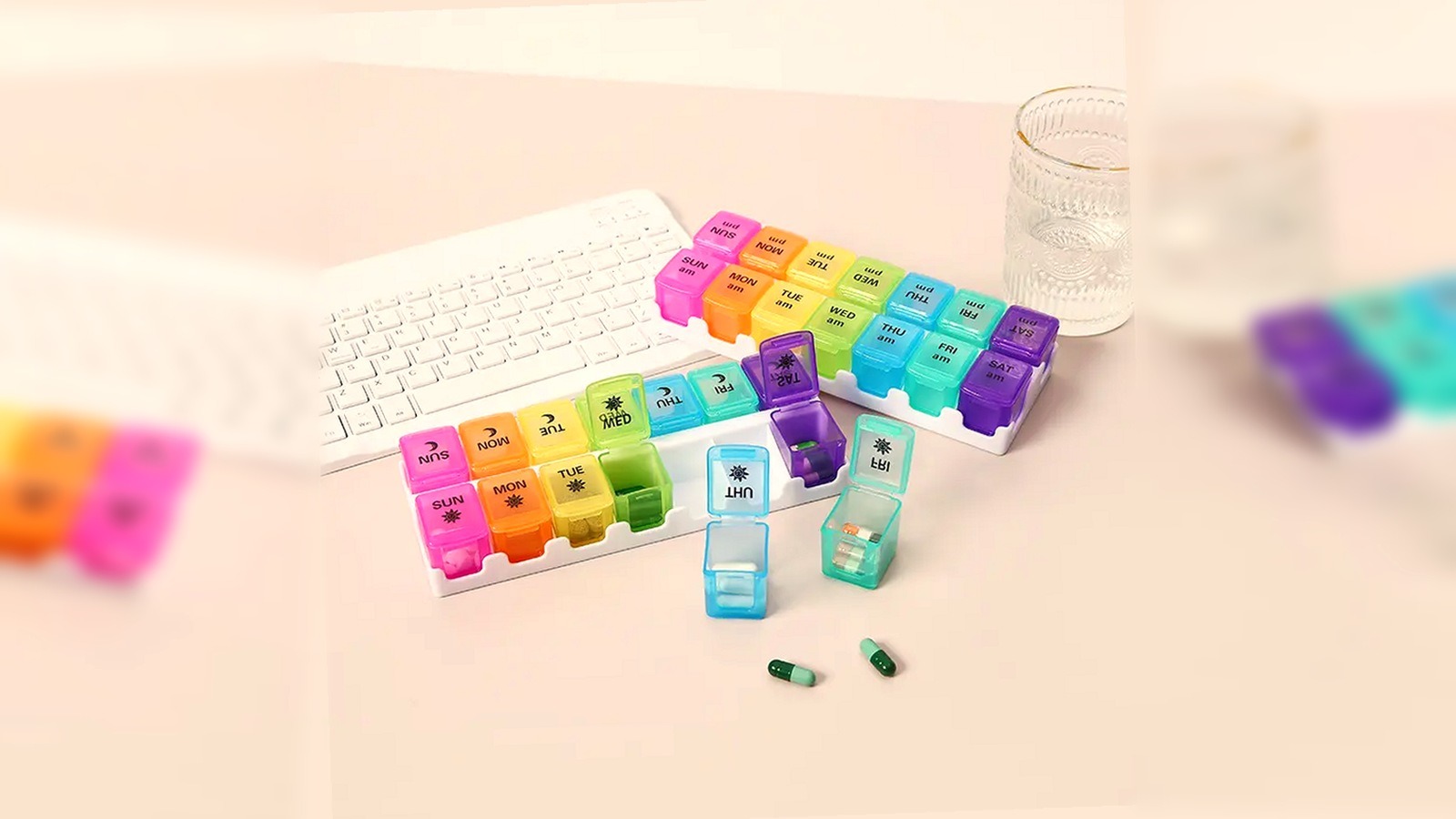
Shell colour is the cheapest functional decision in a pill box, and the one most often made on looks. If your formulation is light-sensitive, that colour decides how much of the dose survives the shelf. A clear, an amber and an opaque pill box are not three shades of the same thing — they block different wavelengths, and only one of them is a documented industry answer.
This is not medical advice, and it does not replace the stability data held by whoever owns the drug registration. It is the framework we walk through with brand owners, pharmacy buyers and supplement companies before a shell colour gets signed off.
Why Light Is a Packaging Problem, Not a Colour Preference
Light carries energy. When a photon is absorbed by a drug molecule it can break bonds, oxidise the active ingredient, or drive a rearrangement that produces a different compound. The container is the only thing standing between that molecule and every light source between our moulding floor and the customer’s bathroom cabinet.
The APIs Usually Flagged as Light-Sensitive
The substances named most often include epinephrine, vitamins A and D, furosemide, doxycycline, sodium nitroprusside, methotrexate, amitriptyline and chlorpromazine. Treat that as a warning list, not a standard, and not as a complete one.
The commercial pattern matters more than the names. Light-sensitive actives are frequently low-dose, so a small absolute loss is a large share of the dose, and the change is invisible from outside the box. You find out from an assay, months later, after the shipment has landed.
What the plastic does chemically is a separate problem from what light does. Sorption and migration are covered in our pill box plastic selection and drug compatibility guide; this article stays on the shell.
What Each Shell Colour Actually Blocks
Amber: the Reference Standard
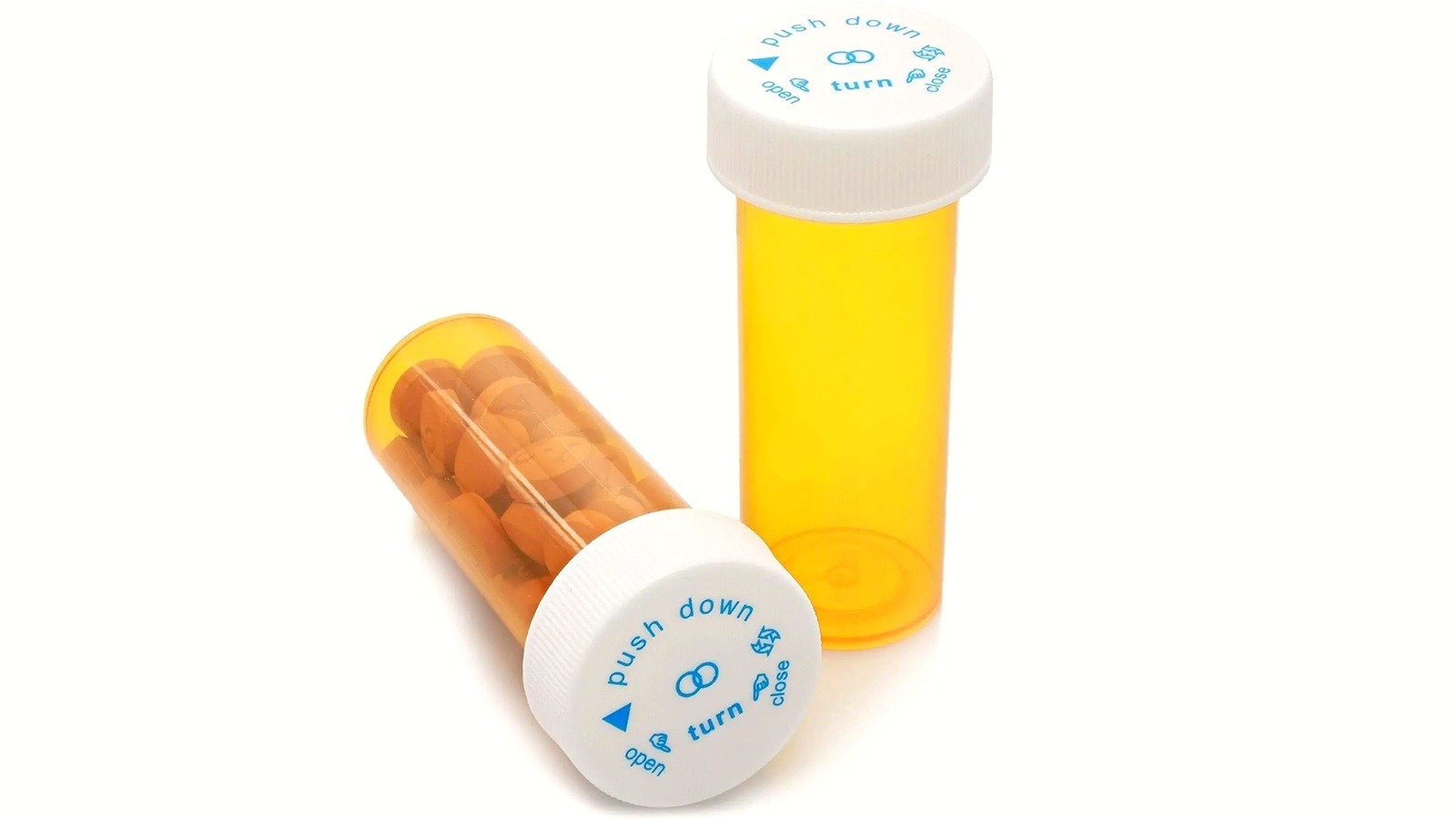
Amber is coloured with iron-sulfur compounds. It absorbs ultraviolet and short-wavelength visible light from roughly 470 nm and below, which is the band that does most of the damage to the molecules listed above.
That is an optical function, not a marketing story, and it is why the amber pill box became the default for pharmacy stock bottles. When you buy amber you are paying for a pigment package and the quality control that keeps it consistent from batch to batch.
Clear: Almost Nothing
Clear transmits essentially the whole ultraviolet and visible range, so its light protection is close to zero. It is the right shell when the tablet is not light-sensitive and the buyer wants to see the dose. It is the wrong shell for everything else, and no amount of thickness fixes that.
Cobalt Blue: Mostly a Brand Decision
Blue tints block part of the ultraviolet band, but their visible-light blocking is markedly weaker than amber. Their real job is shelf psychology — blue reads as clean and clinical, and that sells. It is a legitimate reason to choose it, as long as nobody in the approval chain believes it is doing amber’s job.
Opaque White: Better Than It Looks, Still Not Automatic
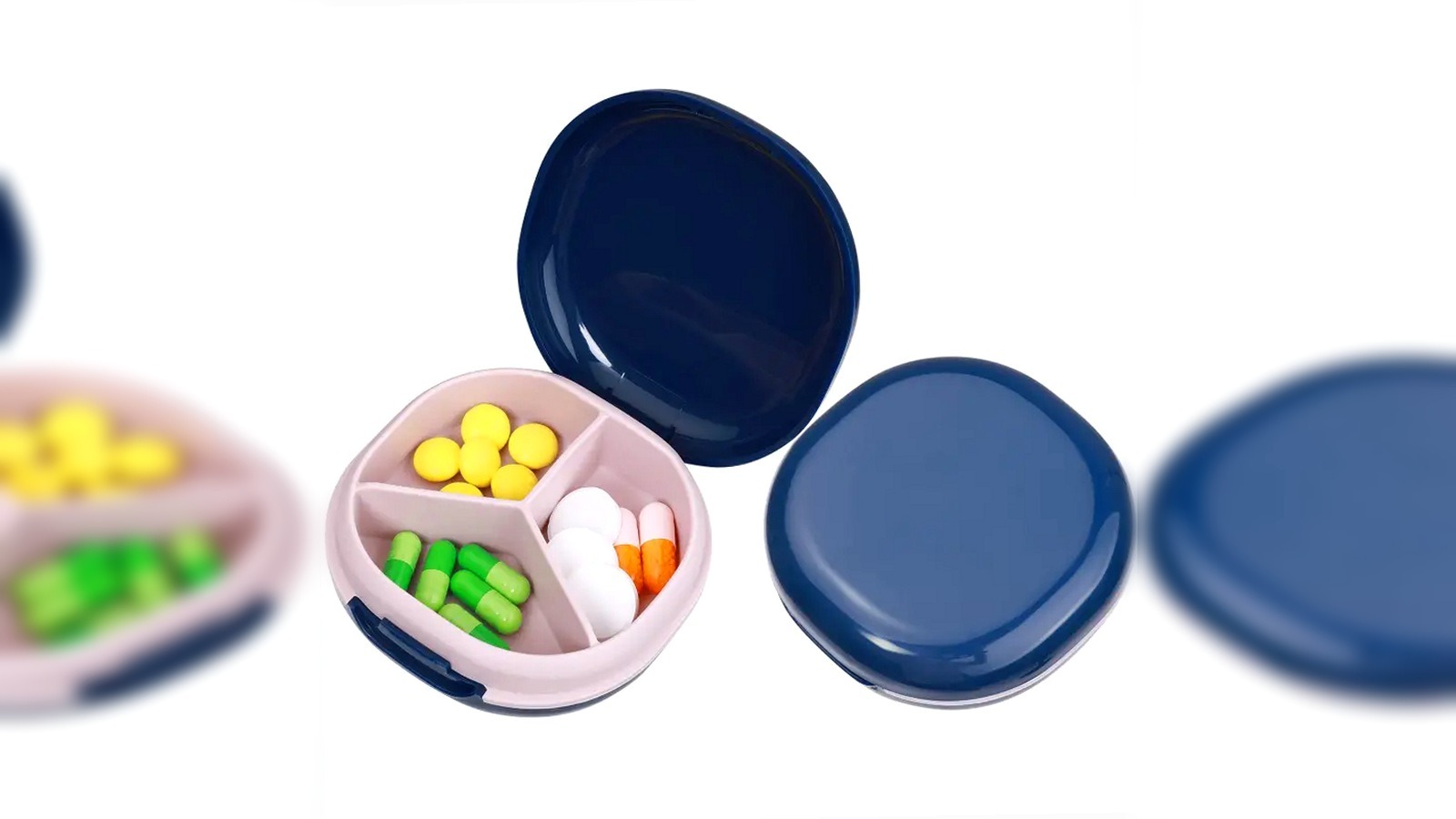
An opaque shell reflects visible light and hides the tablets, which many brand owners want for both aesthetics and discretion. But opaque is not the same as UV-protective. A white shell moulded without an ultraviolet absorber in the formulation can still transmit part of the UV band, because the pigment and the absorber are two different things.
There Is No Universal Colour Code
No harmonised rule says amber means prescription and blue means over-the-counter. Anybody who hands you that rule has invented it. Colour is a specification you agree with your customer, not a code you can read off a competitor’s shelf.
The Two Numbers to Put in a Specification
Spectral Transmission
The measurement is ultraviolet-visible spectrophotometry across 200 to 800 nm. For oral and topical plastic containers, USP 671 sets the line: transmission at any wavelength between 290 and 450 nm must not exceed 10 percent.
That is the figure to quote when a customer asks how much light an amber pill box actually blocks. Ask for it on the finished shell, not on the resin pellet, because wall thickness and pigment dispersion both move the result.
Light Stability Testing
Where a light-protection claim has to be defended, ICH Q1B is the reference: an exposure of at least 1.2 million lux hours, plus at least 200 watt hours per square metre of near-ultraviolet.
Anyone can claim light protection. The claim is worth what the test report behind it is worth, and that report should name the article tested — the assembled box, not a plaque of material cut from a sheet.
What a Pharma Customer Will Ask For
If your customer is a pharmaceutical company, the optical argument lands in three places in their dossier: the container closure system section (3.2.P.7), the container closure discussion in pharmaceutical development (3.2.P.2.4), and the stability data (3.2.P.8.3).
That is why we ask for spectral transmission results before tooling, not after. A buyer who has to go back to a supplier for a light-transmission report three months into a filing has a problem money does not fix quickly.
A Documented Case: 15 Percent Lost, and What Replaced It
One light-stability study on a specific SKU recorded a 15 percent potency loss and visible yellowing in clear packaging, and found that switching to amber PET brought degradation to under 3 percent — comparable to an aluminium foil pack.
Do not read that as a universal constant. It is one formulation, one study, one set of conditions. Read it as the shape of the risk: the same tablet, the same dose, a different shell, and a product that changed.
Where Colour Stops Being Enough
Amber and opaque pill box shells raise the barrier. They do not make a repack box equivalent to the original container. A pill box is a dispensing aid; the primary package the drug was registered in is the package the stability data belongs to.
So the honest line to give your customer is the label line: store in the original packaging and protect from light, and follow the pharmacist’s instructions. Anybody promising that a new box replaces the original bottle is selling past the data.
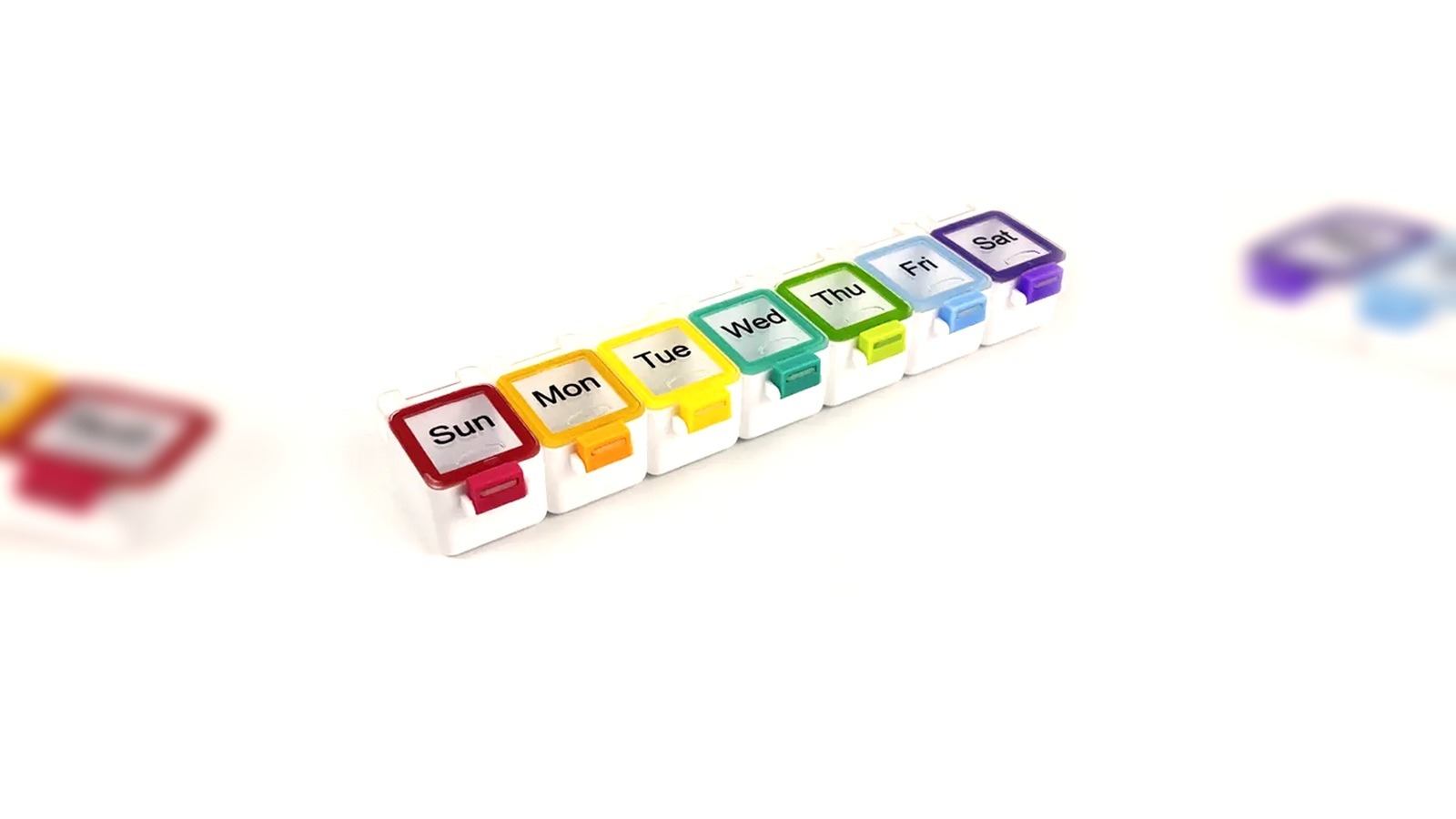
There is a second limit, and it is a human one. If the lid colour is carrying information — a different shade for morning and evening, for instance — it fails for the roughly one in twelve men with a colour vision deficiency.
That is where a tactile day marker earns its place, and we covered the standards in our braille pill box guide.
How to Write Shell Colour Into a Purchase Order
- Resin, colourant and any UV absorber named by supplier and grade — including the masterbatch carrier, not just the word “amber”.
- A spectral transmission report on the finished shell across 200 to 800 nm, or the 290 to 450 nm line from USP 671.
- An approved colour chip, with the light source and viewing conditions recorded alongside it.
- A written commitment to notify you before any colourant or absorber substitution, and to re-test the shell if it happens.
- A stability statement from whoever owns the drug registration, for the container actually being proposed.
- A realistic note on recycled content. Recycled and bio-based grades shade differently, so a colour that matched last year’s chip may not match this year’s — our eco-friendly pill box material guide covers where those grades fit.
The third and fourth items are the ones that get skipped, and they are the expensive ones. A silent colourant swap can invalidate a stability assumption and a regulatory file at the same time, and no certificate issued for the old colour covers the new one.
Colour also costs money, and not only in pigment. Amber and opaque batches need tighter colour control, more scrap at start-up and a documented chip standard, which is why a shell colour change is a tooling conversation rather than a swatch conversation.
If you are sourcing an amber pill box, or any shell that has to block light for a specific formulation, send us the API, the dose and the storage conditions. We will tell you which polymer and which pigment package we would mould it in, and which test we would run before the first sample ships — and we will tell you when the honest answer is that the drug should stay in its original container.