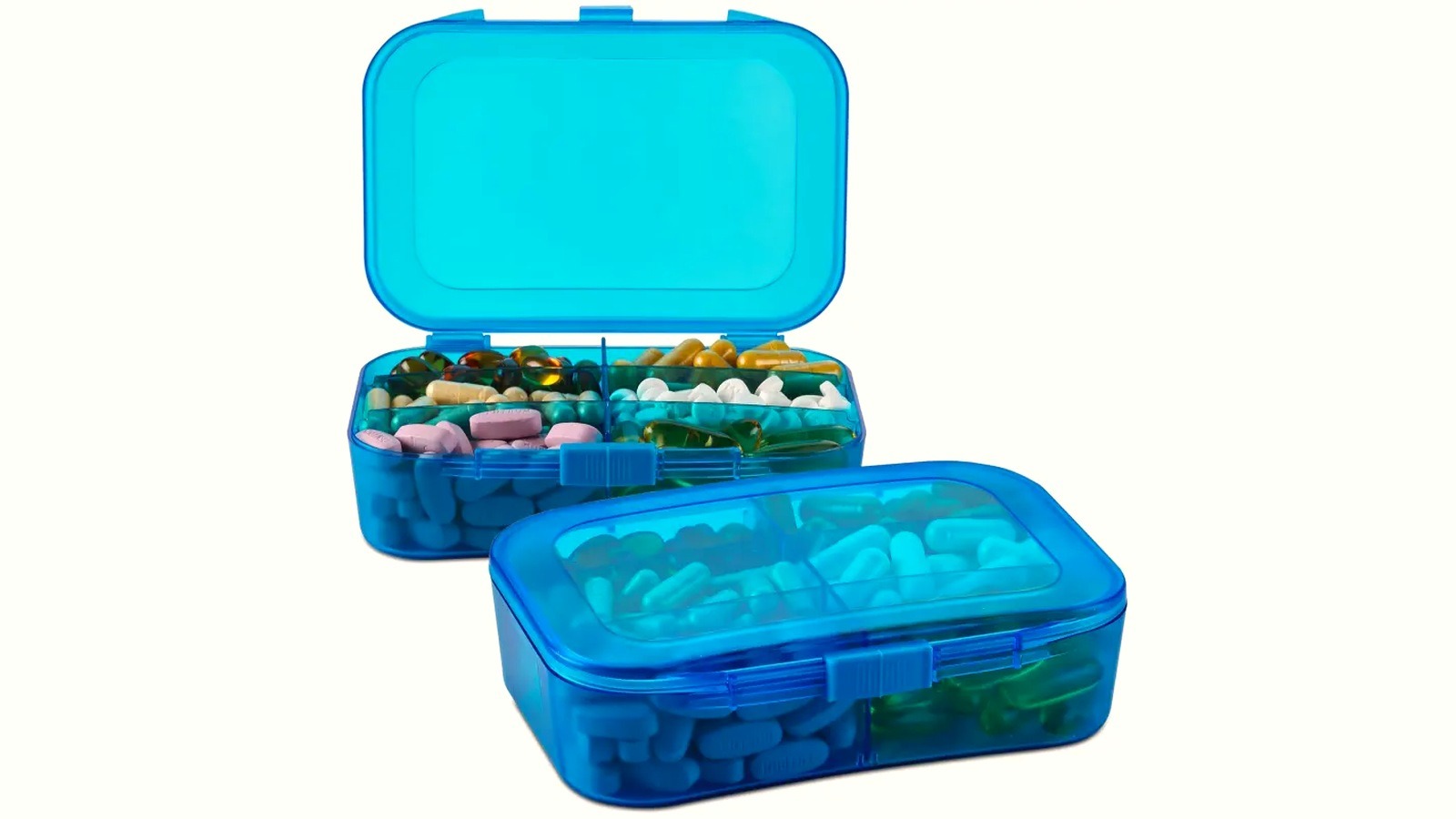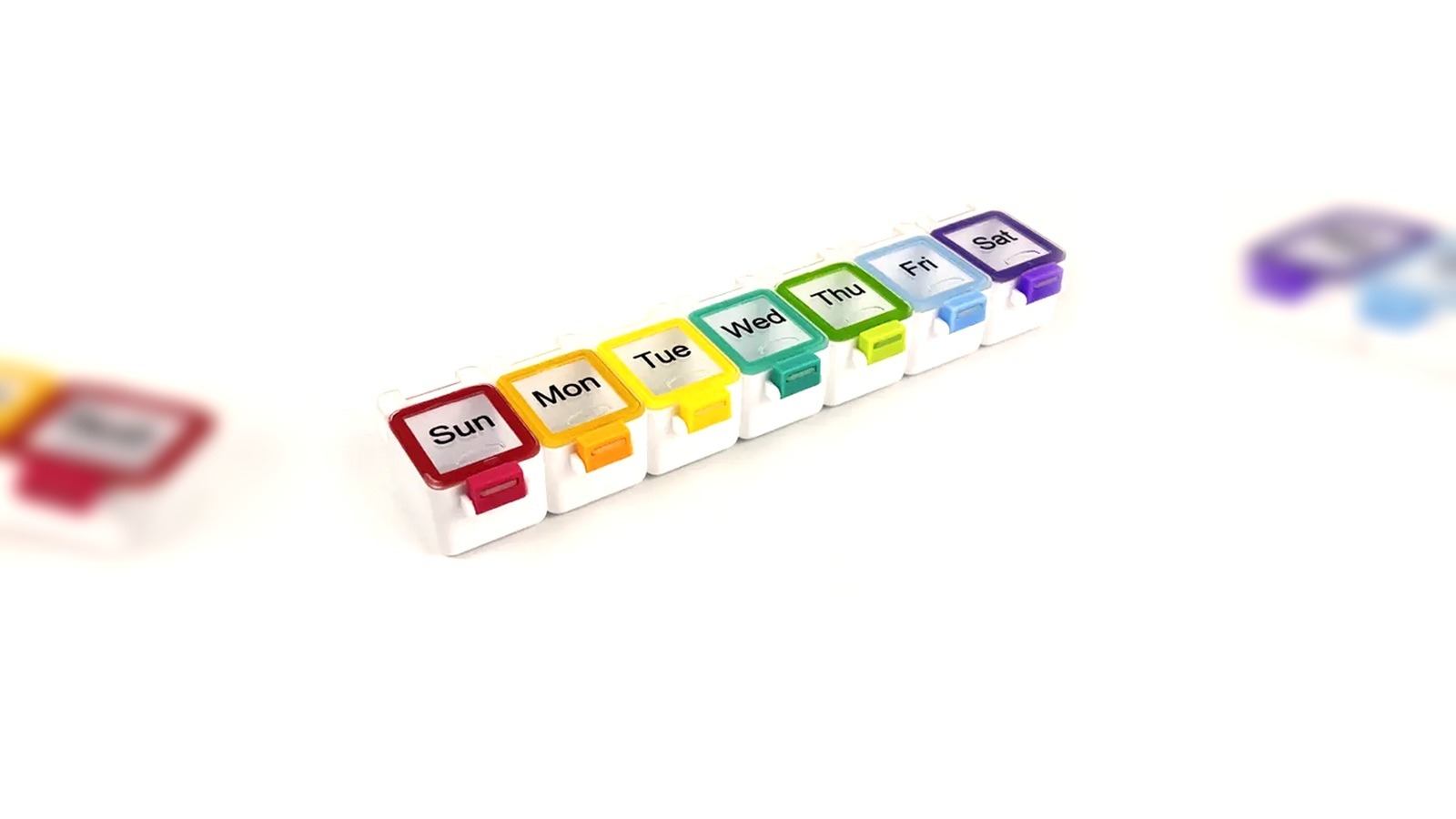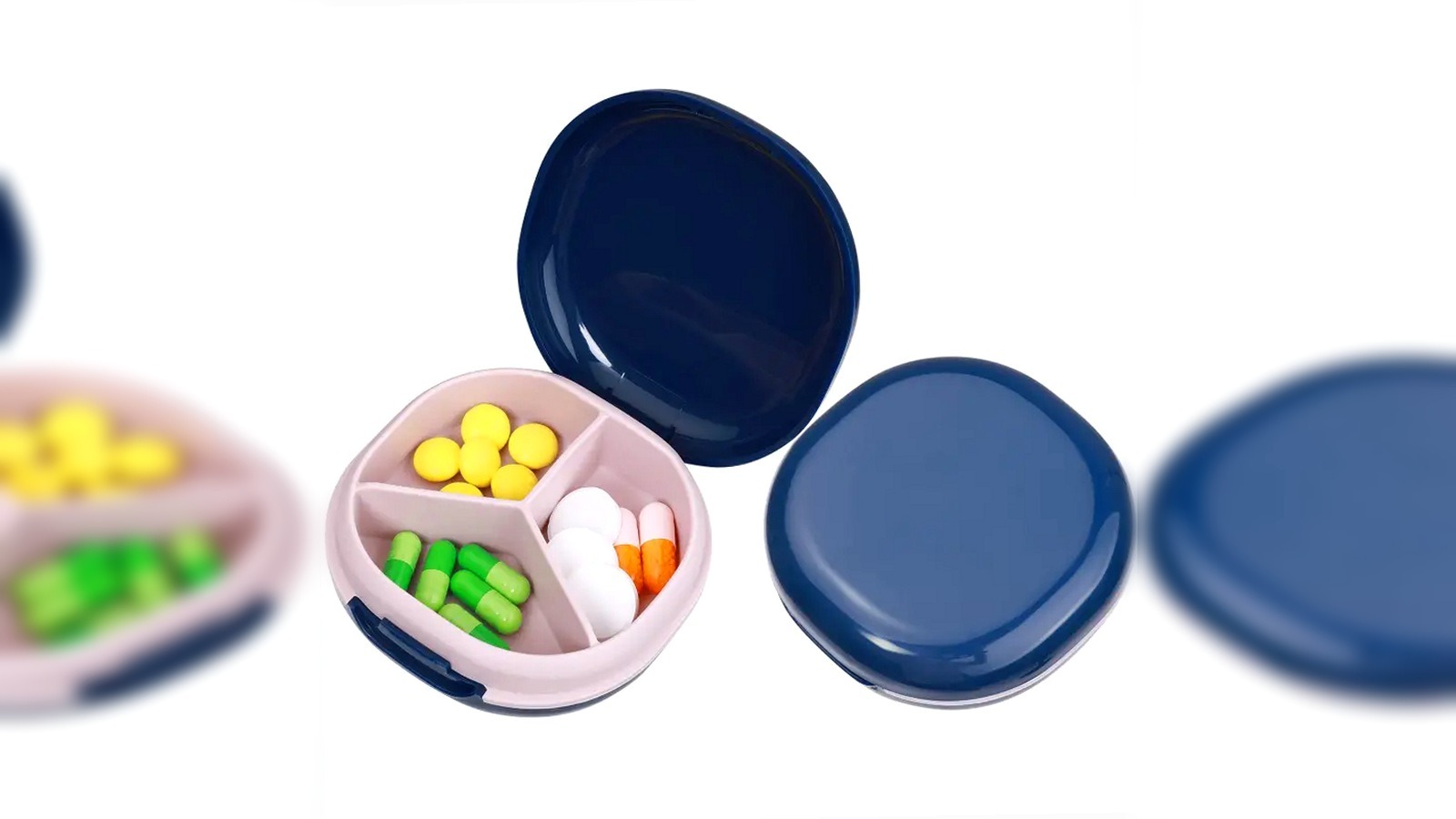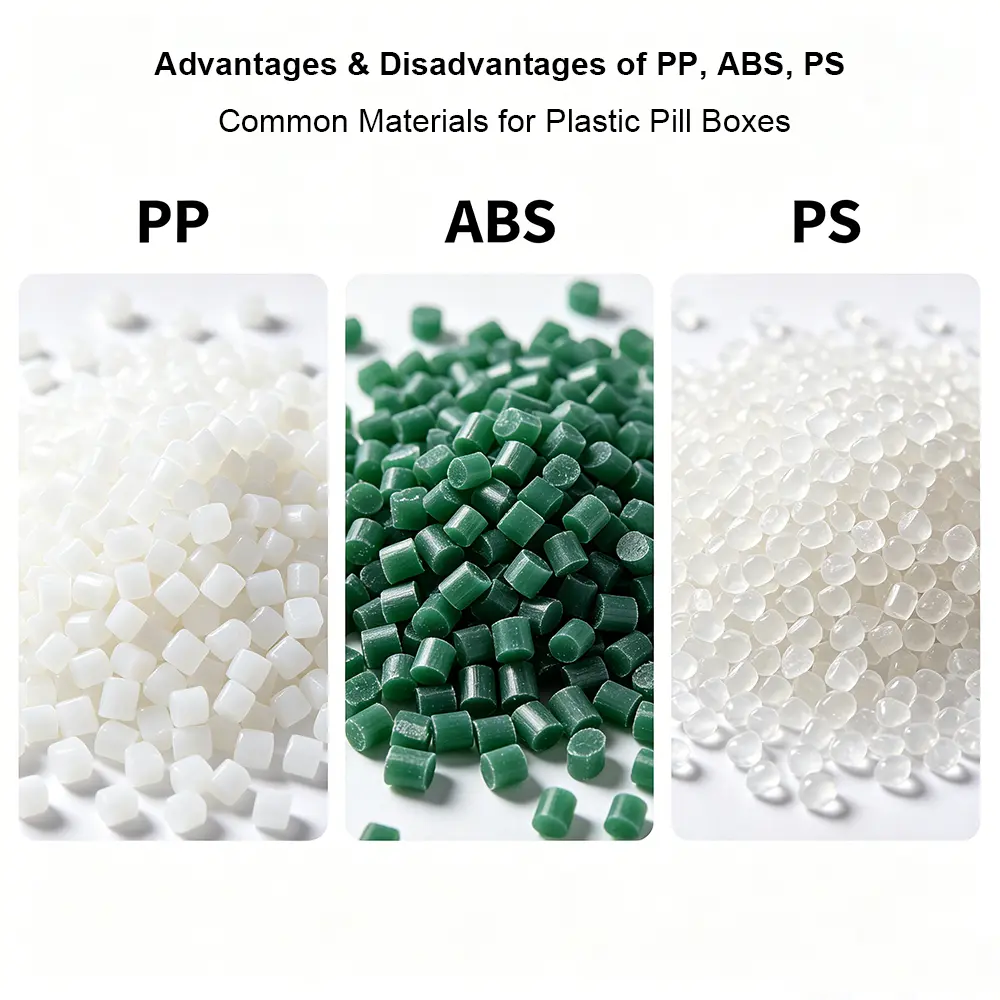
PP (Polypropylene) – The Most Widely Used Material for Pill Boxes
Advantages
High food & medical safety grade
BPA-free available; resistant to boiling water and steam sterilization, compatible with high-temperature disinfection for medicines and microwave-accessible pill storage. Compliant with FDA, LFGB and CE food-contact standards.
Good toughness, drop and bending resistance
Hinges and latches withstand repeated opening/closing without breakage, ideal for flip-top, compartmental and portable pill cases; resistant to brittleness at low temperatures, no cracking when used outdoors in cold weather.
Excellent chemical resistance
Does not react with tablets, vitamins, acidic or alkaline medicines, avoiding harmful substance leaching that contaminates medication.
Lightweight & cost-effective
Low density delivers light finished products; mature mass production keeps costs moderate, perfect for bulk cross-border pill box orders.
Freezer & microwave safe
Stable performance from -20°C to 120°C, suitable for pill containers storing refrigerated medications.
Recyclable plastic; leftover scraps are easy to re-granulate for secondary production.
Disadvantages
Dull matte surface with low gloss
Cannot achieve high-gloss finish, inferior visual grade to ABS/PS for premium gift-style products.
Low surface hardness, prone to scratches
Sharp objects leave visible marks easily, making items look worn after long-term use.
Poor printing adhesion
Ordinary screen printing ink peels off easily; flame or corona surface treatment is required for stable LOGO and scale printing.
Insufficient rigidity; ultra-thin transparent dividers tend to warp slightly.
Suitable Pill Box Types
Daily portable compartment pill organizers, 7-day weekly pill boxes, elderly pocket pill containers, sterilizable pill cases, child-resistant lock pill boxes
ABS (Acrylonitrile Butadiene Styrene) – Mid-to-High Grade Rigid Pill Boxes
Advantages
High rigidity, hardness and glossy finish
Mirror-smooth surface creates a thick, premium hand feel, ideal for gift sets, household medical storage boxes and clinic-use pill organizers.
Excellent printing & electroplating performance
Strong adhesion for screen printing, pad printing and UV color printing; compatible with hot stamping and electroplating for decorative high-end appearances.
Dimensional stability
Minimal deformation after molding; uniform gaps for precise latches and multi-layer combined pill boxes.
Better low-temperature toughness than PS
Resists cracking from drops at room temperature, balancing hardness and impact resistance.
Disadvantages
Poor heat resistance
Heat distortion temperature only 70~85°C; cannot be boiled or steam sterilized. High heat softens the material and may release trace monomers, unsuitable for high-temperature medical disinfection scenarios.
Weak chemical resistance
Contact with alcohol, high-concentration medicinal liquids or essential oils causes whitening and cracking.
Not microwave or freezer compatible; toughness degrades after long-term cold storage.
Limited high-temperature medical certification, restricted for some FDA-regulated medical applications.
Higher raw material and production costs than PP and PS.
Suitable Pill Box Types
Divided into general transparent GPPS and impact-resistant HIPS; GPPS transparent grade is most common for pill containers
PS (Polystyrene) – Low-Cost Transparent Disposable Pill Boxes
Divided into general transparent GPPS and impact-resistant HIPS; GPPS transparent grade is most common for pill containers
Advantages
Ultra-high transparency
Glass-like light transmission for full visibility of pills, the top choice for transparent compartment dividers.
Mirror-high gloss surface with clean transparent appearance for budget products.
Good molding fluidity, easy to produce ultra-thin parts; lowest raw material cost among the three materials.
High surface hardness, less prone to scratches, maintains clean transparent look.
Disadvantages
Extremely brittle, poor impact resistance
Cracks easily after light drops or forceful latch opening; turns fragile and breaks at low temperatures, short service life.
Poor heat resistance
Deforms and softens above 60°C; avoid hot water and direct sunlight exposure.
Worst chemical resistance of the three materials
Contact with alcohol, essential balm or ointments triggers stress cracking and whitening instantly.
Not compatible with disinfection, microwave or freezer storage.
Lack of flexibility; unable to manufacture elastic flip lids for repeated use, only for simple one-piece disposable boxes.
Suitable Pill Box Types
Disposable transparent single-use tablet storage cases, short-term temporary pill dispensers, low-cost promotional one-time medical mini pill boxes (not for long-term repeated use)
Material Selection Guide for Cross-Border Pill Box Manufacturing
Bestselling cross-border daily use, elderly portable models, reusable washable & sterilizable containers → PP
Premium gift packaging, elaborate printing, room-temperature household storage, high-end appearance demand → ABS
Low-cost disposable, fully transparent visual design, short-term temporary storage, promotional cheap items → PS
Comparison Table of Core Performance Indicators
| Material | Heat Resistance | Drop & Impact Toughness | Transparency | Printing Difficulty | High-Temp Sterilization | Cost Level | Medical Compliance |
|---|---|---|---|---|---|---|---|
| PP | Excellent | Excellent | Semi-transparent / Opaque | Requires surface treatment | Boilable & steam sterilizable | Medium | Best, widely FDA approved |
| ABS | Poor | Moderate | Semi-transparent / Solid color | Easy printing | Not heat sterilizable | High | Acceptable only for room-temperature gift products |
| PS | Very Poor | Very Brittle | Fully transparent | Easy printing | Not heat sterilizable | Low | Only for short-term disposable use |