A pill box rattles in a bag for four different reasons, and stuffing it with cotton fixes none of them for long.
Every noise traces back to a measurable feature — the free play inside a compartment, the mating faces of a closure, a spring, or a sliding sleeve. A quiet pill box is a specified one, not a lucky one, and most of the checking can be done on a sample in ten minutes.
The category has a specification vacuum. No standard sets a sound level for pill organizers, and suppliers who print “silent” on listings almost never define it. A buyer who asks for “quiet” receives whatever the factory feels like. This guide breaks the noise into four sources and gives each one an acceptance check you can write into an RFQ.
Four Sounds, Four Different Sources
Rattle is the classic: pills striking hard walls and a hard lid. The source is free play — the clearance between the pills and whatever surrounds them. A half-filled compartment is the loud one, because a full box has no room to move and an empty one has nothing to move. That makes rattle a structural variable, not a user error.
Squeak is friction, not impact. It lives on mating faces, most typically on screw-thread metal cases. In one review aggregation, a screw-top case draws complaints that it “squeaks so badly you can’t be anywhere quiet” — “the worst when my partner is in bed sleeping.” Opening the box at night is exactly when the sound matters.
Click is different: it is designed feedback. Spring-assisted lids click on purpose, and at least one brand’s support copy tells users that “springs make a soft clicking sound… this is normal.” A click can be a selling point rather than a defect — but the buyer should say which one is being specified.
Slide-scrape is the fourth sound: a hard-on-hard scrape from sliding parts. A reviewer of one metal-sleeve design reports “an unpleasant scraping noise while removing or replacing the metal sleeve.” This is the one sound a lining cannot fix, because the noise lives in the mating surfaces of the mechanism itself.
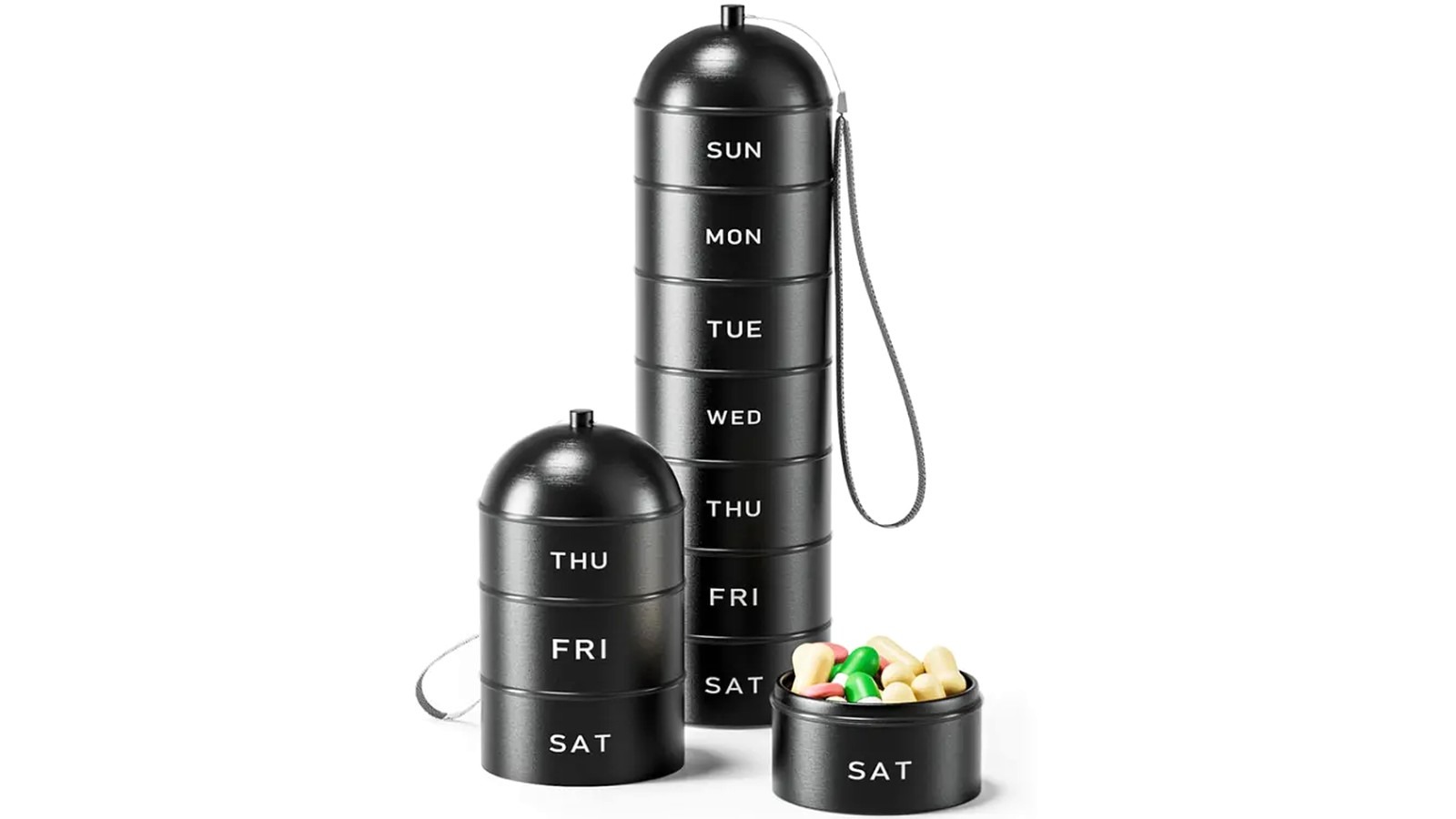
Hard-shell constructions such as the 7-day waterproof metal pill organizer protect tablets well and travel hard — the same rigid walls that make them durable are what give rattle and scrape nowhere to hide.
What “Silent” Means Today: Nothing Measurable
On the supply side, the word is already a selling point — and it means discretion, not acoustics. One manufacturer’s listing defines its product as featuring “silent operation for discreet use,” which reads as “others cannot tell you are taking medication,” not any measured level. It proves the word is in commercial use, not a performance number.
On the consumer side, the vacuum is just as visible. When a reader of a New York Magazine shopping column asked for a pillbox that does not rattle, the published answers were an antique velvet-lined silver case, a do-it-yourself ring box, and cotton stuffing. The most-read answer on the topic contains no engineering at all.
Quiet also reaches further than comfort. A patient-advocacy site citing 2026 research on medication stigma lists “quiet compartments” among the features that make a pill box feel less medical — placing noise on the adherence chain, not just the annoyance list. That is an advocacy citation, not a clinical claim, but the direction is consistent.
The practical consequence sits in the RFQ. “Quiet” as a word carries no information, and an earlier product note on a silent pill box design shows how far an undefined adjective can drift. A quiet pill box starts with paragraphs like the ones below, not with the word.
The Three Home Fixes Are Three Specifications
Consumers have already invented the engineering. The three common home fixes map one-to-one onto spec lines, which makes them the fastest way to discuss noise with a factory.
Cotton or a folded tissue fills the empty space. Translated into a specification: controlled free play. Ask the supplier what takes up the void in a half-filled compartment — a resilient liner, a sprung mat, or divider ribs that contact the load — and how the design behaves between full and empty.
Individual lids that press down on the pills preload the load. Translated: the lid should engage below the fill line, not hover above it. The follow-up question matters as much — a lid pressing on contents adds closing force, which interacts with one-hand opening, covered separately in which pill box latch stays shut on the road.
A silicone-gasket box that seals airtight compresses the air inside, damping the space the pills would cross. Translated: seal material and compression become spec lines. The same gasket doubles as moisture control — see the sealed construction in the moisture-proof silicone seal pill case.
The fourth fix is fabric. Reviewers of soft-shell cases report exactly the wanted effect — “it doesn’t rattle… the fabric deadens the sound” — and the tradeoff is equally explicit: a soft shell gives up crush protection. That tradeoff belongs in the spec discussion, not in marketing copy.
The Ten-Minute Noise Audit for Your Next Sample
- Fill every compartment to half, close the box, and shake it ten times at arm’s length. A box that is quiet full and loud half-full has uncontrolled free play — a geometry problem that padding only postpones.
- Run a screw or latch through twenty open-close cycles in a quiet room. Squeak that appears on later cycles is a mating-surface issue and will not break in.
- If the design has a sliding sleeve or tray, remove and replace it twenty times. Scraping at cycle fifteen is the permanent kind; no later liner will cure it.
- Ask the factory how “quiet” is verified. If the answer is a word rather than a method, the specification does not exist. The realistic request is an in-house check plus a third-party measurement report on the finished parts — “quiet,” like everything else in this category, is something the factory either controls or does not.
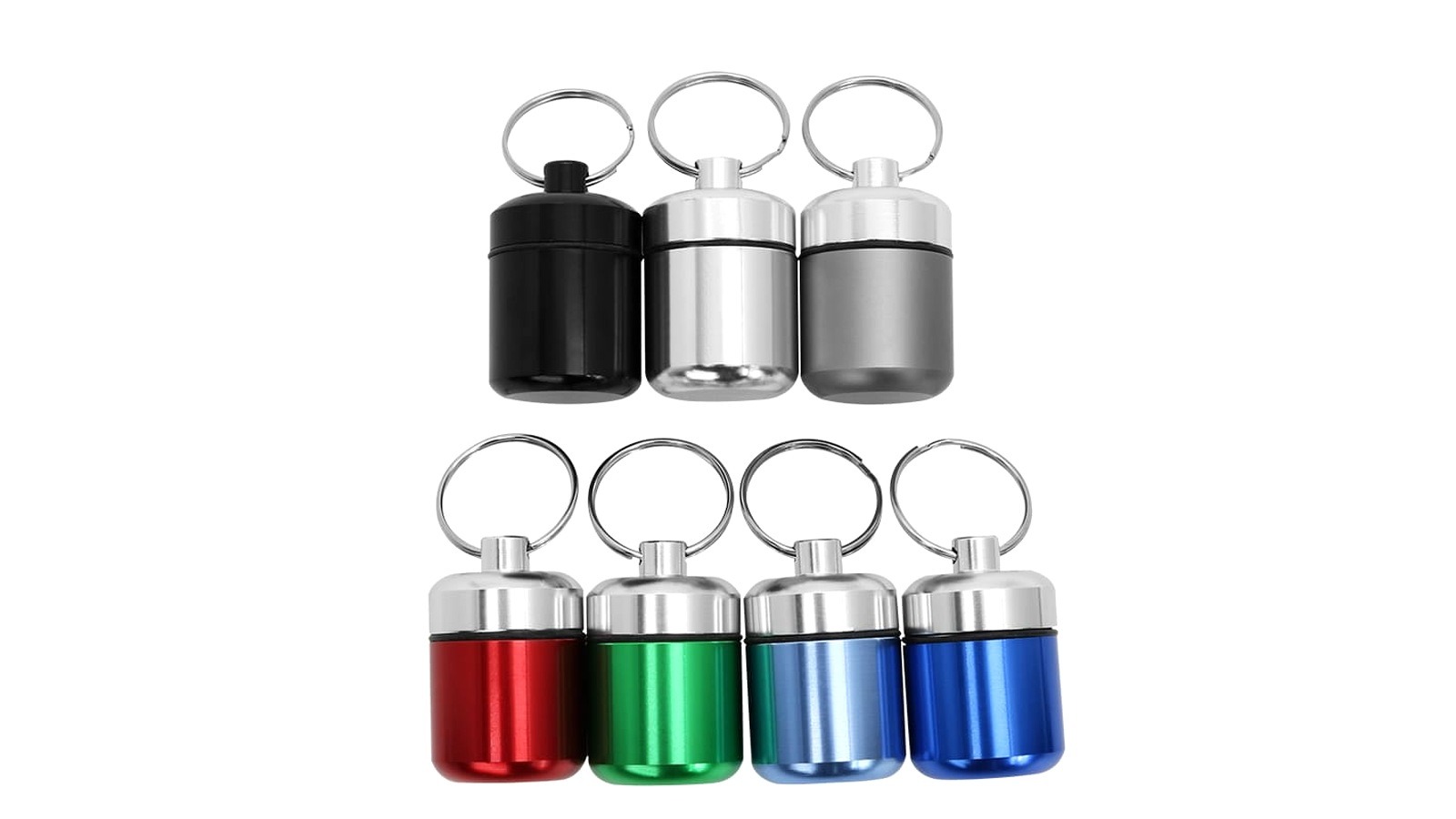
Note the half-fill rule in particular. A quiet pill box is the one where this test comes back boring. In review aggregations, sound mentions on small carry cases run heavily negative — one keychain model’s run about four-to-one — and “only rattles when it’s not full” is the recurring shape of the complaint.
Quiet Competes With Other Requirements
Every noise fix takes something back. A foam or fabric lining adds a part that can trap moisture, collect lint, and complicate cleaning — a lined box that cannot be wiped out is a hygiene problem wearing a comfort solution. Ask how the liner is fixed, whether it is removable, and what happens to it after a month of daily use.
Lining can also change what the box can hold. At least one lined aluminum design states on its spec sheet that soft gel capsules are excluded, because they can jam the liner’s mechanism. A quiet box that cannot carry fish oil is a different product; buyers should read the exclusion before the adjective.
The fabric route trades away crush protection, which matters in checked luggage. This article stays on specification; the travel dimension — what to carry, how to pack — is covered separately in the travel pill organizer guide. The two conversations share products, not criteria.
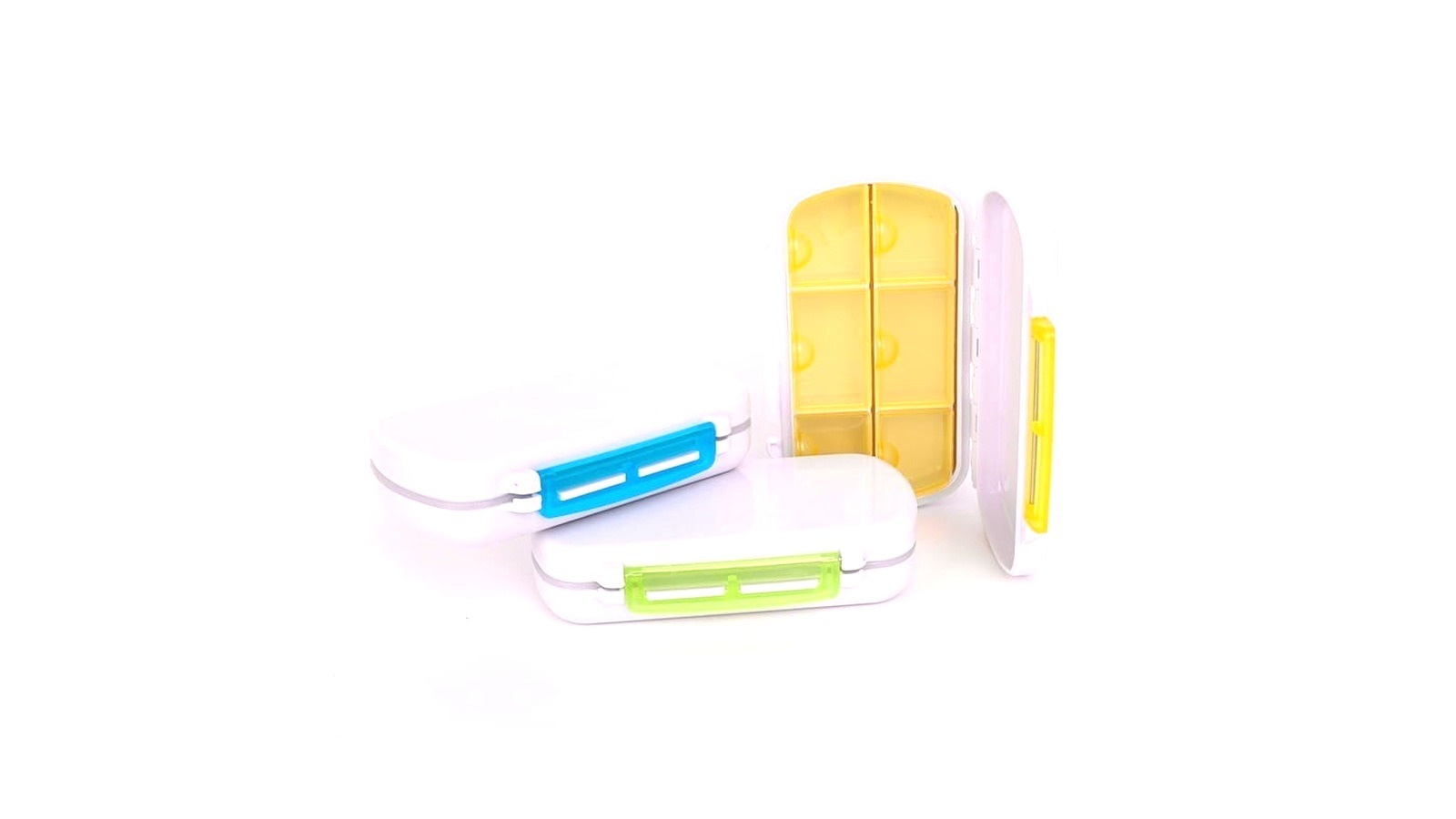
There is also a middle path already on the market: constructions that put soft material where the pills live. One four-compartment case with internal silicone brushes markets exactly that idea — damping the collision without giving up the rigid shell — and appears in our earlier roundup of new pill organizer styles. The concept is right; the buyer’s job is to ask how it is verified.
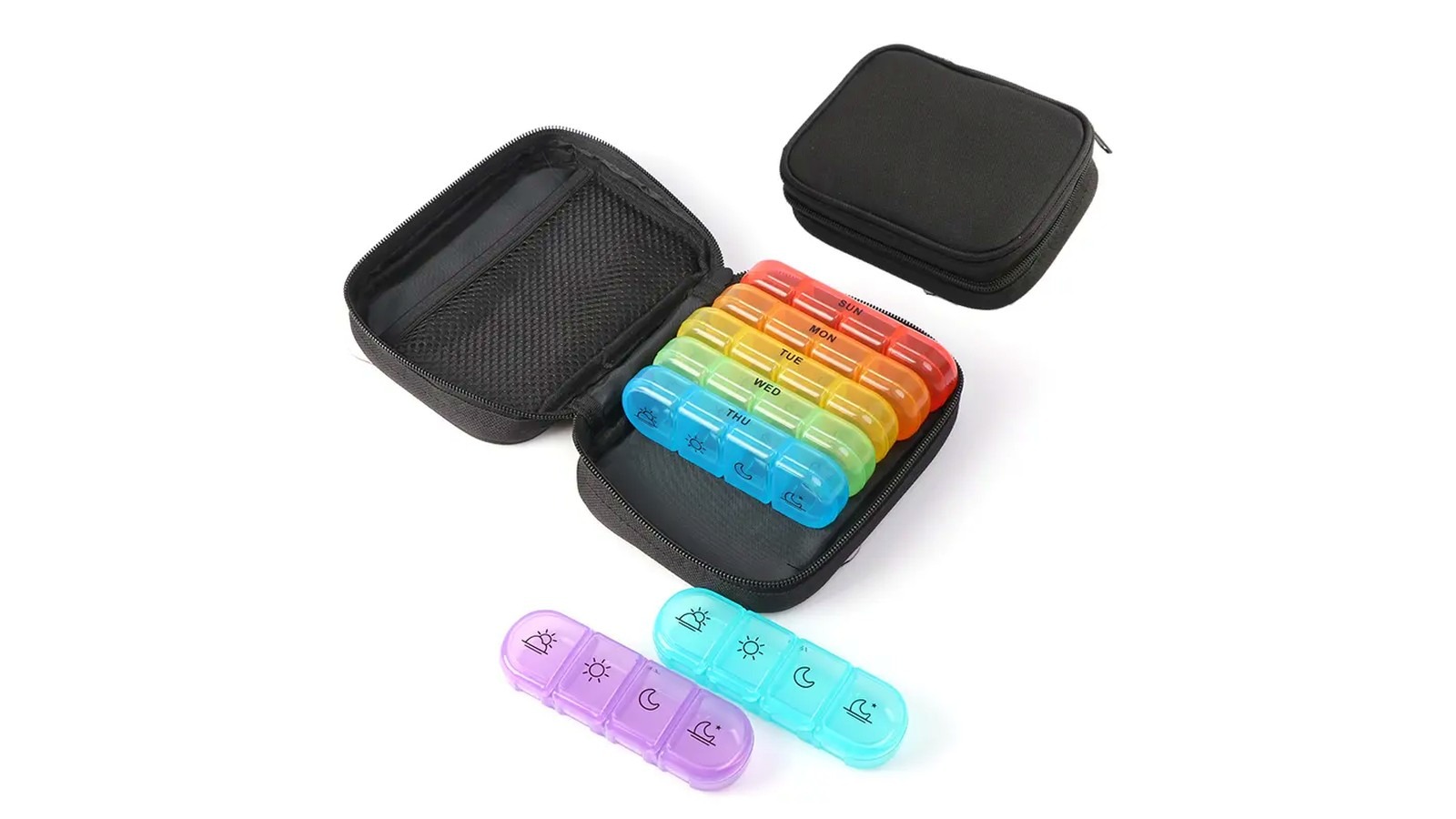
For buyers who want the fabric route as a product rather than a modification, soft-shell constructions such as the weekly pill organizer with zipper case put the damping layer outside the box, where it can be replaced — and where the hard tray inside still does the structural work.
What Quiet Looks Like on a Purchase Order
- Name the sounds you are refusing: rattle in a half-filled box, squeak on mating faces, scrape on sliding parts. Accept click as designed feedback where spring lids are intended.
- Require the free-play control method for a half-filled compartment, stated in writing — liner, sprung element, or contact geometry.
- Require seal material and compression for any gasketed design, and mating-face materials for any threaded or sliding design.
- Require the factory’s in-house verification method for noise, and a third-party measurement report on finished parts where the program justifies it.
- State the tradeoffs you are accepting in exchange: cleaning access, crush protection, and any capsule exclusions the lining imposes.
A quiet pill box is not the padded one. It is the box whose noise sources were engineered out — free play controlled, mating faces chosen, seals specified — and whose factory can describe in writing what takes up the empty space. Cotton wool is what users do when that paragraph is missing from the purchase order.