Weekly Pill Organizer: How It Compares to Monthly Cases and What Buyers Should Lock Down
A weekly pill organizer is a 7-day medication case — typically 1 to 4 compartments per day — designed to cover one week of dosing on a single fill. For importers, pharmacy chains, and hospital procurement teams, the weekly format is the workhorse SKU: it fits the most common regimens, ships flat in retail packaging, and reorders every 30 to 45 days. Monthly trays exist, but they solve a different problem, and treating them as interchangeable costs buyers real money when the format is mismatched.
Here is what a weekly pill organizer actually does on the shelf, how it stacks up against a 28-day case, and the questions worth asking a supplier before the first PO.
What a Weekly Pill Organizer Does in Practice
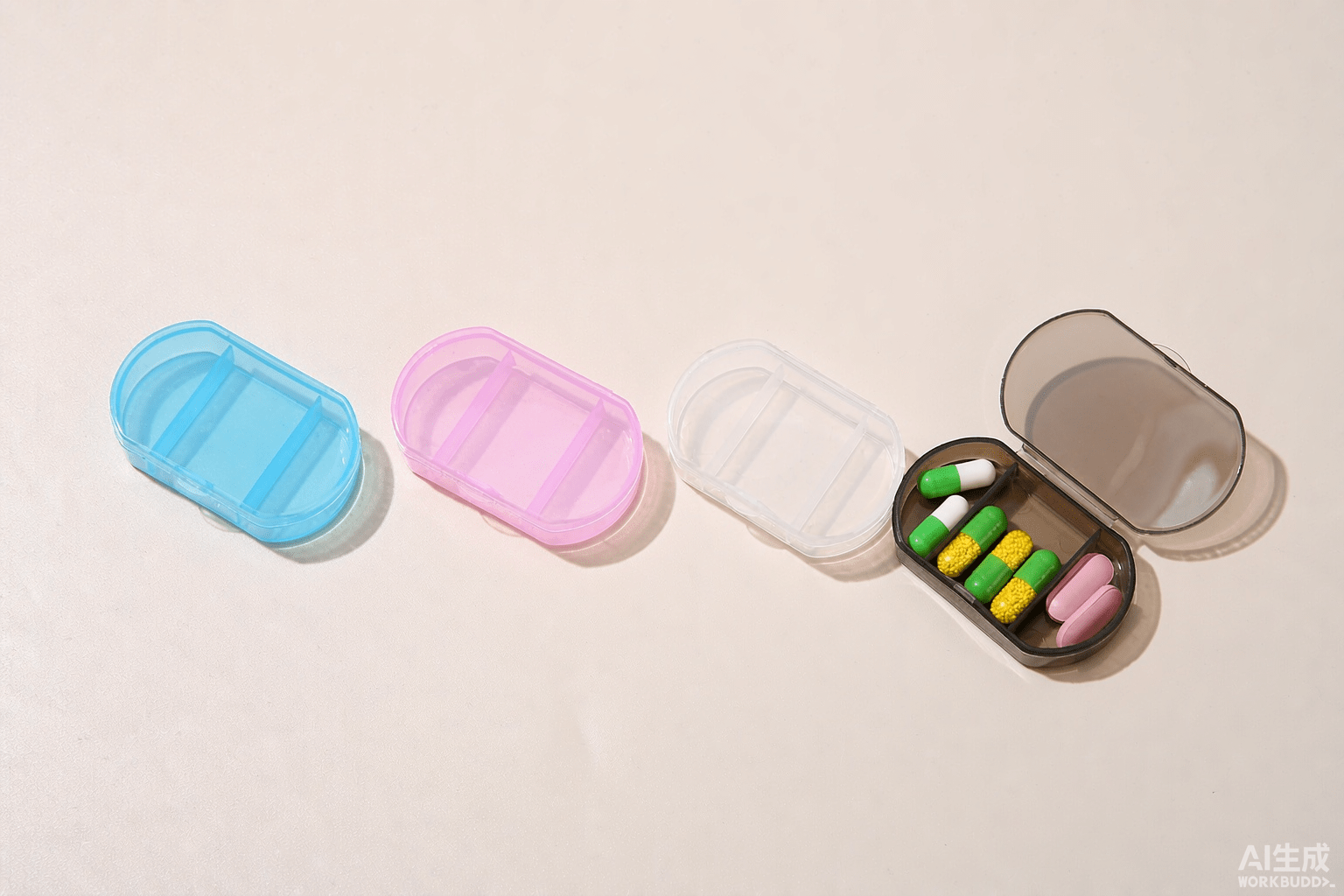
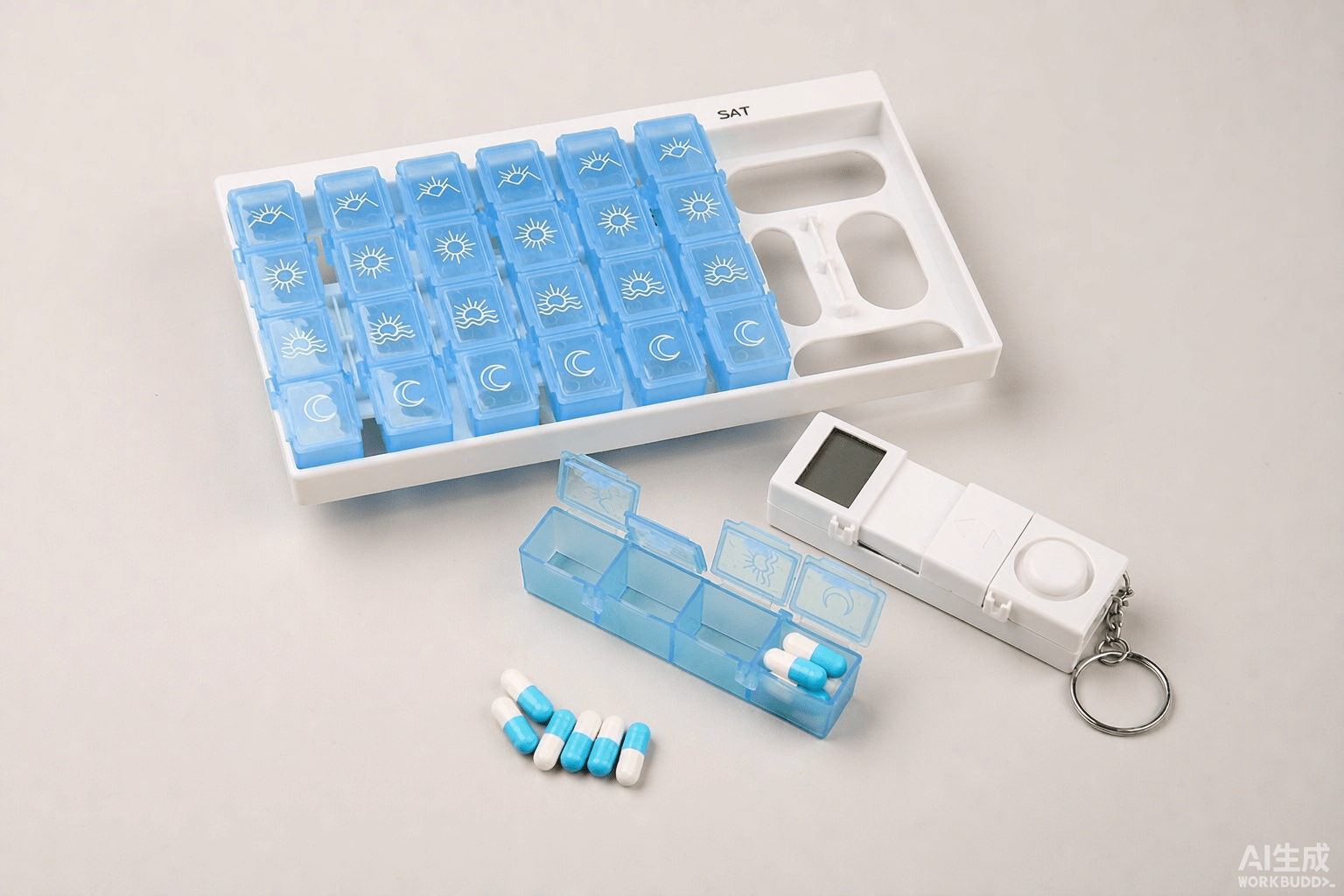
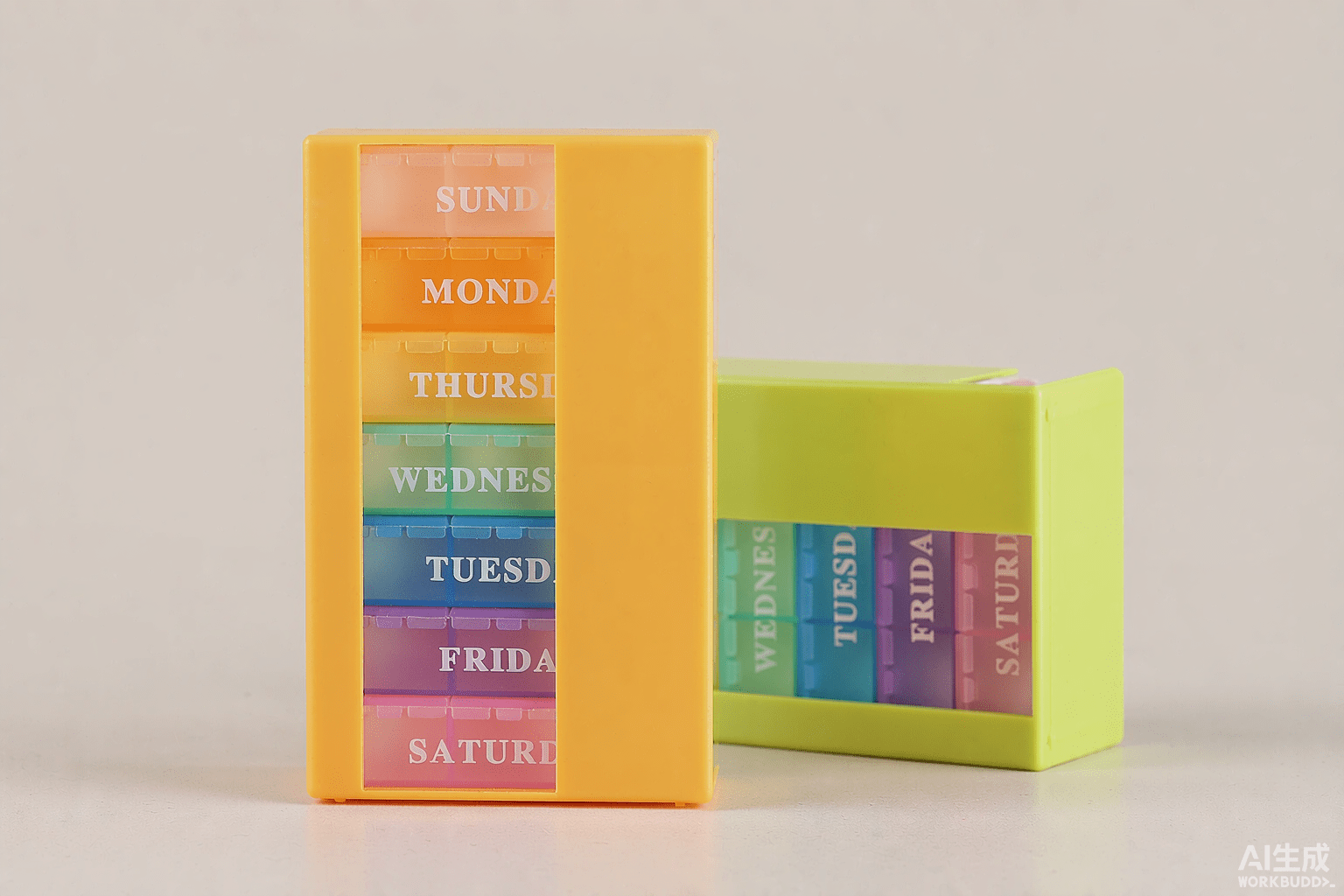
At its simplest, a weekly organizer is a rigid case with seven labeled compartments. The common configurations:
- 1 slot per day = 7 doses total (single-med patients, vitamins)
- 2 slots per day = 14 doses total (AM / PM split)
- 4 slots per day = 28 doses total (the volume SKU for polypharmacy)
I have shipped enough of these out of Ningbo to know the 4-slot-per-day unit accounts for the bulk of reorder volume. Most polypharmacy seniors — the demographic that fills weekly organizers with religious consistency — take three to five meds in the morning and one to three at night.
Why a 7-Day Layout Wins on Adherence
In the rollouts I have helped on since 2021, weekly organizers outsell monthly 3-to-1 in retail and 7-to-1 in pharmacy chains. Three things drive that gap:
- Cognitive load: seven days fits on a counter or nightstand. Twenty-eight days does not.
- Refill ritual: every Sunday the patient re-loads. That weekly cadence is what drives the 80%+ adherence numbers in published studies.
- Travel footprint: a weekly case fits in a carry-on. A 28-day tray rarely does.
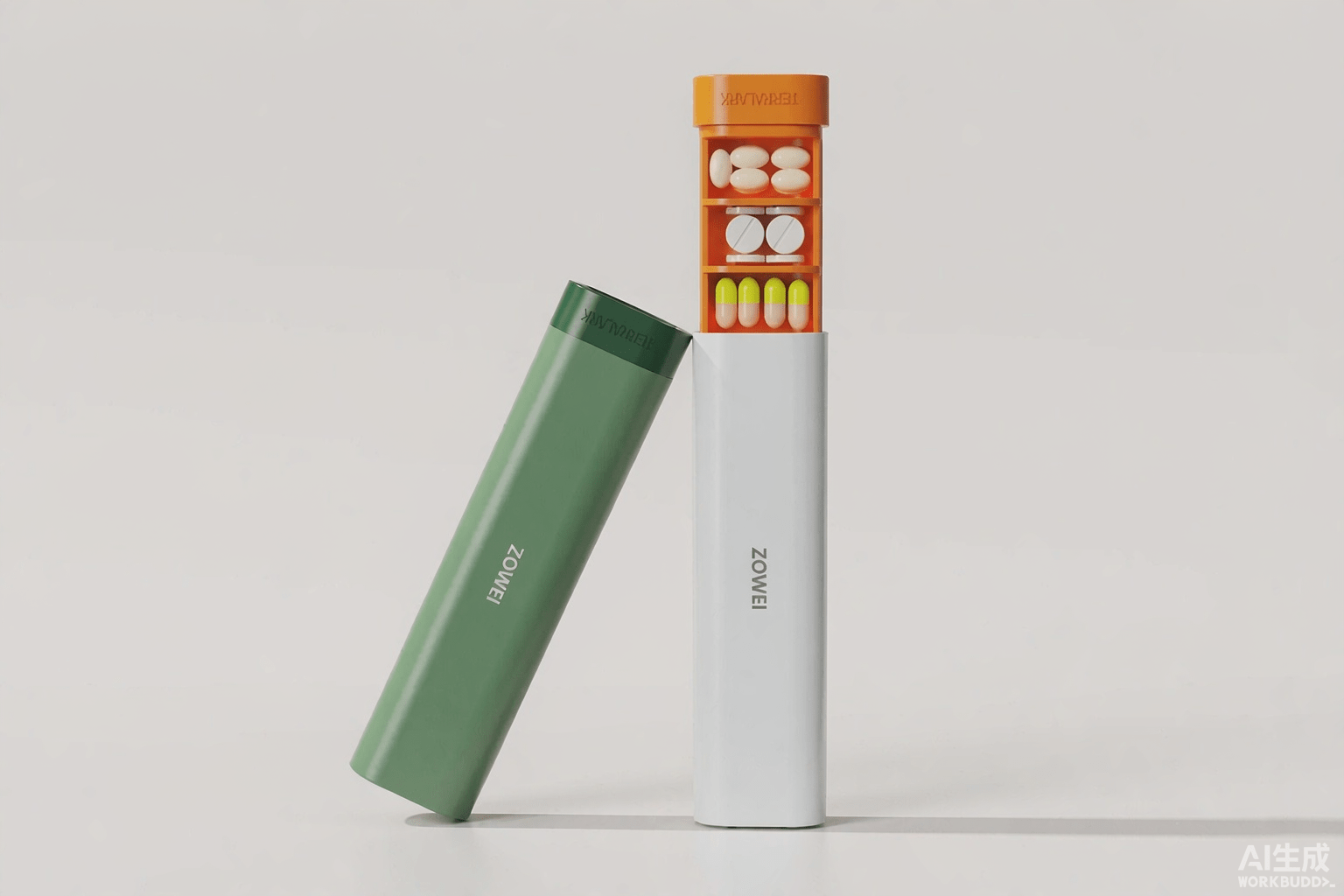
7-Day vs 28-Day Organizers: Where Each Format Earns Its Keep
The two formats are not interchangeable. Match the format to the patient, and reorder rates tend to run 2 to 3 times higher on a 12-month view.
Use Cases That Fit the Weekly Format
- Seniors living independently on a fixed daily regimen
- Travelers and shift workers
- Pharmacy programs that ship 30-day fills in batches
A weekly pill organizer runs lower per-unit landed cost — about $0.18 to $0.35 for an ABS plastic case out of Ningbo — and pulls the patient back into the pharmacy every 7 to 10 days. That refill pull is where retail attach revenue sits.
Use Cases That Fit the 28-Day Tray
- Caregiver-managed dosing in assisted living
- Clinical-trial patients on a fixed 28-day cycle
- Institutional settings where the refill cadence is locked monthly
A 28-slot case runs roughly 40 to 60 percent higher per unit because of the larger molded footprint and the heavier ABS walls needed to prevent flex on a 30 cm tray. If your buyer does not need that footprint, they are paying for capacity they will not use.
What to Check Before You Order
Treat this as the spec sheet you actually need, not the marketing one.
Material and Food Safety
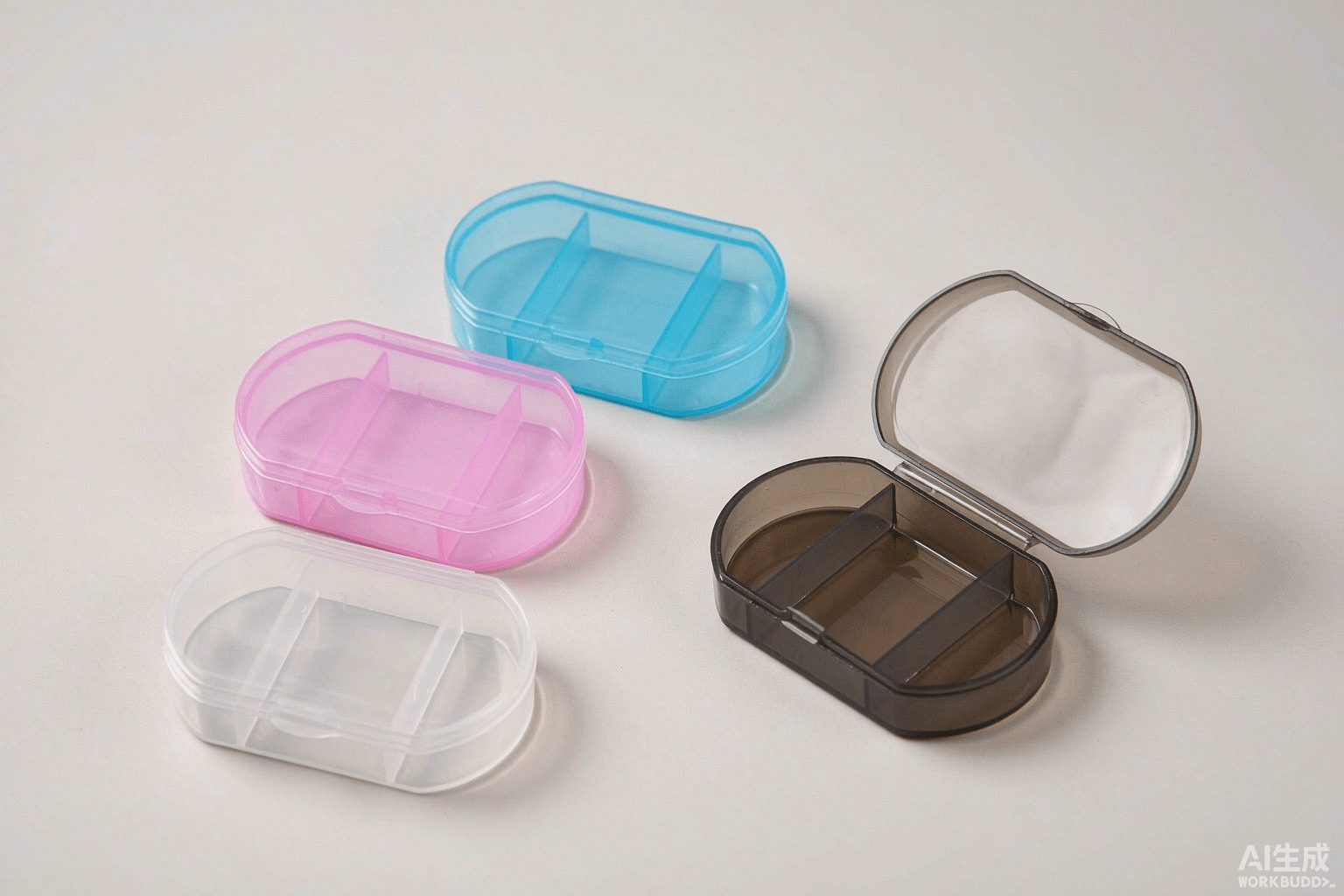
Most weekly organizers are ABS, PP, or food-grade PE. Anything that does not list FDA-compliant resin for the US or LFGB clearance for the EU cannot move into pharmacy channels in those markets. For the full document list to request, see the FDA pill box compliance guide.
Hinge Strength and Closure Cycles
A 7-day case with four compartments opens and closes roughly fourteen times a day in polypharmacy use. Hinge flex is the number-one return reason I have seen in the last five years — a 5,000-unit order can come back at 4 to 6 percent if the hinge spec is wrong. Spec the hinge cycle test at 5,000+ cycles before sign-off.
Compartments vs Patient Profile
- 1-slot daily: single-med patients, vitamin stacks
- 4-slot daily: polypharmacy — the volume SKU
- Removable daily pods: caregivers who pre-fill seven trays at once
If you are weighing a custom retail launch with branded inserts, see the custom pill box guide for what a real OEM run looks like.
Pitfalls I See Every Quarter
Three repeat offenders in sourcing: suppliers mixing recycled ABS into a “food-grade” resin claim, lid labels that wear off after six dishwasher cycles, and color matching that drifts between Pantone sample and the production lot. Push each of these into writing on the PO.
A useful rule of thumb I now share with every new buyer: if a supplier cannot name the ABS grade on the spec sheet, they are sourcing from a trading company, not the actual molder. That is fine for a $1 retail SKU. It is not fine for a 50,000-unit pharmacy contract.
Questions to Ask Before Sampling
Short list that separates a real molder from a trader:
- Is the resin virgin ABS or recycled, and can you give me the grade number?
- What is the hinge cycle rating, and is it on the spec sheet in writing?
- What is the MOQ for a custom mold vs. a logo print vs. a packaging redesign?
- What is the actual lead time from PO to FOB Ningbo, broken into mold, tooling, assembly, and QC?
If the answers feel vague, you are looking at a reseller. Walk away or drop the unit price expectation by 30 percent.
What Real Rollouts Look Like
Across the nine programs I have helped stand up since 2022, the same pattern shows up. Pilot order of 1,000 to 2,000 units in a single 4-slot configuration, three to four weeks of in-store testing with a small pharmacist panel, then a step-up to 10,000 units once the reorder rate holds.
The ones that skip the pilot always come back for a second, smaller order six months later, after the compliance tickets pile up.
For most private-label buyers, a smarter first SKU is a 4-slot weekly pill organizer in two neutral colors — white and grey. It is the simplest format to certify, the cheapest to mold, and the easiest to expand with a third color if a retail buyer asks for a refresh.
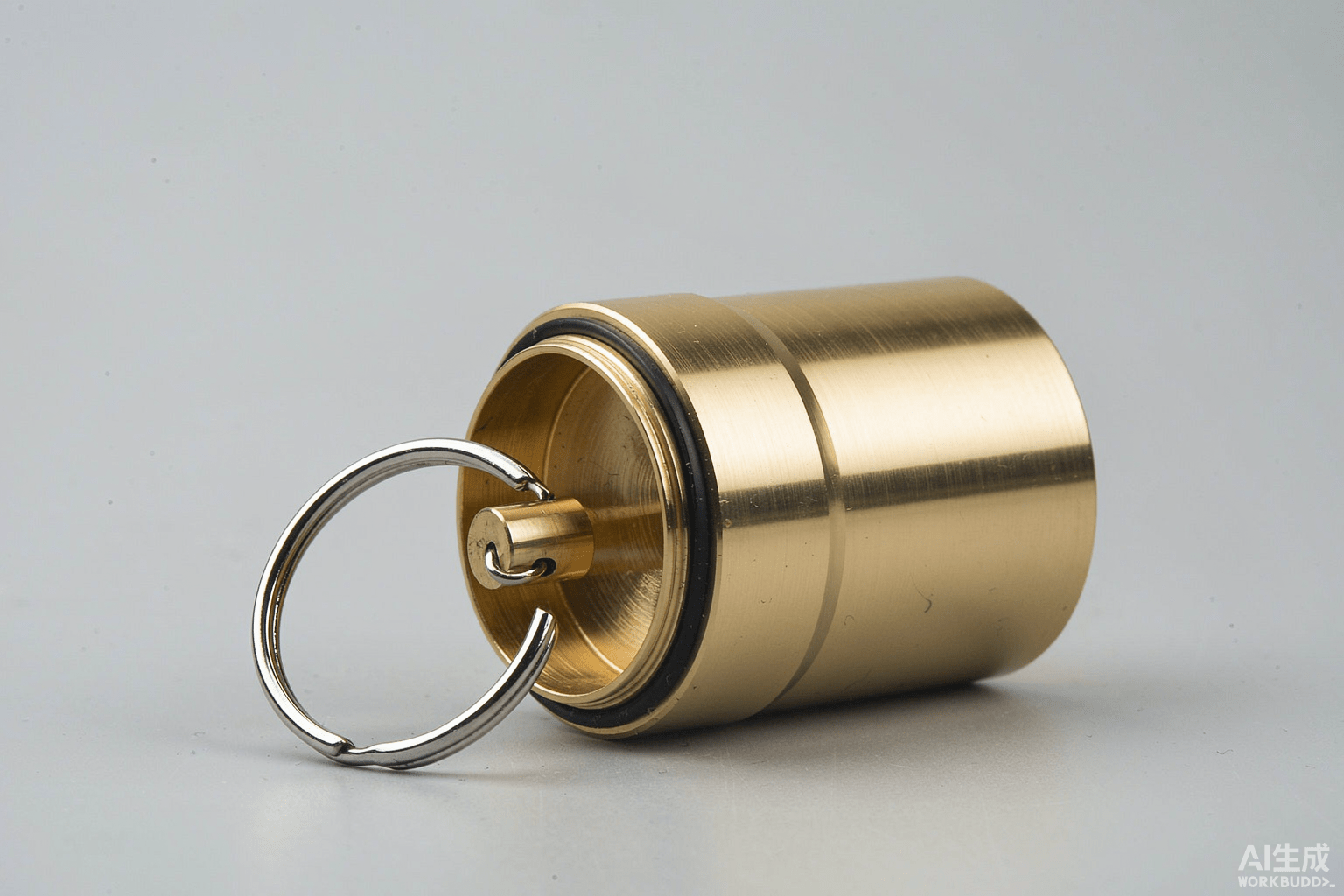
If you are weighing a weekly organizer against a metal weekly case for a premium retail line, the trade-off is real: a metal case will sit on a shelf for ten years and never need a hinge test, a plastic weekly will be used daily and replaced every eighteen months. Pick the use case, not the spec sheet.