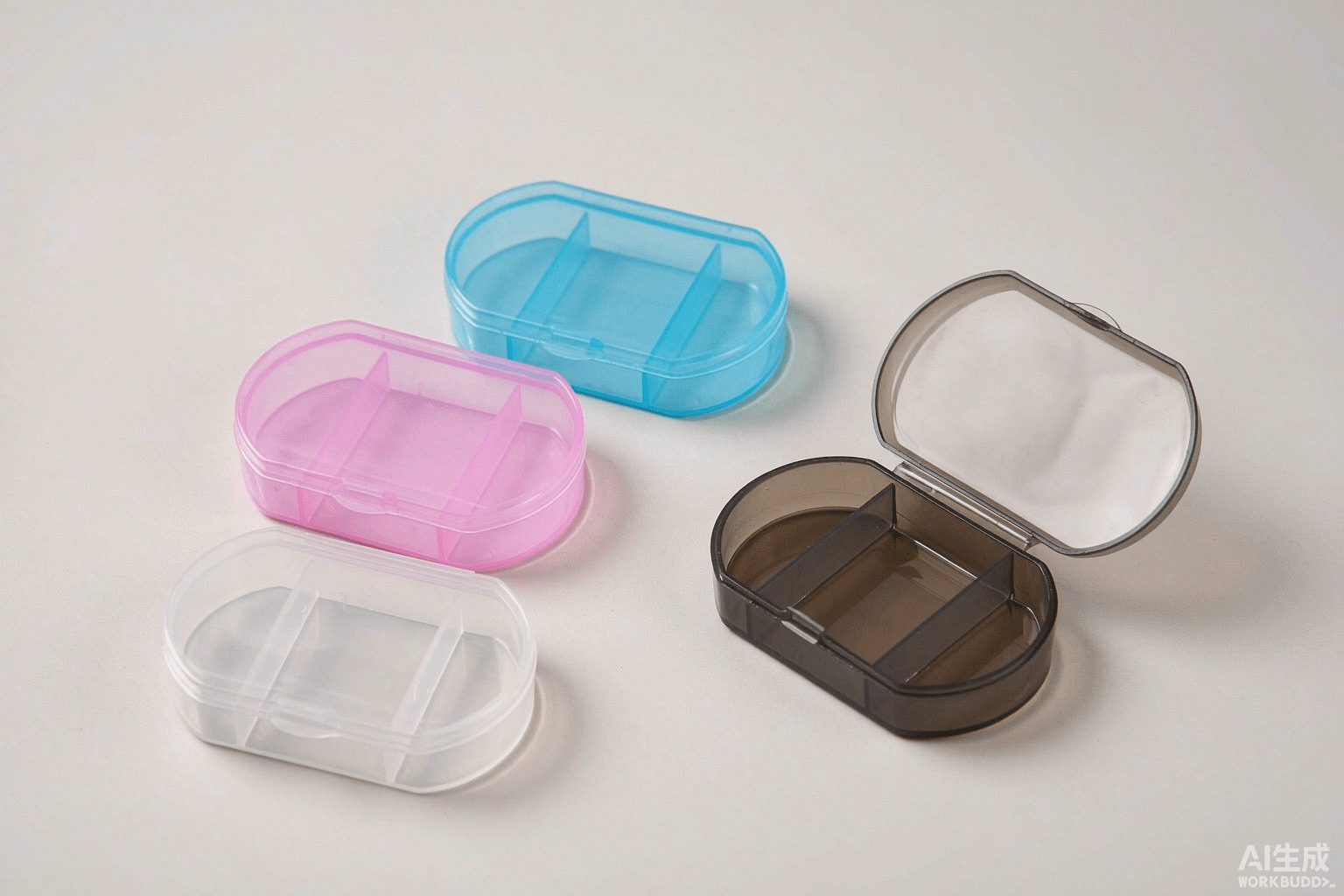
FDA Pill Box: What Importers Should Check Before Buying
Let me save you the suspense: “FDA compliant” is not a magic stamp on a supplier’s catalog page. I learned that the hard way back in 2022 when a client lost a six-figure order at Long Beach because the resin certificate turned out to be two generations out of date. If you are sourcing an FDA pill box from overseas, the supplier you want is the one who pushes a current food-contact letter, an independent migration report, and the actual resin codes onto your desk before you wire a deposit. Everything below is the checklist we run on every FDA pill box quotation now.

What “FDA Compliant” Really Means
Here is something most catalogs will not tell you. The FDA does not “approve” finished pill organizers the way it approves a new drug.
What it does is maintain a list, in Title 21 of the Code of Federal Regulations, of polymers, additives, and coatings allowed to touch food. That is a narrower claim than the marketing suggests, and it is why importer after importer ends up arguing with customs.
The Three Material Families Worth Asking About
Almost every RFQ I see comes down to polypropylene, Tritan, or some kind of metal. Virgin PP without recycled feedstock is the safest bet because it is explicitly listed and shrugs off 80°C dishwasher cycles. Tritan looks great in a clear lid but needs a separate letter confirming no banned phthalates were used in the polymerization.
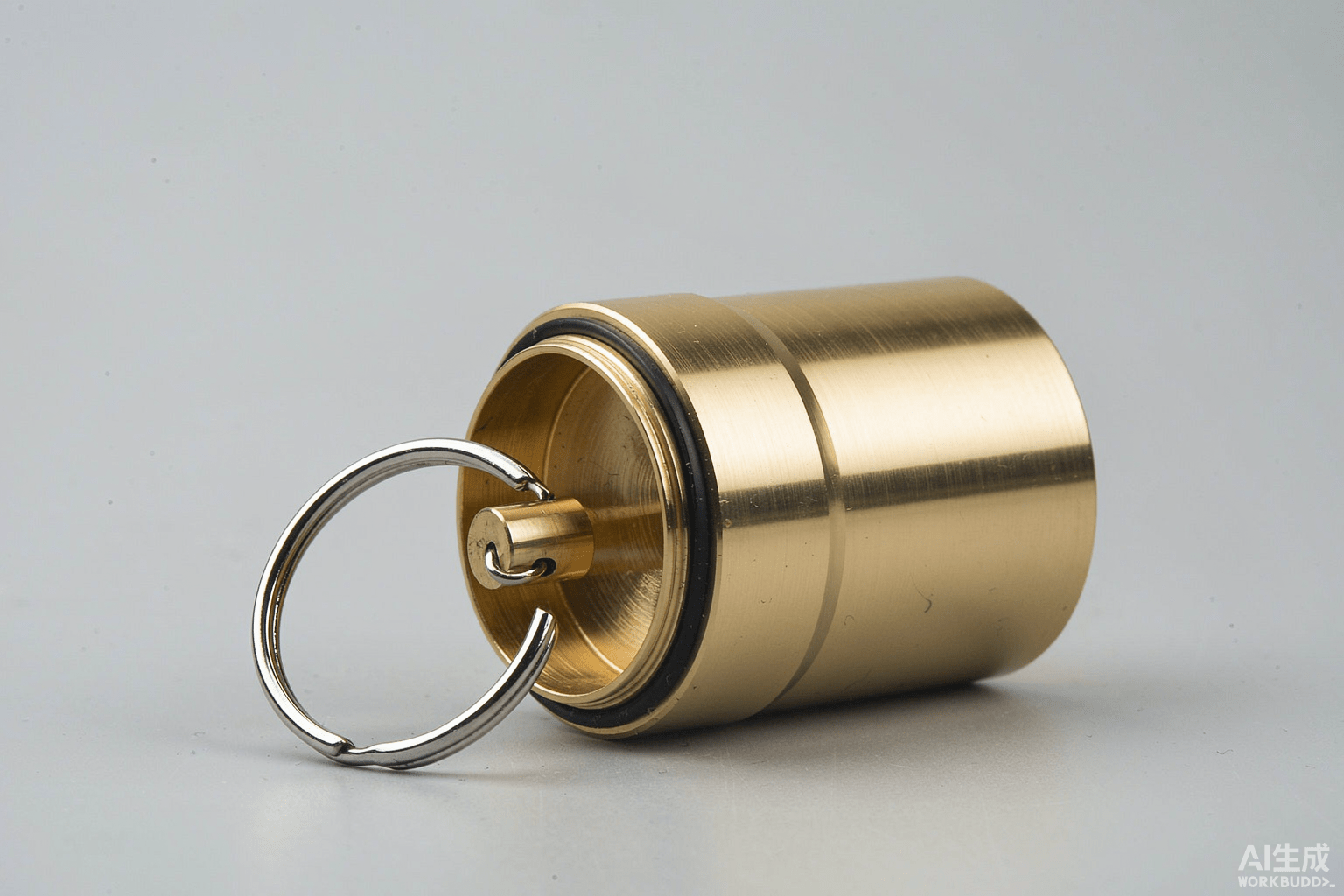
For metal boxes, only consider anodized aluminum or 304/316 stainless. Raw aluminum in a humid medicine cabinet will leach into tablets within months. I have pulled apart enough corroded FDA pill box samples to say that with confidence.
Cleaning Limits That Wreck Compliance
A pill box rinsed under the tap and one sterilized in a 134°C autoclave are not the same product, even if the part number is identical. Talk to your downstream customer before you quote, and confirm in writing that the chosen resin can survive the cleaning protocol for the warranty period you are offering.
One of our buyers last year promised “dishwasher safe” on Amazon and ended up with a PP blend that warped at 70°C — once that happens, the original food-contact statement is void.
Documents a Trustworthy Manufacturer Will Send
I keep a short list on my desk. If a supplier cannot produce any of these within 48 hours of your first email, I move on.
The Two Documents Buyers Mix Up
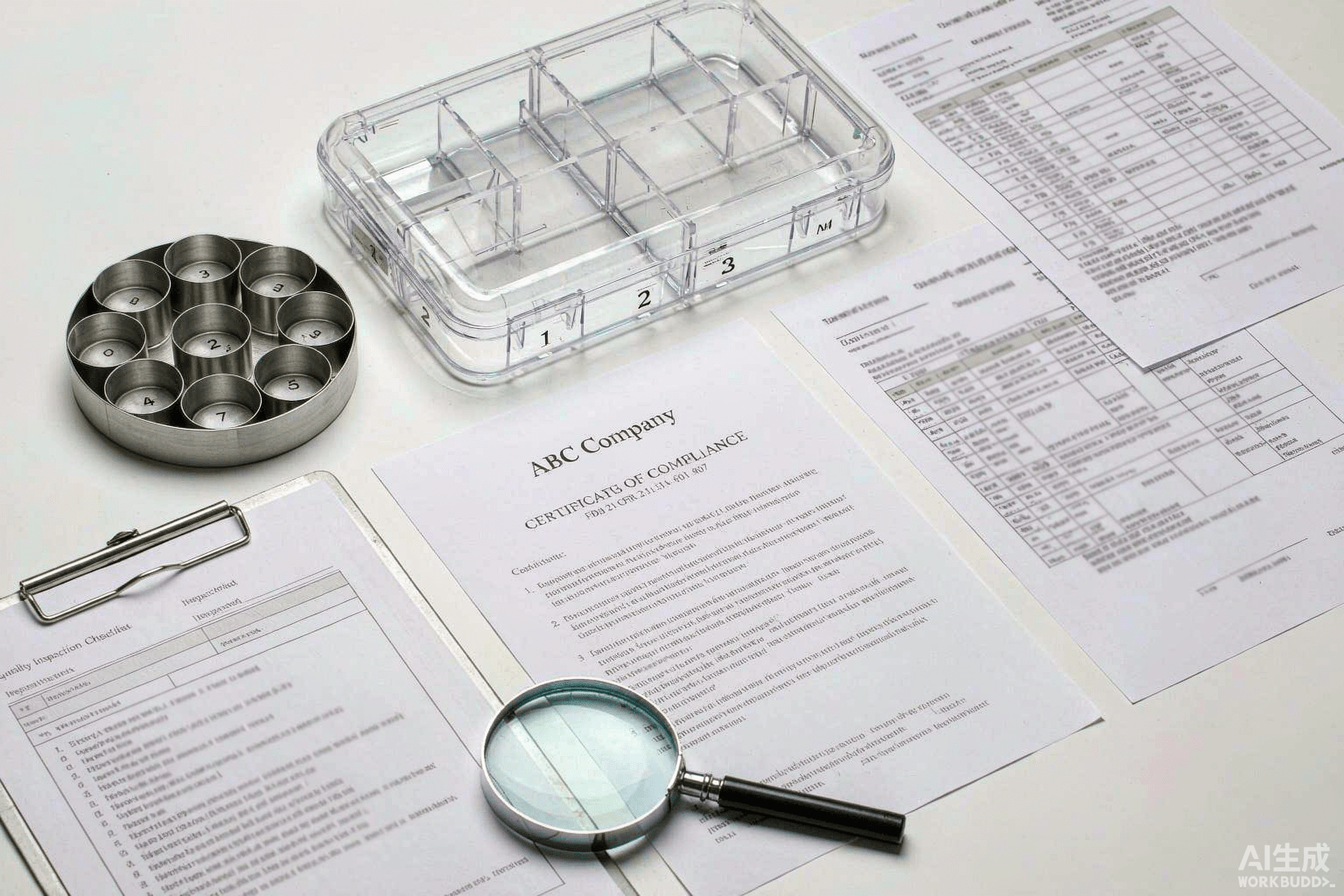
Call them Doc A and Doc B. Doc A is the Certificate of Compliance: a letter that ties a specific resin grade to a specific regulation. Doc B is the FDA Registration Letter, which only proves the factory paid its biennial establishment fee. Doc B does not mean the pill box is FDA compliant — it means the factory is in the system.
Ask for both, then check the resin code printed on the Certificate against the code on the actual molded part. They should match.
Lab Reports That Should Be Independent
Migration testing under your real conditions of use has to come from an ISO 17025-accredited lab, not from the factory’s own QA department. I want to see a report dated within the last 24 months, with the accreditation number verifiable online.
If the supplier sends a one-page “summary” instead of the full PDF, the underlying numbers almost never survive scrutiny. I have walked away from three quotations in the past year on that basis.
Pitfalls I Have Watched Buyers Fall Into
“FDA Approved” on the Website
Walk into any Alibaba store selling pill organizers and you will see “FDA approved” plastered across half the listings. It is mostly nonsense. The FDA approves active pharmaceutical ingredients and Class II/III medical devices; it does not stamp its logo on a weekly organizer.
What you want is the regulation reference — something like 21 CFR 174 to 179 for indirect food additives — printed on the Certificate, not a marketing slogan. If the salesperson cannot explain the difference, the factory does not understand FDA pill box compliance either.
The Logo You Painted On Last Tuesday
Custom decoration is where a lot of compliant projects quietly fail. Pantone-matched shells, pad-printed logos, even a small yellow sun icon on the lid — none of those pigments are automatically covered by the base resin’s food-contact statement.
We saw a 40,000-unit container held at the port of Houston last spring because a particular yellow ink was not on the positive list. The importer ate the demurrage and most of the order.
How I Vet an FDA Pill Box Manufacturer
Start With a Video Tour, Then Push Harder
A video walk-through is a decent first filter, but it is not an audit. Ask to see the resin warehouse, the molding line, the quarantine area for rejected parts, and the document cabinet where Certificates are filed by batch.
If they hesitate to share any of those, there is usually a reason — typically a shared line that also runs industrial plastics. I push for an in-person or third-party audit before I sign any tooling agreement.
Ask About Retained Samples, Not Just Capacity
Buyers obsess over monthly output and forget to ask how long the factory holds reference units from each batch. That retained-sample policy matters more than the headcount, because it is your insurance if a customer files a complaint six months after delivery.
For orders north of 50,000 units, build a pre-shipment inspection into the PO that includes dimensional checks and one random migration re-test per shipment. It costs a few hundred dollars and has saved us six figures on FDA pill box orders.
Read the Quotation Like a Lawyer
Cheapest is rarely best in this category. I line up three to five quotations and compare them line by line: who owns the tooling after the first PO, what happens if resin prices spike mid-run, and what is the procedure if the factory quietly switches resin grade without a new Certificate.
Our weekly pill organizer and custom pill box category pages list the standard resins we ship under.
Use them as a benchmark when you are reading what your supplier sent over, because skipping that comparison step is how importers end up paying for the same FDA pill box mistake twice.