Pill cases are becoming increasingly common in daily life, especially plastic ones, while metal pill cases are deeply loved by the public. Today, we will break down the manufacturing processes of metal pill cases.
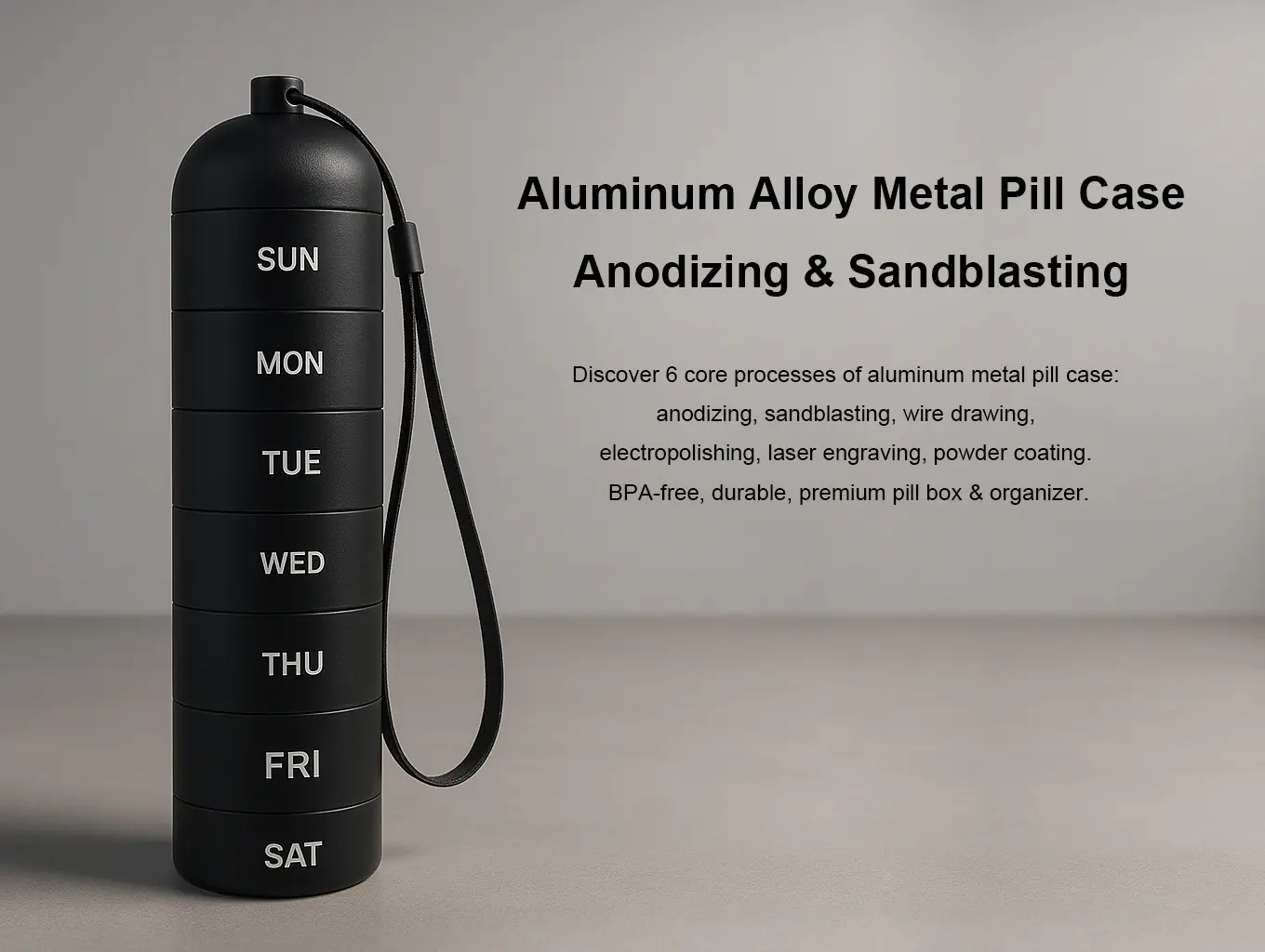
Generally, metal pill cases refer to aluminum alloy pill cases, with 6 core manufacturing processes: anodizing, sandblasting, wire drawing, electropolishing, laser engraving, and powder coating. Each process brings different effects to metal pill cases.
Why Choose Metal Pill Cases? Advantages Over Other Materials
Compared with plastic pill cases, metal pill cases offer these benefits: BPA-free, corrosion-resistant, impact-resistant, moisture-proof, and premium in appearance.
Core Manufacturing Processes of Metal Pill Cases
1. Anodizing Process for Metal Pill Cases
Anodizing is one of the most critical processes for aluminum alloy metal pill cases. It forms a dense, wear-resistant, and corrosion-resistant aluminum oxide protective film on the aluminum surface through an electrolytic reaction, greatly enhancing the corrosion and scratch resistance of metal pill cases. This process ensures the pill case remains intact, rust-free, and scratch-resistant, extending its service life.
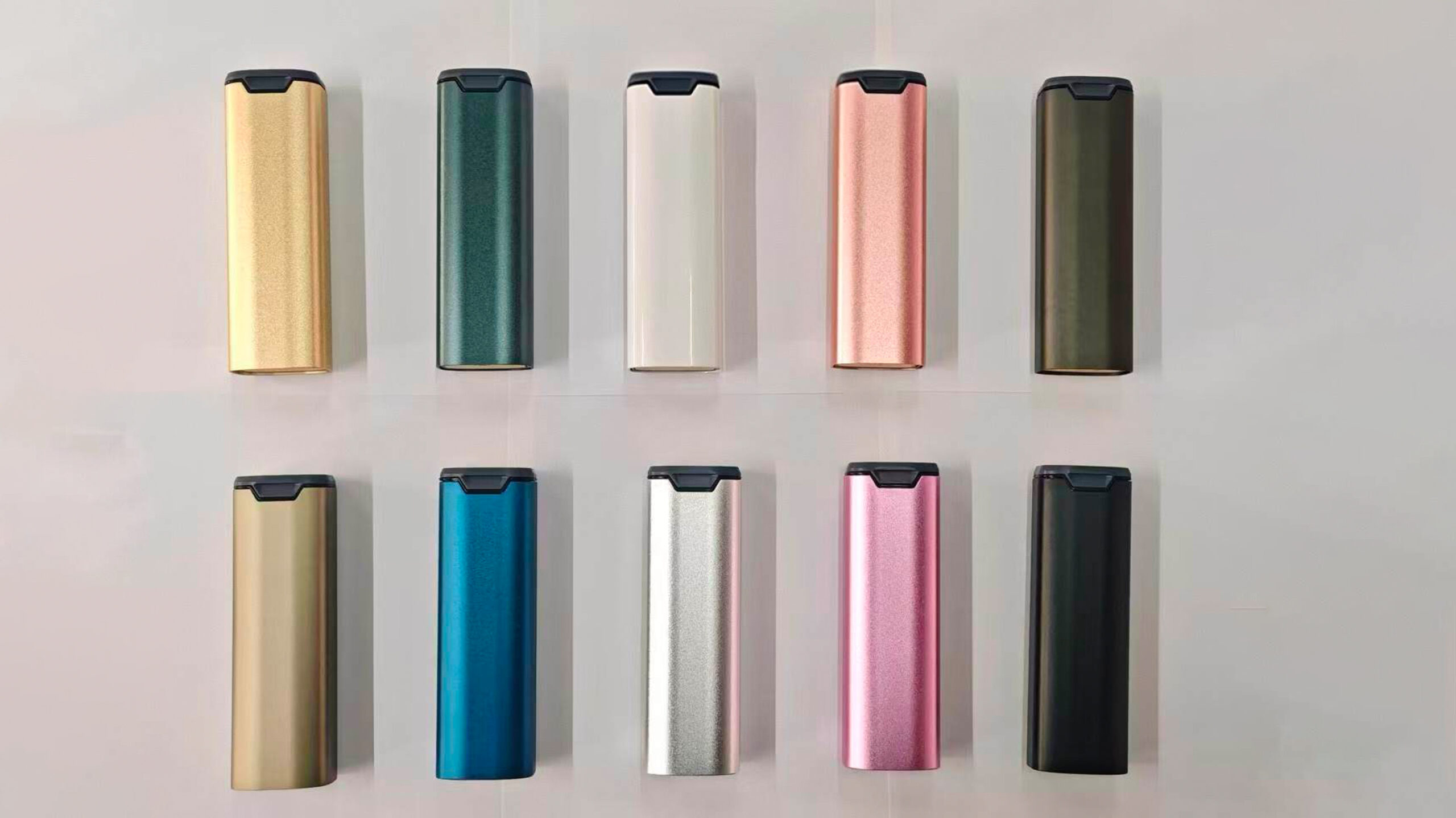
In addition, the anodized film can be dyed in various colors (matte gray, rose gold, medical white, etc.), making metal pill cases both practical and aesthetic to meet personalized needs.
A. Core Principle
- Anode reaction: Water electrolysis produces active oxygen, which reacts with aluminum to form Al₂O₃ (aluminum oxide film).
- Meanwhile, the electrolyte slightly dissolves the oxide film to form a porous structure (facilitating subsequent coloring and sealing).
- A double-layer film is finally formed: an inner dense barrier layer and an outer porous adsorption layer.
B. Complete Process Flow (Industrial Standard)
Anodizing (Core Film Formation)
Degreasing: Remove oil with an acidic degreaser, soak at room temperature for 3–5 minutes.
Alkaline etching: Remove the natural oxide film and burrs with NaOH solution to activate the surface.
Neutralization: Remove alkaline etching residues with nitric acid, followed by multiple water rinses.
Anodizing (Core Film Formation)
Hang workpieces in sulfuric acid electrolyte (15–20% H₂SO₄ commonly used).
Apply direct current, control temperature, current density, and time to form a 5–20μm oxide film.
Post-treatment (Performance Enhancement)
Coloring (optional): Porous film absorbs dyes or electrolytic coloring for color.
Sealing: Seal pores with boiling water/steam/sealant to greatly improve corrosion, wear, and stain resistance.
C. Key Process Parameters (Sulfuric Acid Method, Most Common)
| Parameter | Typical Range | Effects |
|---|---|---|
| Sulfuric acid concentration | 15–20% | Higher concentration → thinner film, better adsorption; Lower concentration → thicker film, higher hardness |
| Electrolyte temperature | 10–20℃ | Lower temperature → harder, more wear-resistant film; Higher temperature → softer film, easier to dye |
| Current density | 1.0–1.5 A/dm² | Higher current → faster film formation; Excessively high current causes burning and loose film |
| Oxidation time | 20–60 minutes | Longer time → thicker film; Overly long time reduces efficiency and dissolves the film |
| Film thickness | 5–20μm | For general decoration/protection; Hard anodizing can reach over 50μm |
2. Sandblasting Process for Metal Pill Cases
Sandblasting is another core process to enhance the texture of metal pill cases. Aluminum alloy sandblasting uses high-speed abrasive to impact the aluminum surface, creating a matte, frosted texture while removing burrs and oxide scale. It is often combined with anodizing for exterior parts. Compared with smooth metal surfaces, sandblasted surfaces offer a more comfortable touch, resist fingerprints, and look more premium and delicate.
A. Basic Principle
- Remove surface defects, tool marks, and natural oxide layers.
- Form a uniform and fine matte frosted surface.
- Increase surface roughness for better adhesion of subsequent anodizing and painting.
B. Standard Process Flow
Pre-treatment
Degreasing: Wash off oil with alkaline/solvent degreaser.
Drying: Ensure no water or oil on the surface to avoid uneven sandblasting.
Clamping and Protection
Cover non-sandblasted areas with tape, plugs, or fixtures to prevent damage to threads, holes, and precision surfaces.
Sandblasting (Core Process)
Equipment: Sandblasting machine (pressure tank type/suction type).
Air source: 0.4–0.7 MPa compressed air.
Distance: 100–300 mm.
Angle: 30°–70°, spray evenly to avoid local over-blasting and dents.
Post-treatment
Dust blowing: Clean dust in gaps with high-pressure air.
Cleaning: Water washing + drying to prevent abrasive residue from affecting subsequent anodizing/coating.
C. Common Abrasives and Effects
| Abrasive | Features | Applicable Effects |
|---|---|---|
| Glass beads | Soft, fine, no blackening | Delicate matte, decorative appearance |
| Brown fused alumina | Strong cutting force, high roughness | Remove oxide scale, enhance adhesion |
| White fused alumina | Low impurities, no aluminum contamination | High-end appearance, precision parts |
| Stainless steel shot | Finer surface, metallic luster | Premium frosted texture |
3. Wire Drawing Process for Metal Pill Cases
Wire drawing creates uniform linear textures on the surface of metal pill cases via mechanical friction. The brushed surface is also wear-resistant and fingerprint-resistant.
This process is often combined with anodizing to further improve the corrosion resistance and aesthetics of metal pill cases.
A. Wire Drawing Principle
B. Standard Process Flow
Pre-treatment
Degreasing and decontamination; remove surface oxide layers and burrs to ensure a clean surface (unclean surfaces cause skipped lines and blackening).
Clamping and Fixing
Wire Drawing (Core Process)
Three common methods:
Abrasive belt drawing: Most widely used, uniform texture, high efficiency.
Nylon wheel/wire drawing wheel: Softer texture.
Manual drawing: Small batches, irregular parts.
Key Controls:
Dust Removal and Cleaning
Wash off aluminum chips and abrasive powder to prevent blackening during subsequent anodizing.
Post-treatment (Common)
Anodizing; clear coating/sealing to prevent oxidation, fingerprints, and discoloration.
C. Common Wire Drawing Textures
Straight wire drawing: Linear texture, most common.
Random wire drawing (snowflake pattern): Irregular fine texture.
Wavy wire drawing: Slightly wavy texture.
Thread/concentric wire drawing: Round parts such as knobs.
4. Electropolishing Process for Metal Pill Cases
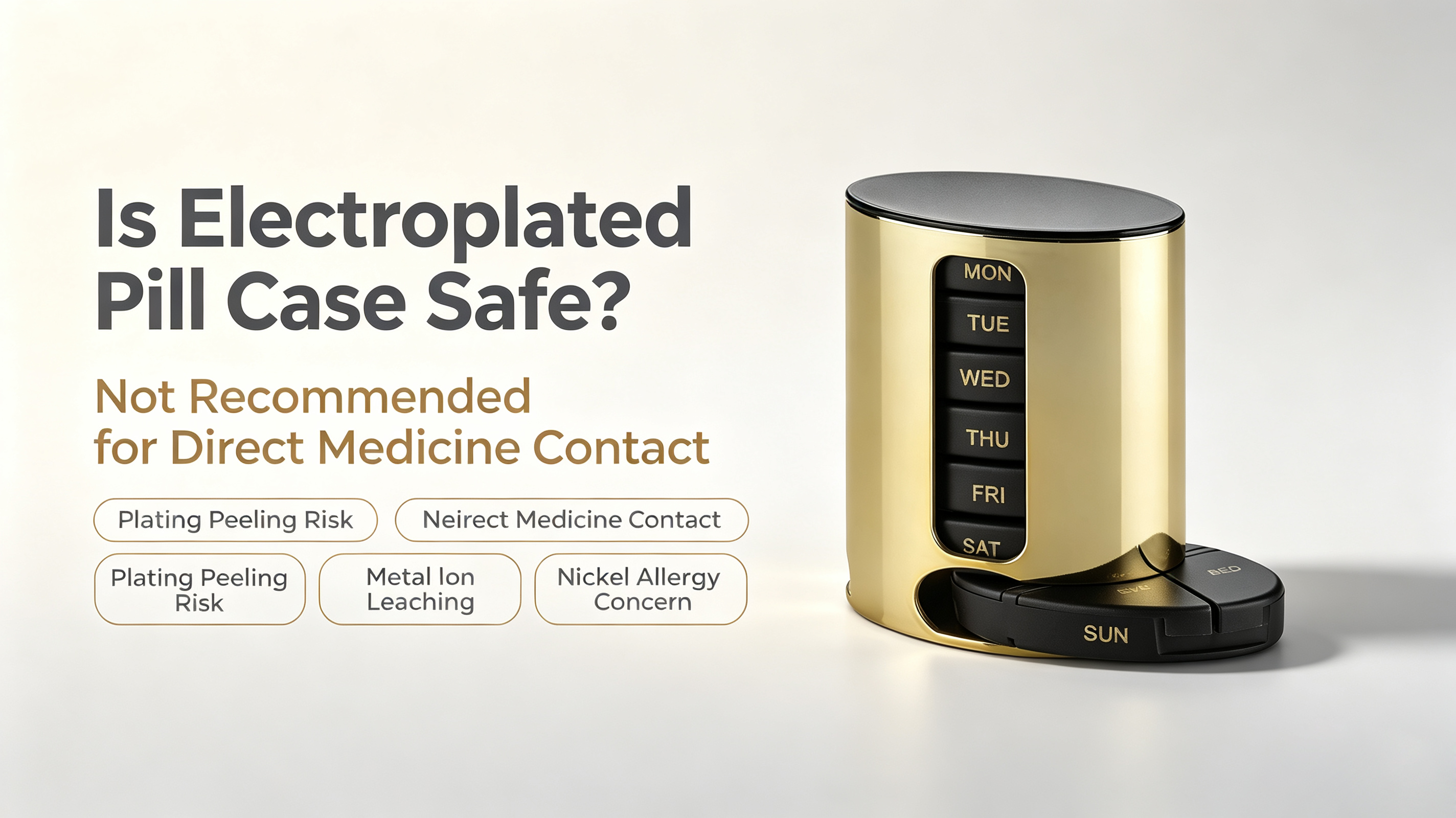
Electropolishing uses electrolysis to smooth and level the aluminum alloy surface, removing burrs and defects for a glossy finish. However, this process is not environmentally friendly for pill cases and is generally not recommended.
A. Basic Principle
The aluminum part acts as the anode, stainless steel/lead as the cathode, immersed in acidic polishing solution with direct current applied. Raised areas have higher current density and dissolve preferentially, finally “flattening” uneven surfaces into a high-gloss mirror finish.
B. Standard Process Flow
Pre-treatment
Degreasing; remove oxide scale and impurities (unclean surfaces cause mottling and black spots during polishing).
Clamping
Electropolishing (Core Process)
Polishing solution: High-phosphoric acid system (phosphoric acid + sulfuric acid + additives).
Temperature: 60–80℃ (strict temperature control required).
Voltage: 6–10V.
Time: 0.5–5 minutes (depending on brightness requirements). Stir gently for uniform brightness.
Rinsing and Neutralization
Running water rinsing; neutralize and remove residues with dilute alkaline solution; pure water rinsing and drying.
Post-treatment (Common)
5. Laser Engraving Process for Metal Pill Cases
A. Basic Principle
- Black marking/color change: Surface oxidation and carbonization form black marks.
- Engraving/white marking: Remove the surface layer to reveal the natural metal color or matte surface.
B. Equipment and Materials
- Equipment: Fiber laser marking machine (most commonly used for aluminum alloys).
- Power: 20W–50W is generally sufficient.
- No ink or consumables required.
C. Standard Process Flow
- Workpiece Preparation
- Drawing and Typesetting
- Clamping and Positioning
- Laser Engraving (Core Process)
Black marking: High frequency, low power.
Deep engraving/white marking: Slightly higher power.
- Post-treatment
Blow off dust with an air gun.
Engraving on anodized aluminum reveals the natural color for obvious contrast.
D. Common Engraving Effects
- Black marking: Black characters burned on the aluminum surface, clear and durable.
- Natural color engraving: Remove the oxide film to reveal bright aluminum color.
- Deep engraving: Slight dents with tactile feel.
Conclusion
A high-quality metal pill case is a product of advanced processes and premium materials. From anodizing and sandblasting to laser engraving and electropolishing, every process serves to create a higher-quality metal pill case. That’s all for today’s pill case knowledge—feel free to leave a comment and discuss more about pill cases.